The state’s rebate programs for e-bikes and other light electric vehicles are too underfunded to reach many of the Californians who need them most.


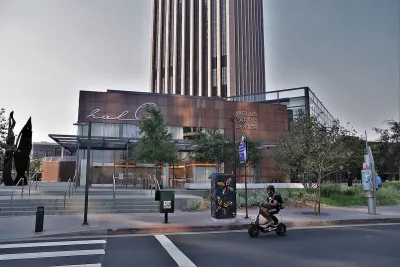
In an opinion piece in Smart Cities Dive, Marta Anadón Rosinach argues that California’s approach to clean transportation is leaving behind the lowest-income residents who need it most.
According to Rosinach, “It’s time we rethink the definition of ‘clean mobility’ to include equitable access. A zero-emission car might qualify on paper, but it won’t help a shift worker in Stockton without a dollar to spare or a teenager in San Bernardino commuting to school.” Moreover, buses and trains don’t reach all areas or don’t offer reliable service.
Rosinach calls for a wider adoption of light electric vehicles (LEVs) such as e-bikes, e-scooters, and other small vehicles that can help replace car trips at a lower cost than an electric car. LEVs are “cheaper to own and operate than motor vehicles, require less space and fewer resources, and work well in urban areas.”
Rosinach argues that cities and the state should do more to subsidize the purchase of LEVs, which could be an important mobility lifeline for low-income people. And while the Driving Clean Assistance Program and the California e-bike incentive exist, these programs are limited and underfunded, with e-bike vouchers running out within minutes of their release.
By expanding the e-bike voucher program to include secondhand bikes, the state could make funding go further to help more people. “Even beyond rebates, we need to start treating light electric transportation more like a public good, with dedicated investment into LEV infrastructure. Not just scattered bike lanes, but a statewide network of safe, physically separated routes connecting neighborhoods to schools, jobs and transit.”
FULL STORY: California’s clean mobility push is leaving low-income residents behind


Jersey City Program Offers Battery Swaps for Electric Bikes and Scooters
Residents can swap depleted batteries for fully charged ones as well as charge and park their devices at two pilot sites.
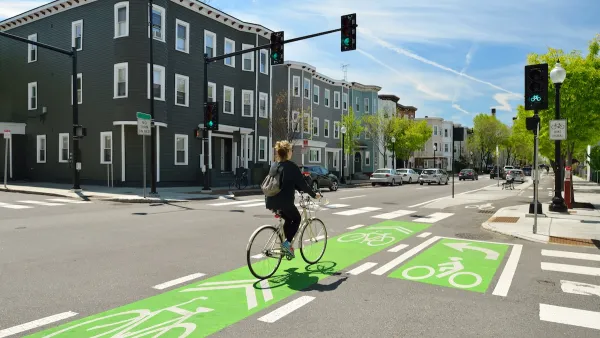
NACTO Releases Updated Urban Bikeway Guide
The third edition of the nationally recognized road design guide includes detailed design advice for roads that prioritize safety and accessibility for all users.
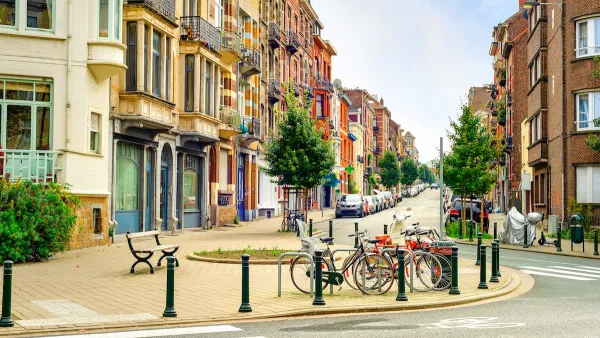
Paris Is Great, But Here's Where the Green Mobility Revolution Is Happening
A movement toward sustainable mobility is taking place across Europe, not just in the City of Lights.

Planetizen Federal Action Tracker
A weekly monitor of how Trump’s orders and actions are impacting planners and planning in America.

The state-sanctioned urbicide of Austin
People don’t kill cities. Freeways do.

US to reduce Colorado River water deliveries to Mexico
A new Colorado Treaty amendment reduces Mexico’s Colorado River water allocation by 250,000 acre feet.

5 New England states march closer to 800 megawatt wind energy project
Securing federal approval for the project may be complicated under the Trump administration, which has historically been hostile towards domestic wind power.

Baltimore to break ground on $50 million Transit Priority Project
The project will bring faster bus trips, safer streets and better bike connections to Baltimore.

Airbnb launches $250 million 'last-dollar financing' housing accelerator, makes first investment in Austin
The company will put $6.4 million towards affordable housing development in Texas’ capital.

FREE Course: Walkable City 1: Why Walkability?
After describing his path towards focusing on walkability as the essence of good planning, Jeff Speck marches through his five principal reasons for making more walkable places.
Reinventing Malls: Planning Alchemy—Turning Gray Fields Into Gold
The course focuses on the opportunities and imperatives that shape reinvention of mall sites.

.jpg)
Eagle County Government
Harvard University Graduate School of Design
Nashville Planning Department
The Architects Foundation
University of Cincinnati Online
The Pocatello Development Authority
The Urban Renewal Agency of the City of Pocatello
Journal of the American Planning Association