London’s effort to reduce speeds and limit vehicles in parts of the city are contributing to improved road safety.


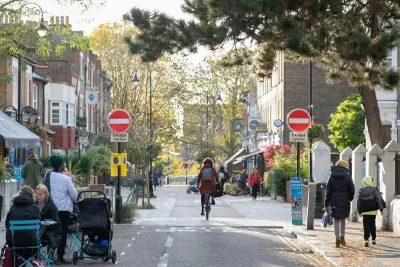
A new study found a 35 percent drop in overall road injuries in one of London’s low-traffic neighborhoods (LTN), areas designed to prioritize people on bikes and on foot.
As Ron Johnson explains in Momentum, “the injury reduction inside LTNs was consistent across different user groups and locations, although the benefit was smaller in outer London LTNs introduced since 2020. Where LTNs were removed, injury levels rose back to pre-intervention rates.” According to the researchers, the LTNs prevented over 600 injuries during the study period.
Further, the analysis addressed a common criticism, that LTNs could potentially shift dangerous traffic to other streets, finding that cyclists and motorcyclists on boundary roads around LTNs also saw a decrease in injury rates.
Read the full story: Low-Traffic Neighborhoods Cut Serious Road Injuries by a Third, Study Finds


Traffic Reductions in Outer London's 'Mini-Hollands' Curtail Vehicle Ownership
An analysis of areas designated as "low traffic neighborhoods" shows a decrease in vehicle ownership rates, a promising sign for the traffic-choked metropolis.
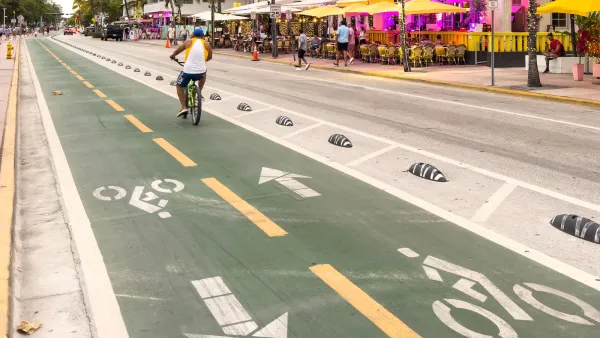
FHWA removes bike lanes and speed cameras from list of traffic safety measures
The agency did not announce its intention to eliminate five proven safety measures from its list of suggested interventions.
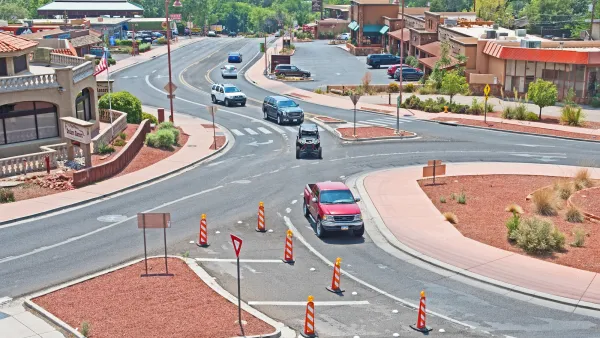
Study: Roundabouts are Primarily in Wealthier Neighborhoods
A North Carolina study sheds light on inequities in road safety interventions.

Planetizen Federal Action Tracker
A weekly monitor of how Trump’s orders and actions are impacting planners and planning in America.

Amtrak, CN end decades-long dispute with eight-year agreement
The new operating agreement establishes an updated framework for the companies to work together, including processes to resolve disputes.

Nation's most wind-powered state turns to coal as data centers increase energy demand
For the first time in decades, Iowa has increased its generation of coal power.

Alabama scores up to $2.5 billion federal loan for largest infrastructure project in state’s history
The Mobile River Bridge and Bayway Project aims to ease congestion at Alabama’s worst bottleneck.

Trump is considering data centers on 6 states' public land — some state officials say they had no idea
If the administration approves the proposed projects, data center and data center-related developments will cover 17,600 acres of public land.

Despite court ruling, Trump is keeping nearly all wind projects in the US on hold
At least 110 wind energy projects have not heard from the government since a federal judge ruled that the Trump administration's freeze on wind turbine clearances was likely illegal.

FREE Course: Walkable City 1: Why Walkability?
After describing his path towards focusing on walkability as the essence of good planning, Jeff Speck marches through his five principal reasons for making more walkable places.
Reinventing Malls: Planning Alchemy—Turning Gray Fields Into Gold
The course focuses on the opportunities and imperatives that shape reinvention of mall sites.

KFH Group Inc.
Greater Baltimore Committee
Eagle County Government
The Architects Foundation
University of Cincinnati Online
The Pocatello Development Authority
The Urban Renewal Agency of the City of Pocatello