An investigation reveals that anti-homeless actions increased up to 500% after Grants Pass v. Johnson — even in cities claiming no policy change.


One year after a Supreme Court ruling that made it easier for cities to criminalize homelessness, arrests and criminal penalties for sleeping outside are on the rise in many of California’s largest cities.
According to reporting by Marisa Kendall for CalMatters, an analysis found that arrests and citations for homelessness-related offenses rose by as much as 500 percent (in San Francisco) in the six months after the Grants Pass decision. In Los Angeles, arrests went up by 68 percent. In San Diego, arrests and citations doubled.
City officials say they don’t want to criminalize people but rather to help them get into housing and access services. However, homeless advocates say punitive measures often disrupt established communities and push people farther from service providers. “But shelter beds aren’t always available. Last year, California had more than 187,000 unhoused residents, and fewer than 76,000 year-round shelter and transitional housing beds, according to data compiled by the U.S. Department of Housing and Urban Development.”
The article notes that since the Grants Pass decision, at least 50 California cities and three counties have passed new ordinances targeted at unhoused residents.
Kendall points out that less visible homelessness doesn’t mean people have moved into housing. According to UCLA sociology professor Chris Herring, “Most people are just sleeping on cardboard or on the street and moving every night.”
FULL STORY: Homeless-related arrests, citations soared in these cities after Supreme Court case

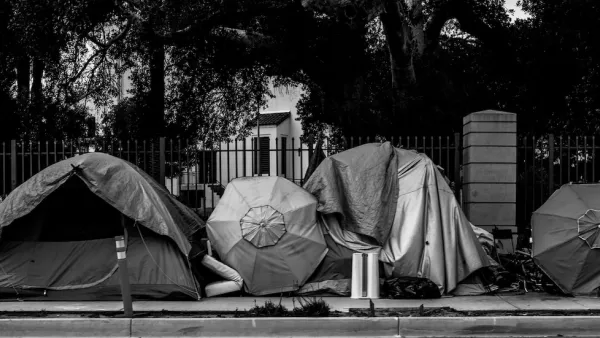
Trump Wants to Force Homeless People Into ‘Tent Cities.’ Can He?
The president pushed for sweeping crackdowns and the possible internment of people experiencing homelessness. To see what's coming, we should look to what states have already done.
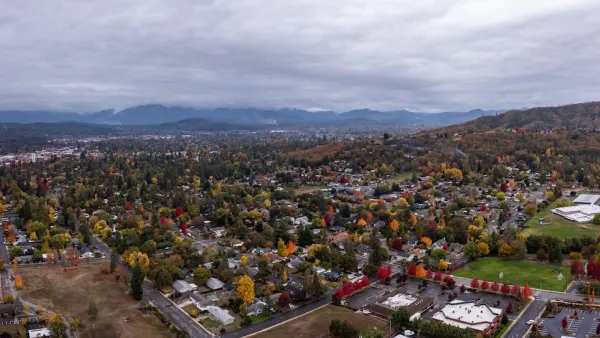
Grants Pass Bans Outdoor Sleeping, Creates Designated Camping Areas
The Oregon city was at the heart of a controversial Supreme Court case that paves the way for the criminalization of homelessness.
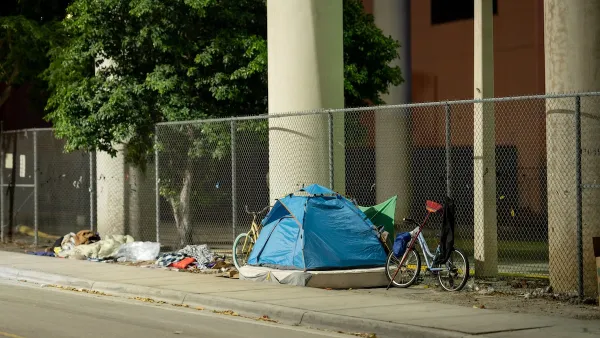
Grants Pass Homelessness Ruling Brings Issues Into Sharp Focus
Advocates for unhoused people are rallying to protect homeless populations as new legislation criminalizing homelessness rolls out around the country.

Planetizen Federal Action Tracker
A weekly monitor of how Trump’s orders and actions are impacting planners and planning in America.

The state-sanctioned urbicide of Austin
People don’t kill cities. Freeways do.

US to reduce Colorado River water deliveries to Mexico
A new Colorado Treaty amendment reduces Mexico’s Colorado River water allocation by 250,000 acre feet.

Mamdani overhauls NYC's Vision Zero plan with 100 new policy goals
The overhaul aims to reduce traffic deaths and make streets safer for pedestrians, cyclists and drivers through lower speed limits, new safety infrastructure and more.

Amtrak not solely to blame for New Jersey commuter rail's unreliability, report finds
A new study from the Garden State Initiative found that NJ Transit’s budget grew 20% across a 4 year period, but reliability declined significantly over the same period.

EPA erases limits on planet-warming pollution from power plants
Under Monday’s plan, power plants would still have some limits on how much mercury, arsenic and other contaminants they can emit.

FREE Course: Walkable City 1: Why Walkability?
After describing his path towards focusing on walkability as the essence of good planning, Jeff Speck marches through his five principal reasons for making more walkable places.
Reinventing Malls: Planning Alchemy—Turning Gray Fields Into Gold
The course focuses on the opportunities and imperatives that shape reinvention of mall sites.


Eagle County Government
Harvard University Graduate School of Design
Nashville Planning Department
The Architects Foundation
University of Cincinnati Online
The Pocatello Development Authority
The Urban Renewal Agency of the City of Pocatello
Journal of the American Planning Association