The Oregon city was at the heart of a controversial Supreme Court case that paves the way for the criminalization of homelessness.


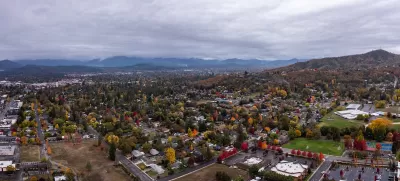
The city council in Grants Pass, the Oregon city involved in a Supreme Court case that allows cities to prohibit unhoused people from camping on public property even when no other options are available, passed a law that bans camping everywhere except in four designated areas where the city will provide toilets, handwashing stations, and trash receptacles.
In an article for the Associated Press, Claire Rush explains that the new rules create four designated locations where unhoused residents can set up tents. Camping elsewhere in Grants Pass is subject to a $50 citation. The designated locations only allow people to stay for one day, or four days in the case of one site. The city says the sites are not meant to be permanent encampments.
Grants Pass Mayor Sara Bristol acknowledges the law is a stopgap solution that doesn’t address the causes of homelessness or provide supportive services, calling it the beginning — but not the end — of the city's strategy to alleviate homelessness. The city has plans to build two additional shelters and identify other properties for camping sites, according to the mayor.
FULL STORY: Oregon city at heart of Supreme Court homelessness ruling votes to ban camping except in some areas

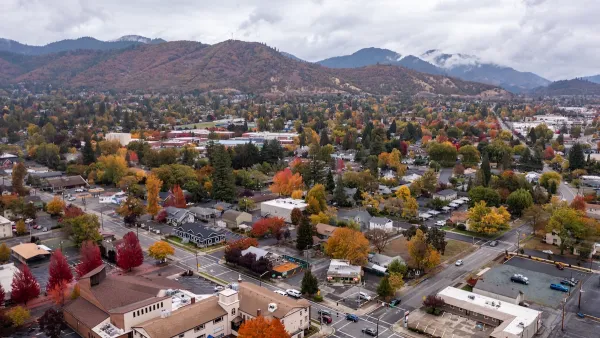
Judge Halts Enforcement of Anti-Homeless Laws in Grants Pass
The Oregon city will be barred from enforcing two ordinances that prosecute unhoused residents until it increases capacity and accessibility at designated camping sites.
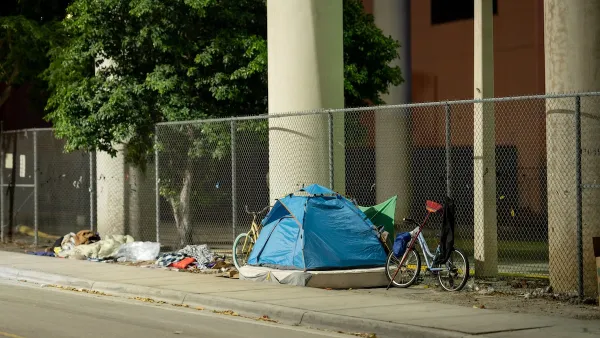
Grants Pass Homelessness Ruling Brings Issues Into Sharp Focus
Advocates for unhoused people are rallying to protect homeless populations as new legislation criminalizing homelessness rolls out around the country.
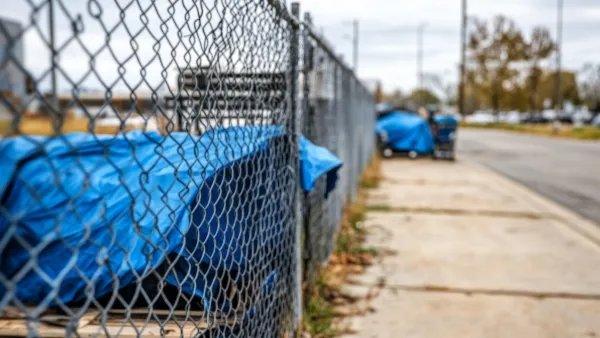
Camping Bans Proliferate After Supreme Court Ruling
A Supreme Court ruling in the case of Grants Pass v. Johnson has led over 100 cities to pass or step up enforcement of camping bans that criminalize unhoused residents.

Planetizen Federal Action Tracker
A weekly monitor of how Trump’s orders and actions are impacting planners and planning in America.

The state-sanctioned urbicide of Austin
People don’t kill cities. Freeways do.

US to reduce Colorado River water deliveries to Mexico
A new Colorado Treaty amendment reduces Mexico’s Colorado River water allocation by 250,000 acre feet.

Airbnb launches $250 million 'last-dollar financing' housing accelerator, makes first investment in Austin
The company will put $6.4 million towards affordable housing development in Texas’ capital.

Guerilla urbanists are building DIY bus stop benches in Chicago
A before-and-after of one of the bus stops with a new bench. The new benches are not officially sanctioned or permitted, but the residents who placed them hope they will be the start of a network of DIY benches across the city.

Mamdani overhauls NYC's Vision Zero plan with 100 new policy goals
The overhaul aims to reduce traffic deaths and make streets safer for pedestrians, cyclists and drivers through lower speed limits, new safety infrastructure and more.

FREE Course: Walkable City 1: Why Walkability?
After describing his path towards focusing on walkability as the essence of good planning, Jeff Speck marches through his five principal reasons for making more walkable places.
Reinventing Malls: Planning Alchemy—Turning Gray Fields Into Gold
The course focuses on the opportunities and imperatives that shape reinvention of mall sites.

Eagle County Government
Harvard University Graduate School of Design
Nashville Planning Department
The Architects Foundation
University of Cincinnati Online
The Pocatello Development Authority
The Urban Renewal Agency of the City of Pocatello
Journal of the American Planning Association