A Supreme Court ruling in the case of Grants Pass v. Johnson has led over 100 cities to pass or step up enforcement of camping bans that criminalize unhoused residents.


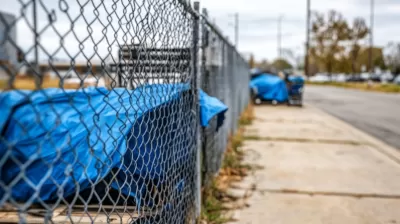
A Supreme Court ruling from earlier this year in the case of Grants Pass, Oregon v. Johnson that allows cities to criminalize homelessness even when no shelter beds are available is having widespread repercussions across the country, reports Jennifer Ludden for KSMU.
According to Ludden, over 100 municipalities have passed or strengthened camping bans since the ruling. “So far, in the months since the ruling, some places with aggressive new camping bans have ramped up fines and arrests.”
Advocates for the unhoused say punitive policies only exacerbate the problem, pushing people out of safe spaces and making it harder to connect them to services. “Some cities have held firm against the Supreme Court ruling. The most prominent is Los Angeles, where Mayor Karen Bass has pushed to move people temporarily into motels and touted success after the number of people living on the streets dropped 10% this year.” But despite renewed efforts to build new shelter beds, most U.S. cities remain short.
FULL STORY: 100-plus cities in the U.S. banned homeless camping this year. But will it work?

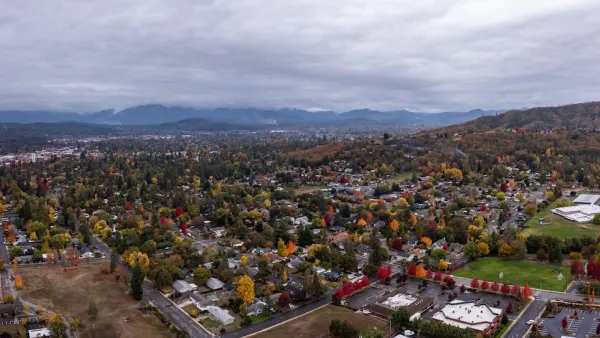
Grants Pass Bans Outdoor Sleeping, Creates Designated Camping Areas
The Oregon city was at the heart of a controversial Supreme Court case that paves the way for the criminalization of homelessness.
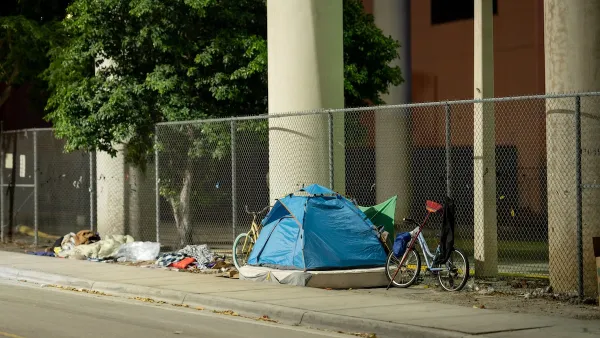
Grants Pass Homelessness Ruling Brings Issues Into Sharp Focus
Advocates for unhoused people are rallying to protect homeless populations as new legislation criminalizing homelessness rolls out around the country.
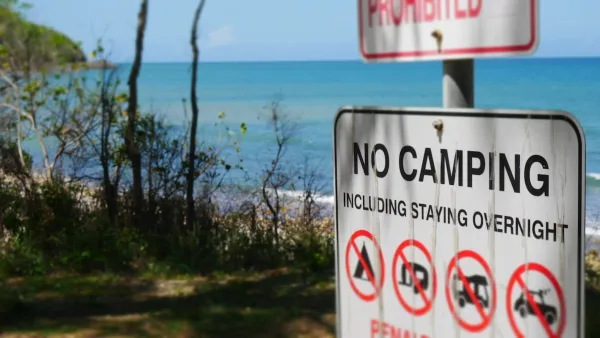
Florida Public Sleeping Ban Goes Into Effect October 1
The law allows citizens to sue cities for lax enforcement.

The state-sanctioned urbicide of Austin
People don’t kill cities. Freeways do.

US to reduce Colorado River water deliveries to Mexico
A new Colorado Treaty amendment reduces Mexico’s Colorado River water allocation by 250,000 acre feet.

New Jersey’s second-largest city bans standalone data centers
Jersey City will continue to allow co-location facilities, such as those meant for research institutions that store their own data.

Amtrak not solely to blame for New Jersey commuter rail's unreliability, report finds
A new study from the Garden State Initiative found that NJ Transit’s budget grew 20% across a 4 year period, but reliability declined significantly over the same period.

EPA erases limits on planet-warming pollution from power plants
Under Monday’s plan, power plants would still have some limits on how much mercury, arsenic and other contaminants they can emit.

Phoenix announces new on-demand transit service, more frequent RAPID buses
Both new services will launch in October, and are part of Phoenix's Project Effective Access Solutions for Easing Congestion.

FREE Course: Walkable City 1: Why Walkability?
After describing his path towards focusing on walkability as the essence of good planning, Jeff Speck marches through his five principal reasons for making more walkable places.
Reinventing Malls: Planning Alchemy—Turning Gray Fields Into Gold
The course focuses on the opportunities and imperatives that shape reinvention of mall sites.

Eagle County Government
Harvard University Graduate School of Design
Nashville Planning Department
The Architects Foundation
University of Cincinnati Online
The Pocatello Development Authority
The Urban Renewal Agency of the City of Pocatello
Journal of the American Planning Association