The decision limits the scope of a federal law that mandates extensive environmental impact reviews of energy, infrastructure, and transportation projects.


Editor’s note: The original piece incorrectly stated the project in question was a pipeline, not a rail line. We have amended the article to reflect this correction on June 10, 2025.
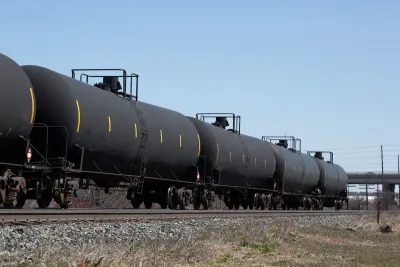
A Supreme Court decision in favor of a proposed Utah rail line designed to move crude oil will likely have sweeping implications for other energy, transportation, and infrastructure projects. According to reporting by Nina Totenberg for NPR, “The decision makes it easier to win approval for highways, bridges, pipelines, wind farms and other infrastructure projects.”
The ruling concerns a proposed railway in Utah’s Uinta Basin, which was approved by the Surface Transportation Board (STB). “The U.S. Court of Appeals in Washington subsequently ruled that the Board had violated NEPA, by failing to consider the environmental effects from oil drilling and production, referred to as upstream, and oil refining and distribution, known as downstream.”
The Supreme Court’s reversal of that decision signals a rollback of NEPA’s powers. The act has been frequently used by environmental and community activists to block harmful projects and ensure that officials evaluate all the potential impacts of a project.
FULL STORY: Supreme Court limits environmental reviews of infrastructure projects

Misuse of Environmental Laws Betrays Their Intent
How laws written to protect natural resources and biodiversity are being reinterpreted by NIMBY groups to block development.
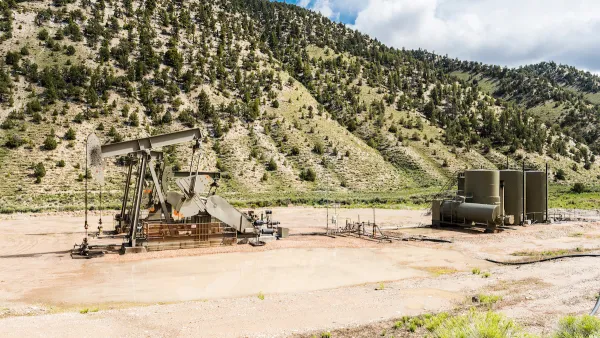
Utah Oil Shale Extraction Dealt Major Setback
The Surface Transportation Board's approval in 2021 of a proposed 85-mile Uinta Basin Railway in Utah that would have enabled increased extraction of the world's largest source of oil shale was partially vacated by a federal appeals court last month.
Trump's Latest Deregulatory Itch: The National Environmental Policy Act
In a move called "one of the biggest — and most audacious — deregulatory actions of the Trump administration," President Trump yesterday announced plans to weaken the National Environmental Policy Act for federal infrastructure projects.

Planetizen Federal Action Tracker
A weekly monitor of how Trump’s orders and actions are impacting planners and planning in America.

The state-sanctioned urbicide of Austin
People don’t kill cities. Freeways do.

US to reduce Colorado River water deliveries to Mexico
A new Colorado Treaty amendment reduces Mexico’s Colorado River water allocation by 250,000 acre feet.

5 New England states march closer to 800 megawatt wind energy project
Securing federal approval for the project may be complicated under the Trump administration, which has historically been hostile towards domestic wind power.

Baltimore to break ground on $50 million Transit Priority Project
The project will bring faster bus trips, safer streets and better bike connections to Baltimore.

Airbnb launches $250 million 'last-dollar financing' housing accelerator, makes first investment in Austin
The company will put $6.4 million towards affordable housing development in Texas’ capital.

FREE Course: Walkable City 1: Why Walkability?
After describing his path towards focusing on walkability as the essence of good planning, Jeff Speck marches through his five principal reasons for making more walkable places.
Reinventing Malls: Planning Alchemy—Turning Gray Fields Into Gold
The course focuses on the opportunities and imperatives that shape reinvention of mall sites.

Eagle County Government
Harvard University Graduate School of Design
Nashville Planning Department
The Architects Foundation
University of Cincinnati Online
The Pocatello Development Authority
The Urban Renewal Agency of the City of Pocatello
Journal of the American Planning Association