Only 3% of the city's crossing signals are currently accessible to blind pedestrians.


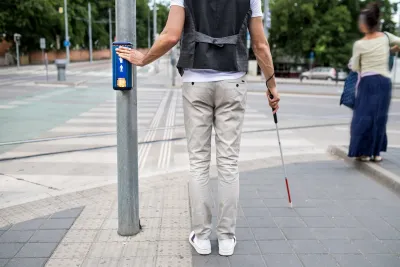
A federal court has ordered Chicago to equip at least 71 percent of its signalized pedestrian crossings with accessible pedestrian signals (APS) within the next 10 years, a major victory for blind and low-vision pedestrians. “Chicago will then have another 5 years to install APS at all remaining signalized intersections, unless it can show that blind pedestrians already have meaningful access to the pedestrian grid.”
The ruling is the result of a class action lawsuit filed on behalf of the American Council of the Blind of Metropolitan Chicago and three individual plaintiffs, which charged the city with discriminatory practices. “The federal Department of Justice joined the suit shortly after it was filed following its own investigation into the City’s APS-related policies and practices.”
When the suit was filed in 2019, less than half of one percent of the 2,800 signalized crossings in the city had APS technology. Today, that number has risen to just 3 percent. The court is also requiring the city to establish an APS compliance and maintenance program and create an APS Community Advisory Committee.
Plaintiff Ann Brash praised the decision saying, “This will go a long way toward ensuring that all blind pedestrians can safely cross Chicago streets.”
FULL STORY: Court Orders Chicago to Install Thousands of Accessible Pedestrian Signals

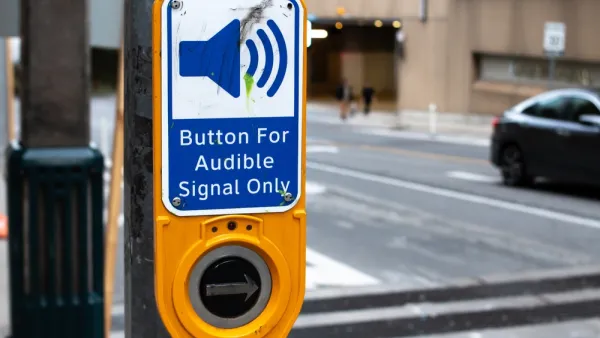
Chicago Found Liable for ADA Violations
A federal judge ruled that the city fails to provide “meaningful access” to many of its streets due to a lack of infrastructure for pedestrians with vision impairments at most of the city’s intersections.
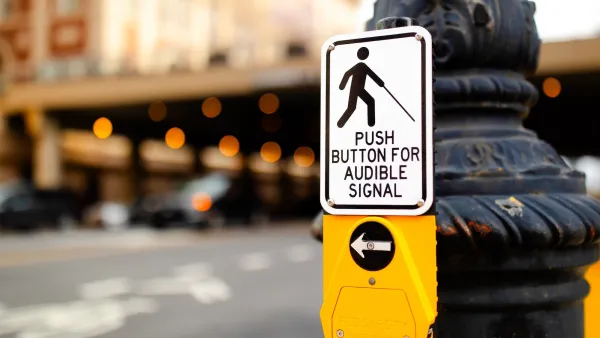
Report: Chicago surpassed its legal mandate for accessible pedestrian signals — but none passed inspections
Gaps in accessibility, placement and functionality highlight the importance of regular inspections and maintenance.
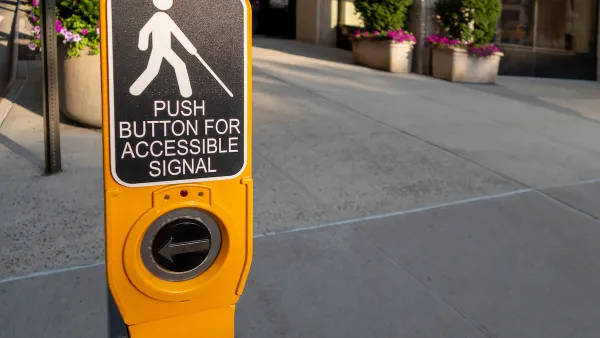
Chicago Made Hundreds of Accessibility Upgrades in 2024
The city has improved over 200 bus stops and 400 of its nearly 3,000 intersections to make them safer for people with disabilities.

The state-sanctioned urbicide of Austin
People don’t kill cities. Freeways do.

US to reduce Colorado River water deliveries to Mexico
A new Colorado Treaty amendment reduces Mexico’s Colorado River water allocation by 250,000 acre feet.

New Jersey’s second-largest city bans standalone data centers
Jersey City will continue to allow co-location facilities, such as those meant for research institutions that store their own data.

Amtrak not solely to blame for New Jersey commuter rail's unreliability, report finds
A new study from the Garden State Initiative found that NJ Transit’s budget grew 20% across a 4 year period, but reliability declined significantly over the same period.

EPA erases limits on planet-warming pollution from power plants
Under Monday’s plan, power plants would still have some limits on how much mercury, arsenic and other contaminants they can emit.

Phoenix announces new on-demand transit service, more frequent RAPID buses
Both new services will launch in October, and are part of Phoenix's Project Effective Access Solutions for Easing Congestion.

FREE Course: Walkable City 1: Why Walkability?
After describing his path towards focusing on walkability as the essence of good planning, Jeff Speck marches through his five principal reasons for making more walkable places.
Reinventing Malls: Planning Alchemy—Turning Gray Fields Into Gold
The course focuses on the opportunities and imperatives that shape reinvention of mall sites.

Eagle County Government
Harvard University Graduate School of Design
Nashville Planning Department
The Architects Foundation
University of Cincinnati Online
The Pocatello Development Authority
The Urban Renewal Agency of the City of Pocatello
Journal of the American Planning Association