The Disadvantaged Business Enterprise Program encouraged contracting with minority- and women-owned businesses in the transportation sector, where these groups are vastly underrepresented.


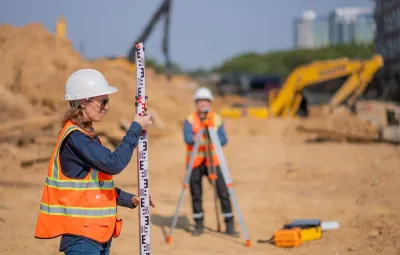
The Trump administration wants to end a U.S. Department of Transportation (USDOT) program that supports minority- and women-owned businesses, one of the nation’s oldest and largest affirmative action initiatives.
According to reporting by Julian Mark in The Washington Post, “In a motion filed in the U.S. District Court for the Eastern District of Kentucky, the Justice Department said that a Transportation Department program that has carved out an estimated $37 billion for minority- and women-owned businesses violates the equal protection clause of the Constitution.”
If a judge agrees with the DOJ, it could spell the end of the Disadvantaged Business Enterprise Program (DBE), which was created by Congress in 1983 and allocates at least 10 percent of transportation funds to contracts with women- or minority-owned businesses. “The settlement is still subject to challenge by a coalition of businesses that intervened in the case after President Donald Trump took office, arguing that the program is essential to removing entrenched barriers that minorities and women face in the $759 billion contracting sector.”
Read the full story: Trump administration moves to upend $37B affirmative action program

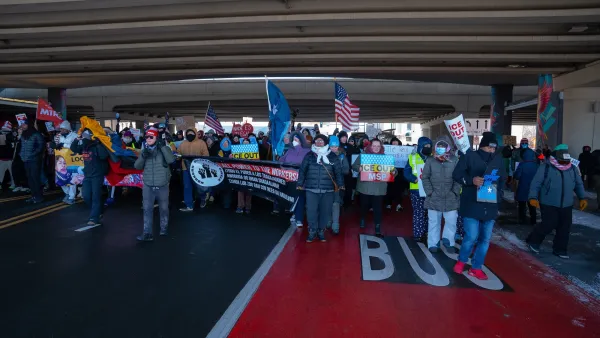
USDOT Ends Effort to Tie Transportation Funding to ICE Cooperation
The department ended its effort to challenge a court ruling barring it from withholding federal grants over immigration enforcement.
Federal Judge Rules Trump Can’t Tie Transportation Funding to Immigration Policy
The judge said the administration did not offer “any plausible connection” between transportation projects and immigration enforcement.

Judge Halts Trump Order Tying State Transportation Grants to Immigration Actions
Ruling applies to Colorado, which was among 20 plaintiff states.

Planetizen Federal Action Tracker
A weekly monitor of how Trump’s orders and actions are impacting planners and planning in America.

The state-sanctioned urbicide of Austin
People don’t kill cities. Freeways do.

US to reduce Colorado River water deliveries to Mexico
A new Colorado Treaty amendment reduces Mexico’s Colorado River water allocation by 250,000 acre feet.

Nation's most wind-powered state turns to coal as data centers increase energy demand
For the first time in decades, Iowa has increased its generation of coal power.

NYC cools commuters with city's first rain garden above a bus stop
New York City officials say the plants in the rain garden can absorb 16 gallons of rainwater during heavy storms.

Brightline West’s future may rely on $6 billion federal loan
The company has until Nov. 2 to make a $400 million equity investment into its proposed high-speed rail line.

FREE Course: Walkable City 1: Why Walkability?
After describing his path towards focusing on walkability as the essence of good planning, Jeff Speck marches through his five principal reasons for making more walkable places.
Reinventing Malls: Planning Alchemy—Turning Gray Fields Into Gold
The course focuses on the opportunities and imperatives that shape reinvention of mall sites.

Greater Baltimore Committee
Eagle County Government
Harvard University Graduate School of Design
The Architects Foundation
University of Cincinnati Online
The Pocatello Development Authority
The Urban Renewal Agency of the City of Pocatello
Journal of the American Planning Association