The fee is higher than the average tax paid by gas-powered vehicle owners.


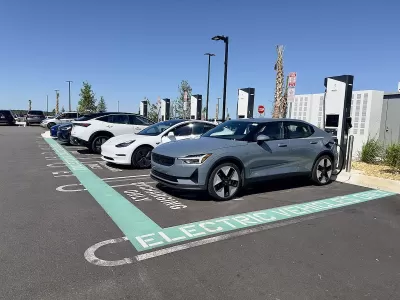
A proposed federal $250 tax on electric vehicles would raise the cost of EV ownership and help make up for lost gas tax revenue, report Maxine Joselow and Shannon Osaka in The Washington Post.
The House Transportation Committee approved the proposal last week, noting that EV owners do not pay gas taxes to help maintain roadways. “But according to calculations by Consumer Reports, the $250 fee is more than double what the owner of even the most gas-guzzling vehicle would pay in fuel taxes — and more than triple the amount paid by the average new gas car driver. ”According to the article, at a gas tax rate of 18.4 cents per gallon, the average gas-powered car would pay $73 per year into the Highway Trust Fund.
To date, at least 39 states have imposed registration fees on EVs. In both Republican and some Democratic states, EV charges tend to outpace the average gas tax. The authors add, “The Transportation Committee initially planned a $200 annual fee for EV drivers and a $20 annual fee for drivers of gas cars. But the panel eventually increased the fee on EV drivers and abandoned the tax on gas car drivers altogether due to opposition from some Republicans.”
EV drivers represent just 2 percent of the cars currently on the road, but that percentage is expected to grow.
FULL STORY: Republicans say EVs don’t pay their fair share. Here’s the math.

Restoring Solvency to the Highway Trust Fund
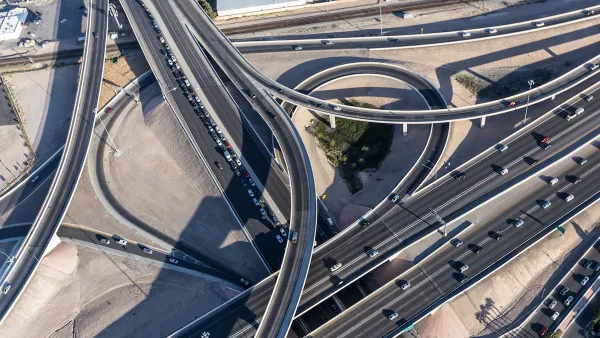
The Highway Trust Fund, the nation's source of road and bridge funding, went bankrupt in 2008 and has since relied on transfers from the General Fund to supplement fuel taxes. Republican Senators have proposed a new funding source: an EV fee.

Swapping your gas car for an EV is greener than keeping it, research shows
An EV repays the 'carbon debt' caused by building it after 4,400 miles.
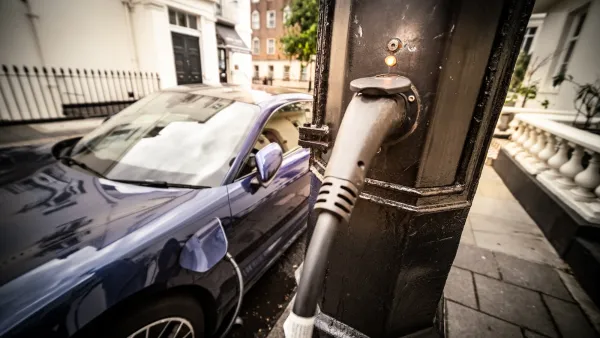
DC light poles will soon charge your electric car
The city awarded three grants to companies that will install more publicly available EV chargers.

Planetizen Federal Action Tracker
A weekly monitor of how Trump’s orders and actions are impacting planners and planning in America.

The state-sanctioned urbicide of Austin
People don’t kill cities. Freeways do.

US to reduce Colorado River water deliveries to Mexico
A new Colorado Treaty amendment reduces Mexico’s Colorado River water allocation by 250,000 acre feet.

5 New England states march closer to 800 megawatt wind energy project
Securing federal approval for the project may be complicated under the Trump administration, which has historically been hostile towards domestic wind power.

Baltimore to break ground on $50 million Transit Priority Project
The project will bring faster bus trips, safer streets and better bike connections to Baltimore.

Airbnb launches $250 million 'last-dollar financing' housing accelerator, makes first investment in Austin
The company will put $6.4 million towards affordable housing development in Texas’ capital.

FREE Course: Walkable City 1: Why Walkability?
After describing his path towards focusing on walkability as the essence of good planning, Jeff Speck marches through his five principal reasons for making more walkable places.
Reinventing Malls: Planning Alchemy—Turning Gray Fields Into Gold
The course focuses on the opportunities and imperatives that shape reinvention of mall sites.


Eagle County Government
Harvard University Graduate School of Design
Nashville Planning Department
The Architects Foundation
University of Cincinnati Online
The Pocatello Development Authority
The Urban Renewal Agency of the City of Pocatello
Journal of the American Planning Association