USC researchers have created a biodegradable, marine-safe plastic alternative using calcium carbonate from seashells, offering a promising solution to ocean pollution.



Researchers at USC Viterbi School of Engineering have developed a new biodegradable plastic substitute that could help reduce marine pollution. Led by Dr. Eun Ji Chung, the team used calcium carbonate — a mineral found in seashells — and combined it with poly (1,8-octanediol-co-citrate) (POC), a biocompatible polymer approved by the FDA. This innovative material, dubbed POC-CC, mimics the properties of traditional plastics while offering the added benefit of breaking down in marine environments without producing harmful microplastics.
As reported by Greta Harrison, the inspiration for the project stemmed from Chung’s growing concern about plastic waste during the COVID-19 pandemic, particularly from sterile single-use lab materials. Drawing on her earlier research with citric acid-based biodegradable polymers, Chung realized she could adapt this technology for more sustainable, environmentally friendly applications. By incorporating calcium particles derived from seashells and heating the mixture, the team produced a sturdy prototype — including soda can rings — capable of replacing traditional petroleum-based plastics.
Testing revealed that the material safely degrades in ocean water over time, does not alter pH levels, and remains non-toxic to marine life such as green algae. Supported by a USC Sea Grant, the project emphasizes the importance of sustainable innovation along urban coastlines. Chung’s lab now plans to refine the material further for faster degradation and expand its use to other everyday products like stronger, eco-friendly straws — potentially reshaping how we think about plastic and its environmental legacy.
Read the full story: USC Researchers Develop Plastic Substitute from Mineral Found in Seashells

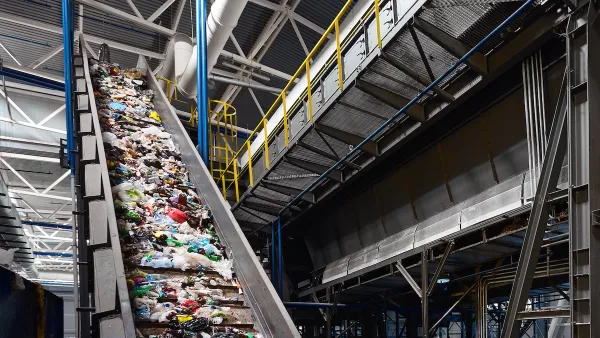
Recycling’s Real Impact: Challenges, Misconceptions, and the Path Forward
Recycling offers modest environmental benefits but faces significant challenges in effectiveness and scalability, requiring systemic changes like reducing plastic production and exploring alternative waste reduction strategies.

Commentary: Colorado Will Forge Ahead With Conservation Work
While federal policy may become less friendly to environmental efforts, support from state legislators and agencies can prevent the state from backsliding.
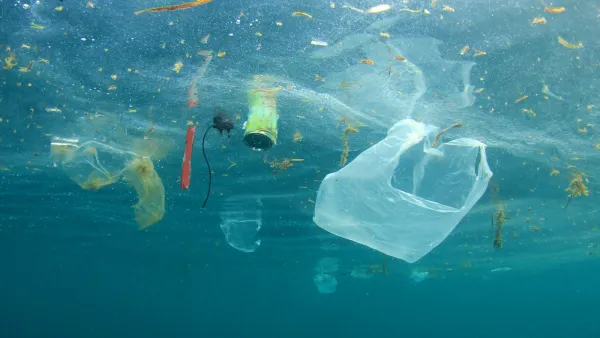
Bag Tax Making a Big Difference in Chicago, Study Finds
NYU study finds 30% decrease in use of disposable bags since the city of Chicago implemented a seven-cent tax on them.

Planetizen Federal Action Tracker
A weekly monitor of how Trump’s orders and actions are impacting planners and planning in America.

Amtrak, CN end decades-long dispute with eight-year agreement
The new operating agreement establishes an updated framework for the companies to work together, including processes to resolve disputes.

Northwest rail fans eager for Sept. 30 debut of Amtrak’s Airo fleet
Get ready for that new train smell and more seats. But they won’t go faster or run more frequently on the Cascades route in Washington and Oregon.

St. Louis Metro to test if single-car trains can reduce operating costs, maintain rider satisfaction
The pilot program will run from October to spring 2027, and begin with one single-car train operating on Metrolink’s Red and Blue lines.

Pennsylvania is building data centers in abandoned mines
Housing data centers in mines provides an alternative to destroying local forests and may spare residents from data centers’ noise and air pollution.

If Corpus Christi can’t revive desalination plant project, it may owe Texas $235 million
Earlier this month, city officials declined to pursue developing the plant for the second time in a year.

FREE Course: Walkable City 1: Why Walkability?
After describing his path towards focusing on walkability as the essence of good planning, Jeff Speck marches through his five principal reasons for making more walkable places.
Reinventing Malls: Planning Alchemy—Turning Gray Fields Into Gold
The course focuses on the opportunities and imperatives that shape reinvention of mall sites.

City of Thousand Oaks
City of Wisconsin Rapids
Harvard University Graduate School of Design
The Architects Foundation
University of Cincinnati Online
The Pocatello Development Authority
The Urban Renewal Agency of the City of Pocatello