A new study highlights the challenges people with disabilities continue to face in navigating urban spaces.


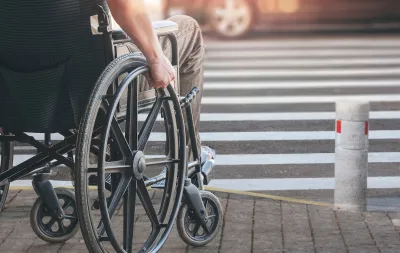
In a piece in Greater Good Magazine, Mohsen Rasoulivalajoozi and Carmela Cucuzzella outline ways that cities can make urban spaces more inclusive for people with disabilities and mobility challenges.
According to the authors, “To create truly inclusive cities, it is vital for policymakers and experts to go beyond minimum standards and critically examine how our urban spaces continue to exclude people with disabilities.”
Some people who require mobility devices face a financial burden in getting safe, well-fitting, and effective equipment. This can create a mismatch between users and mobility aids, which may also not match the environment people must navigate on a daily basis. “However, integrating new technologies requires careful consideration, as assistive devices can also attract social stigma.”
The authors also point to trust as a key factor in whether people want to use mobility aids or facilities designed to improve accessibility, as well as the importance of sociocultural contexts in how people navigate their environment and use mobility aids. “By addressing negative representations and promoting designs that reflect dignity and inclusivity, interventions can align with inclusivity goals and enhance positive social engagement.”
Read the full story: Four Ways Cities Could Be More Inclusive for Mobility Challenges
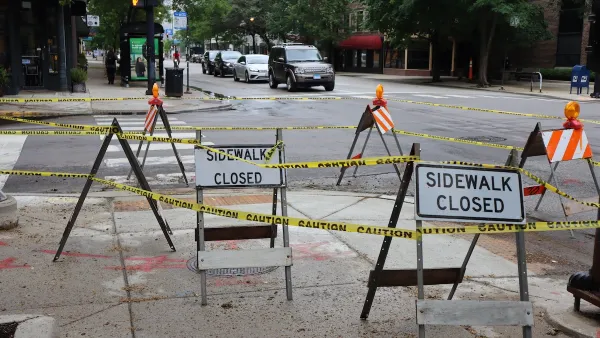
Chicago Residents Sue City Over Inaccessible Sidewalks
The suit alleges the city has failed to create a “coordinated, proactive system” for complying with ADA and ensuring accessibility on the city’s sidewalks and crosswalks.
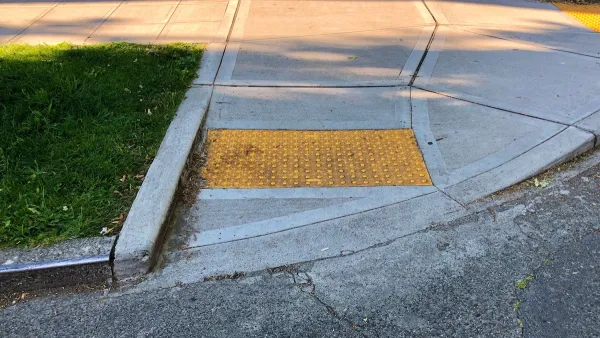
Baltimore Ordered to Improve Sidewalk Accessibility
The city is one of many to face lawsuits for failing to comply with the Americans with Disabilities Act.
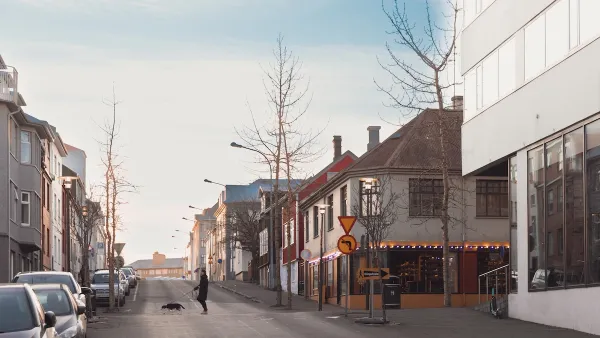
For Advice on Accessibility, Look to Iceland
Cities around the country installed over 1,700 wheelchair ramps in the last five years, thanks in part to one man’s initiative.

Planetizen Federal Action Tracker
A weekly monitor of how Trump’s orders and actions are impacting planners and planning in America.

Eastern Nebraska is running out of electricity
Data centers and electrification are straining eastern Nebraska’s grid, throttling economic development.

Study reveals best places in the U.S. for cycling, walking
New research from Streetlight Data examines bicycle and pedestrian miles per capita in the 100 largest U.S. cities by population.

Next-generation nuclear reactors are coming to Texas
The reactors will not require towering containment structures thanks to new safety features.

California distributes $1.3 billion to prevent transit service cuts, bolster projects
Twenty-eight projects across California received a portion of the funding.

Pennsylvania Democrats have 15 affordability, clean energy bills for flipped state Senate
Bills in consideration include a bill supporting geothermal energy and a bill supporting solar on warehouses.

FREE Course: Walkable City 1: Why Walkability?
After describing his path towards focusing on walkability as the essence of good planning, Jeff Speck marches through his five principal reasons for making more walkable places.
Reinventing Malls: Planning Alchemy—Turning Gray Fields Into Gold
The course focuses on the opportunities and imperatives that shape reinvention of mall sites.

City of Charlotte
City of Rosemead
Rutgers University, Edward J. Bloustein School of Planning and Public Policy
University of Michigan School for Environment and Sustainability (SEAS)
Hunter College, City University of New York (CUNY)
The Architects Foundation
City of Cambridge
The Pocatello Development Authority
The Urban Renewal Agency of the City of Pocatello