In the face of federal threats to public lands and conservation efforts, indigenous groups continue to model nature-centered conservation efforts.


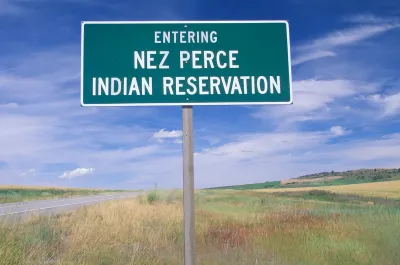
As federal agencies move to deregulate the exploitation of public lands, Native American leaders are developing their own plans to continue stewarding and protecting their lands.
Writing in The Conversation, Alyssa Kreikemeier notes that Native Americans were instrumental in the growth of the modern environmental movement. “Native nations regained federally recognized rights and political power at the same time as the national environmental awakening. In fact, tribal nations exercised environmental sovereignty in ways that restored federal recognition and influenced broader U.S. environmental law and policy.”
Noting the long history of Native environmental activism, Kreikemeier outlines how various tribes have taken air quality monitoring and water conservation into their own hands. “Over the decades, Native nations have partnered with federal agencies and used federal laws and funds to manage their environments. They have also built connections between tribes and nations across the continent,” Kreikemeier explains.
However, “Tribal governments have been hit hard by the shifts in federal priorities, including Trump administration funding cuts that have slowed scientific research, such as environmental monitoring and management on tribal lands.”
FULL STORY: As federal environmental priorities shift, sovereign Native American nations have their own plans


Five of the World's Most Promising Examples of Environmental Conservation
A Huffington Post article shares the stories of the fellows selected by the Lincoln Institute of Land Policy to present their work at the 2014 World Parks Congress in Australia.
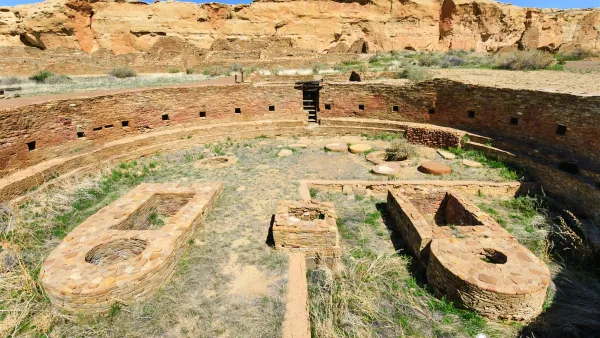
BLM could allow oil leases near sacred New Mexico Indigenous sites
The Bureau of Land Management is considering removing protections from roughly 336,000 acres surrounding Chaco Culture National Historical Park.
Trump's proposed budget slashes EPA funding by 52%
The budget also reduces funding for FEMA, climate resilience projects, and water infrastructure programs.

Planetizen Federal Action Tracker
A weekly monitor of how Trump’s orders and actions are impacting planners and planning in America.

The state-sanctioned urbicide of Austin
People don’t kill cities. Freeways do.

US to reduce Colorado River water deliveries to Mexico
A new Colorado Treaty amendment reduces Mexico’s Colorado River water allocation by 250,000 acre feet.

5 New England states march closer to 800 megawatt wind energy project
Securing federal approval for the project may be complicated under the Trump administration, which has historically been hostile towards domestic wind power.

Baltimore to break ground on $50 million Transit Priority Project
The project will bring faster bus trips, safer streets and better bike connections to Baltimore.

Airbnb launches $250 million 'last-dollar financing' housing accelerator, makes first investment in Austin
The company will put $6.4 million towards affordable housing development in Texas’ capital.

FREE Course: Walkable City 1: Why Walkability?
After describing his path towards focusing on walkability as the essence of good planning, Jeff Speck marches through his five principal reasons for making more walkable places.
Reinventing Malls: Planning Alchemy—Turning Gray Fields Into Gold
The course focuses on the opportunities and imperatives that shape reinvention of mall sites.

Eagle County Government
Harvard University Graduate School of Design
Nashville Planning Department
The Architects Foundation
University of Cincinnati Online
The Pocatello Development Authority
The Urban Renewal Agency of the City of Pocatello
Journal of the American Planning Association