A Huffington Post article shares the stories of the fellows selected by the Lincoln Institute of Land Policy to present their work at the 2014 World Parks Congress in Australia.


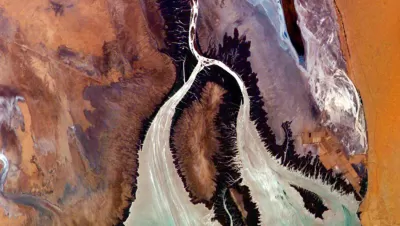
The article gives a voice to five teams of environmental pioneers, working to create a greener, sustainable future. The group of fellows include:
- Two brave souls who travelled the length of the Colorado River to create the "Remains of a River" film.
- "Researchers at the University of Calgary…working with the Canadian Department of National Defense to better manage the land at Canadian Forces Base (CFB) Suffield, the largest military base in Canada."
- Bankers at Credit Suisse, who are "building an emerging conservation finance program with the goal of providing investors with reliable returns while channeling private capital toward the protection of nature."
- A policy lab group at Stanford Law School, working with David J. Hayes, former deputy secretary of the United States Department of the Interior, developed a comprehensive approach to environmental mitigation that involves improved permitting practice and efficiency.
- The Instituto Terra de Preservação Ambiental (Earth Institute for Environmental Protection), working to protect the Brazilian Atlantic Forest.
Read the full story: 5 Innovative Ways Environmentalists Are Working to Save the Earth
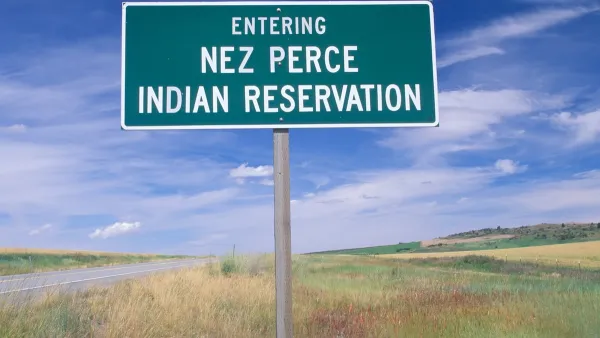
Native American Communities Prepare to Lead on Environmental Stewardship
In the face of federal threats to public lands and conservation efforts, indigenous groups continue to model nature-centered conservation efforts.
Trump's proposed budget slashes EPA funding by 52%
The budget also reduces funding for FEMA, climate resilience projects, and water infrastructure programs.

Trump Administration Wants to Remove Conservation From Approved 'Uses' of Public Land
The Department of the Interior moved to officially rescind the Public Lands Rule passed in 2024, which elevates the conservation of public lands to the same level of protection as other uses.

Planetizen Federal Action Tracker
A weekly monitor of how Trump’s orders and actions are impacting planners and planning in America.

California plans to bury El Niño’s downpour
If the state plays its cards right, it may be able to store a billion acre-feet of El Niño’s water in aquifers.

Desperate measures: Advocates weigh draining Lake Powell to fill Colorado River
Draining the reservoir could reduce evaporation losses by a couple hundred thousand acre-feet.

Mamdani’s pied-à-terre tax survives legal challenge
A panel of judges found that the plaintiffs failed to demonstrate injury as a result of New York City's implementation of the tax.

Eastern Nebraska is running out of electricity
Data centers and electrification are straining eastern Nebraska’s grid, throttling economic development.

Seattle passes record-breaking transit services expansion
Proposition 1 will double the city’s transit tax to add 95,000 more bus trips and preserve 180,000 bus trips annually.

FREE Course: Walkable City 1: Why Walkability?
After describing his path towards focusing on walkability as the essence of good planning, Jeff Speck marches through his five principal reasons for making more walkable places.
Reinventing Malls: Planning Alchemy—Turning Gray Fields Into Gold
The course focuses on the opportunities and imperatives that shape reinvention of mall sites.

City of Rosemead
Rutgers University, Edward J. Bloustein School of Planning and Public Policy
One Hundred Miles
University of Michigan School for Environment and Sustainability (SEAS)
Hunter College, City University of New York (CUNY)
The Architects Foundation
City of Cambridge
Montrose County
The Pocatello Development Authority