Humans relish in over-complicating things, but the sweetest and healthiest things in life are the simplest.
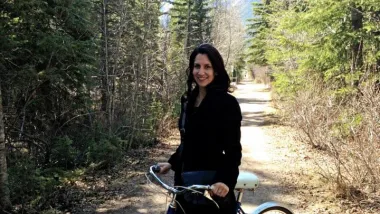


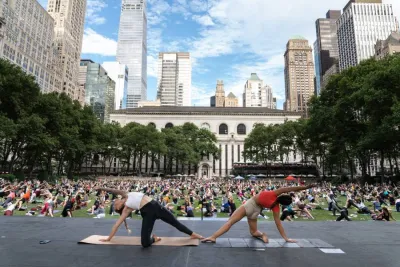
I was happy to learn that Wellness is the theme of this year’s Biophilic Leadership Summit at Serenbe, taking place March 30–April 1. The annual event brings together academics and others to share some of the latest research on biophilic design. I attended the Summit last spring, which had a Placemaking theme, and moderated a panel. This year, after navigating Hurricane Helene and unexpectedly moving to a new state, I didn’t have the capacity to seek involvement, even though I now live just 30 minutes away.
Biophilia is a Greek word that translates to ‘the love of life’ (bio = life; philia = love). It was popularized by ecologist E.O. Wilson to describe the importance of humans connecting with nature. Like many Western disciplines, it positions humans as separate from nature, in contrast to indigenous understandings of how we are intrinsically part of it, just like other animals. Nevertheless, the field of biophilia provides a useful framework for Western thinkers to appeal to city planners, architects, and others to integrate natural elements into man-made places.
I noticed early last year that a key element missing from the field in a substantial way was the crucial element of human movement, the focus of much of my career. Jennifer Walsh’s wonderful, heartfelt (and scientific) work about walking is probably the largest contribution in this space. It’s wonderful and only expanding, so follow her. She’s also a lovely human.
The below is an excerpt of what I pitched the Summit last year for a presentation; and although the board didn’t accept it (perhaps because I lack a PhD and was unknown to them), it’s worth sharing to a broader audience. It’s something I’ve spoken about for a while and was the focus of a presentation I delivered in April 2024 at an International Downtown Association conference alongside the board chair.
—
A key ingredient of successful biophilic placemaking is the essential element of human movement. Human movement – both to and within a place – extends the placemaking experience and welcomes a wider diversity of people across cultures and age groups.
Most will agree that still, quiet reflection in biophilic places brings humans many benefits. Less discussed is the interplay and importance of movement. Yet, humans are designed to move, and it's essential for our basic survival as well as our physical, mental, and emotional health.
Just like squirrels, birds, and pets who forage for food and water, soak up the sun, and jump and fly about, humans are also built to move outside to produce food, sunbathe, commune, and stretch and strengthen our bodies. Our shift to doing much of this indoors is a mostly maladaptive phenomenon. Moving outside in nature is part of who we are as a species.
Human movement is also beautiful and artistic. From indigenous rain dances to Greek choreias, dance has been a primary form of cultural expression, central to spiritual life and community. Some dances are a form of oral tradition and storytelling. This is delightfully place-based: every community has its own spin – sometimes literally, like on cardboard boxes in the Bronx where breakdancing began in the ‘70s.
Today, in public parks and other biophilic places around the world, people love to move. Indeed, the most popular natural places invite this, which ensures the positive feedback loop of a place’s active use, safety, and social elements. On converted rail lines and other rural and urban trails, people walk, jog, bicycle, skate, and otherwise move their bodies in a shared place. Whether walking on NYC’s High Line, bicycling along Greenville’s Swamp Rabbit Trail, salsa dancing in Los Angeles, playing pickup basketball in urban parks, mastering tai chi outside a community center, or participating in yoga in a public square, human movement is often the lifeblood of a place.
We like our streets designed this way, too. People prefer streets that feel like communal places, where we not only get from point A to B, but also do so safely and with a social interaction. We know that relegating streets to only car transportation and speed is a failed recipe for safety, social life, and economics. We’re learning from the past and redesigning our failed streets as linear parks. We’re re-incorporating design strategies like traffic calming, curb extensions, wide sidewalks, protected bike lanes, tree cover, pollinator gardens, food gardens, benches, tables, creative crosswalks, public murals, sculptures, free library stands, and more to redesign our streets as places.
All of this is essential for climate mitigation and planetary health. Converting some car trips into active transit trips draws down carbon, as does creating beautiful biophilic places people can reach car-free.
Drawing from her sustainable placemaking and transportation career on guiding the development of walkable and bicycle communities, successful urban parks, and other biophilic amenities, April will provide details about specific projects and current initiatives. She’ll also share briefly about her personal journey of choosing to live car-free most of her life in multiple cities, including as a single-parent bicycle commuter. After Q&A, April will facilitate a mini workshop for audience members to reflect and discuss how they might weave more movement into their work and communities.
—
Outdoor human movement is the closest thing to a panacea for human health. (By the way, panacea comes from the Greek word panakēs, which means all-healing [pan = all; akos = remedy].) While arguably nothing is a cure-all for everything, outdoor human movement comes mighty close. Movement, sunshine, Vitamin D, happiness, fresh air, and being screen-free really packs a punch.
The concept isn’t new, which makes it even more important. After all, the most central things in life are obvious yet often undervalued. Humans relish in over-complicating things, but the sweetest and healthiest things in life are the simplest.
I’m posting this at the Spring Equinox, exactly one year after I rebranded my 21-year consultancy to Holistic Cities. Now that I’m settled post-hurricane, I look forward to continuing my work in this area.
Please join me in moving more outdoors this season, whether through walking, hiking, bicycling, skateboarding, gardening, dancing, martial arts, paddle boarding, or anything that gets you moving. Solo or in community, let’s step into the fresh air. It’s what we’re made for.
Happy Spring!

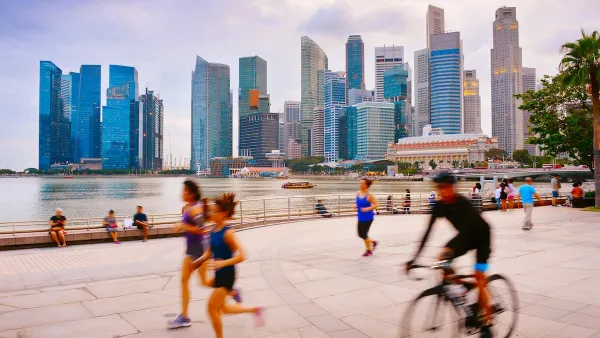
Singapore: A Model for Longevity and Quality of Life
Singapore's remarkable rise in life expectancy, driven by government policies on health, green spaces, and social cohesion, has earned it the distinction of being named the world's sixth “Blue Zone.”
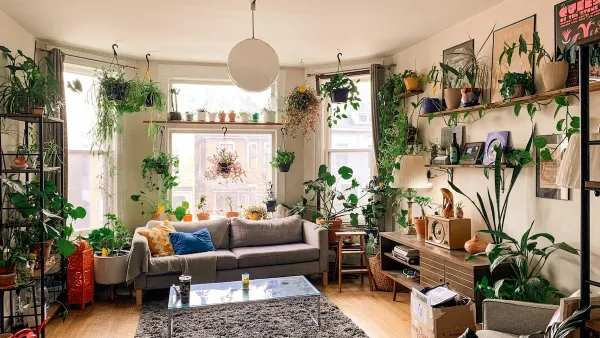
The Death of the Living Room
High housing costs are squeezing out common shared spaces in many UK apartments, leading to social isolation and negative mental health impacts.
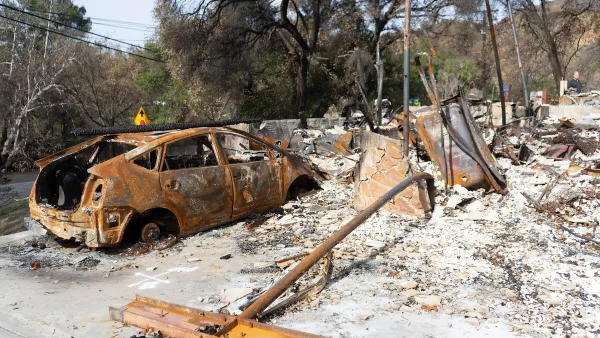
The Unseen Aftermath: Wildfires’ Lasting Health and Emotional Burden
Wildfires in Los Angeles not only pose immediate physical health risks but also lead to long-term respiratory problems and mental health struggles, underscoring the need for a coordinated public health response to mitigate their lasting effects.

Planetizen Federal Action Tracker
A weekly monitor of how Trump’s orders and actions are impacting planners and planning in America.

Amtrak, CN end decades-long dispute with eight-year agreement
The new operating agreement establishes an updated framework for the companies to work together, including processes to resolve disputes.

Northwest rail fans eager for Sept. 30 debut of Amtrak’s Airo fleet
Get ready for that new train smell and more seats. But they won’t go faster or run more frequently on the Cascades route in Washington and Oregon.

LAX SkyLink opening delayed again, contractor won’t commit to new deadline
The project was supposed to open its doors to the public in 2023.

Caltrain may slash over one-third of its stations
If Bay Area voters reject two transit tax measures, Caltrain, BART and AC Transit will see steep service cuts.

A 'dangerous' precedent: North Carolina successfully pressures communities into voting for toll roads
Two mayors resigned from the Charlotte Regional Transportation Planning Organization after it voted in favor of the toll roads.

FREE Course: Walkable City 1: Why Walkability?
After describing his path towards focusing on walkability as the essence of good planning, Jeff Speck marches through his five principal reasons for making more walkable places.
Reinventing Malls: Planning Alchemy—Turning Gray Fields Into Gold
The course focuses on the opportunities and imperatives that shape reinvention of mall sites.

City of Thousand Oaks
City of Wisconsin Rapids
Harvard University Graduate School of Design
The Architects Foundation
University of Cincinnati Online
The Pocatello Development Authority
The Urban Renewal Agency of the City of Pocatello

