A series of proposed bills seeks to limit ratepayer increases and ensure data centers report their energy usage and electricity sources.



California lawmakers are proposing a series of bills to protect ratepayers from electricity rate hikes prompted by data centers, which use high amounts of energy, reports Khari Johnson for CALmatters. The amount of energy used by data centers has tripled in the last decade and could double or even triple again by 2028, curbing states’ efforts to reduce greenhouse gas emissions.
“One measure, from Democratic Assemblymember Rebecca Bauer-Kahan of San Ramon, would require data centers and the developers of large AI models to publicly share how much energy they use. It would also make state energy regulators adopt efficiency standards for data centers.” Another bill would require utilities to create a rate structure specific to data centers, while yet another would incentivize the creation of jobs and zero-emission power sources.
“Just as increased traffic on roads leads to congestion and delays, the addition of large data center loads to the power grid can, in theory, drive up overall electricity demand and exacerbate transmission congestion, said UC Riverside professor Shaolei Ren, who studies the environmental impact of data centers.” Increased greenhouse gas emissions also contribute to higher health care costs and deaths. One study from the California Institute of Technology and UC Riverside estimates that data center emissions could contribute to roughly 1,300 premature deaths by 2030.
FULL STORY: Crackdown on power-guzzling data centers may soon come online in California


Ohio Forces Data Centers to Prepay for Power
Utilities are calling on states to hold data center operators responsible for new energy demands to prevent leaving consumers on the hook for their bills.
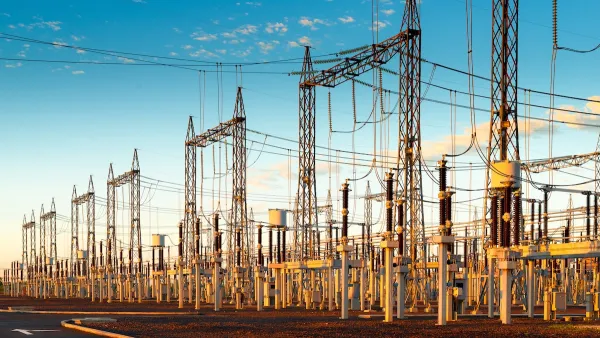
Ratepayers Could Be on the Hook for Data Centers’ Energy Use
Without regulatory changes, data centers’ high demand for energy would be subsidized by taxpayers, according to a new study.

AI’s Thirst for Energy Threatens Electric Grids
The rapidly growing demand for electricity could lead to shortages and is already impacting where data centers are built.

Planetizen Federal Action Tracker
A weekly monitor of how Trump’s orders and actions are impacting planners and planning in America.

The state-sanctioned urbicide of Austin
People don’t kill cities. Freeways do.

US to reduce Colorado River water deliveries to Mexico
A new Colorado Treaty amendment reduces Mexico’s Colorado River water allocation by 250,000 acre feet.

5 New England states march closer to 800 megawatt wind energy project
Securing federal approval for the project may be complicated under the Trump administration, which has historically been hostile towards domestic wind power.

Baltimore to break ground on $50 million Transit Priority Project
The project will bring faster bus trips, safer streets and better bike connections to Baltimore.

Airbnb launches $250 million 'last-dollar financing' housing accelerator, makes first investment in Austin
The company will put $6.4 million towards affordable housing development in Texas’ capital.

FREE Course: Walkable City 1: Why Walkability?
After describing his path towards focusing on walkability as the essence of good planning, Jeff Speck marches through his five principal reasons for making more walkable places.
Reinventing Malls: Planning Alchemy—Turning Gray Fields Into Gold
The course focuses on the opportunities and imperatives that shape reinvention of mall sites.

Eagle County Government
Harvard University Graduate School of Design
Nashville Planning Department
The Architects Foundation
University of Cincinnati Online
The Pocatello Development Authority
The Urban Renewal Agency of the City of Pocatello
Journal of the American Planning Association