The law calls for heat mitigation measures when temperatures exceed 88 degrees.



A new state law in New York will ensure students and staff in schools are kept safe from extreme heat. “By setting clear guidelines for extreme heat conditions, the bill will help schools ensure their spaces are conducive to student learning, reduce unnecessary disruptions, and provide for the health and safety of all those in their buildings,” according to a WBEN article by Brayton J. Wilson.
“In June, Gov. Hochul announced the release of the Final Interagency Extreme Heat Action Plan, which advanced her directive to address extreme heat impacts on disadvantaged communities and on New Yorkers with increased risk of harmful health effects.”
The new law establishes a maximum temperature of 88 degrees and defines extreme heat condition days. “In addition, school districts will be required to take action to relieve heat-related discomfort when classroom temperatures reach 82 degrees. Such actions can include turning off overhead lights, pulling down shades or blinds, turning on fans, opening classroom doors and windows, turning off electronics, and providing water breaks.”
FULL STORY: Gov. Hochul signs bill to protect students, staff at schools from extreme heat

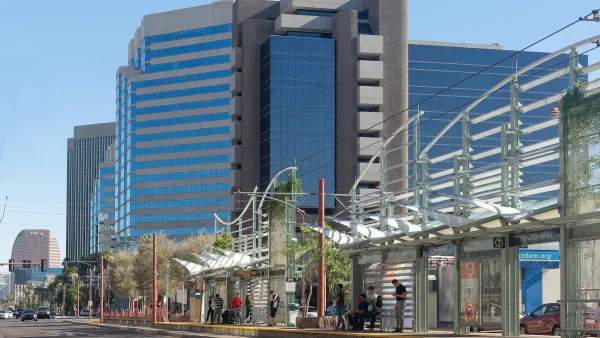
Cool Routes app plots shady walks in arid Arizona
Alternate routes provided by the app reduced the heat experienced during the walk by an average of 4.5 degrees.

The Pacific Northwest is an unlikely front in the fight for cooling
A 2021 heat dome killed over 250 people in the Pacific Northwest, bringing into sharp focus the potential of extreme heat to have deadly consequences even in historically cool climates.
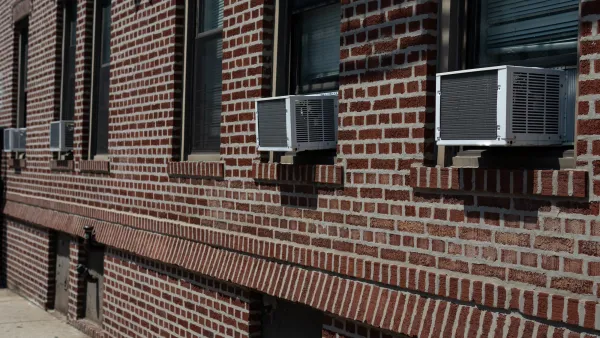
New NYC Law Requires Landlords to Provide AC Units — But not in Public Housing
Building owners are required to install AC units for tenants who request them in the next four years, but tenants are on the hook for electricity costs.

Planetizen Federal Action Tracker
A weekly monitor of how Trump’s orders and actions are impacting planners and planning in America.

The state-sanctioned urbicide of Austin
People don’t kill cities. Freeways do.

US to reduce Colorado River water deliveries to Mexico
A new Colorado Treaty amendment reduces Mexico’s Colorado River water allocation by 250,000 acre feet.

5 New England states march closer to 800 megawatt wind energy project
Securing federal approval for the project may be complicated under the Trump administration, which has historically been hostile towards domestic wind power.

Baltimore to break ground on $50 million Transit Priority Project
The project will bring faster bus trips, safer streets and better bike connections to Baltimore.

Airbnb launches $250 million 'last-dollar financing' housing accelerator, makes first investment in Austin
The company will put $6.4 million towards affordable housing development in Texas’ capital.

FREE Course: Walkable City 1: Why Walkability?
After describing his path towards focusing on walkability as the essence of good planning, Jeff Speck marches through his five principal reasons for making more walkable places.
Reinventing Malls: Planning Alchemy—Turning Gray Fields Into Gold
The course focuses on the opportunities and imperatives that shape reinvention of mall sites.

Eagle County Government
Harvard University Graduate School of Design
Nashville Planning Department
The Architects Foundation
University of Cincinnati Online
The Pocatello Development Authority
The Urban Renewal Agency of the City of Pocatello
Journal of the American Planning Association