The country is building tens of thousands of miles of rail service that is expensive to maintain and, in some cases, redundant.


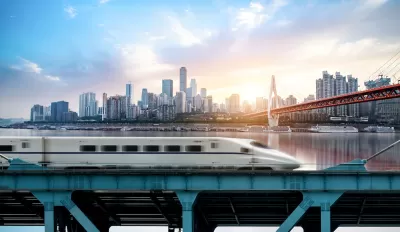
In the last two decades, China has built over 30,000 miles of high-speed rail, reports Brian Spegele in MSN News. “The plan sticks to a well-worn economic model built on maintaining growth through infrastructure spending—even though China already has much of what it needs.”
However, the country’s rail operator has amassed nearly $1 trillion in debt and liabilities, and questions are being raised about how necessary many of the new rail lines, particularly those running to rural areas, are. “The line connecting Shanghai and the tech hub of Hangzhou, home to Alibaba, drew an average of around 100,000 passenger trips every day during its first decade between 2010 and 2020, according to state media.” But a similar line in rural Fushun County only reported roughly 9,000 daily trips, and some rural lines replicate existing services, rendering them unnecessary.
According to Spegele, “China is now practically duplicating some routes. High-speed trains have operated for years between the inland cities of Chongqing and Kunming, a journey that takes about five hours. China State Railway says a new $20 billion line being built between the cities, following a different path, will cut travel time to about two hours, while supporting the regional economy and promoting national unity.”
FULL STORY: China Is Building 30,000 Miles of High-Speed Rail—That It Might Not Need

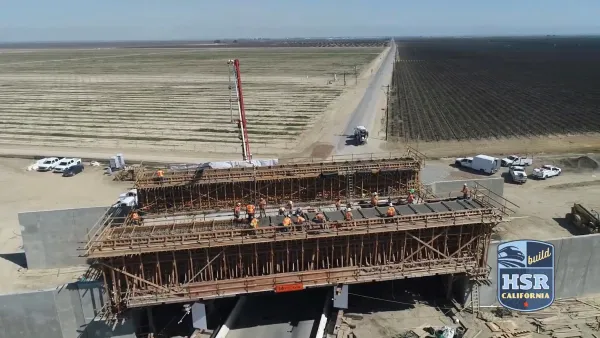
California High-Speed Rail Slashes $1.7B From 2026 Budget
The CHSRA plans to complete the Central Valley segment of the line and begin revenue service as soon as possible.
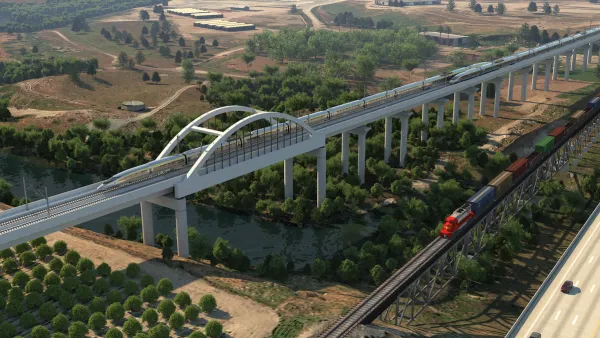
California Commits $1B Annually for 20 Years to High-Speed Rail
New legislation extends the state’s cap-and-trade program to 2045 and formalized a yearly allocation to the California high-speed rail project.
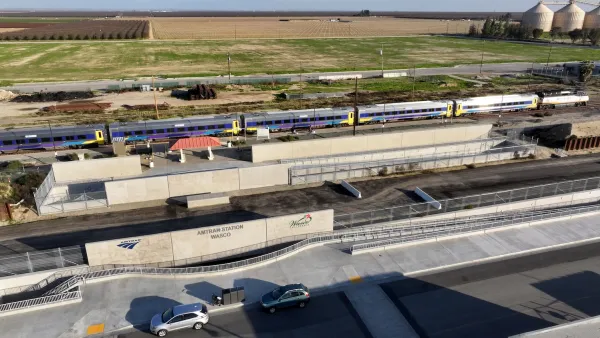
Trump: Federal Government Won’t Pay for California HSR
The President has targeted federal funding for the California bullet train project since his first administration.

The state-sanctioned urbicide of Austin
People don’t kill cities. Freeways do.

US to reduce Colorado River water deliveries to Mexico
A new Colorado Treaty amendment reduces Mexico’s Colorado River water allocation by 250,000 acre feet.

New Jersey’s second-largest city bans standalone data centers
Jersey City will continue to allow co-location facilities, such as those meant for research institutions that store their own data.

Amtrak not solely to blame for New Jersey commuter rail's unreliability, report finds
A new study from the Garden State Initiative found that NJ Transit’s budget grew 20% across a 4 year period, but reliability declined significantly over the same period.

EPA erases limits on planet-warming pollution from power plants
Under Monday’s plan, power plants would still have some limits on how much mercury, arsenic and other contaminants they can emit.

Phoenix announces new on-demand transit service, more frequent RAPID buses
Both new services will launch in October, and are part of Phoenix's Project Effective Access Solutions for Easing Congestion.

FREE Course: Walkable City 1: Why Walkability?
After describing his path towards focusing on walkability as the essence of good planning, Jeff Speck marches through his five principal reasons for making more walkable places.
Reinventing Malls: Planning Alchemy—Turning Gray Fields Into Gold
The course focuses on the opportunities and imperatives that shape reinvention of mall sites.

Eagle County Government
Harvard University Graduate School of Design
Nashville Planning Department
The Architects Foundation
University of Cincinnati Online
The Pocatello Development Authority
The Urban Renewal Agency of the City of Pocatello
Journal of the American Planning Association