Underground steam pipe systems in New York, Boston, and other cities could hold the key to renewable power generation.


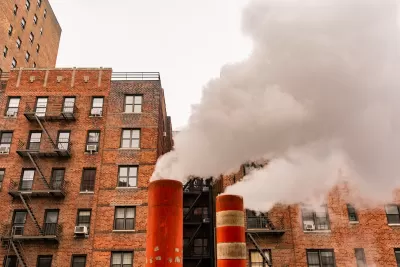
A 106-mile network of underground pipes could hold the key to clean energy in New York City.
As Tope Alake and Linda Poon explain in Bloomberg CityLab, the city’s subterranean pipes currently deliver roughly 15 billion pounds per year of 370-degree steam to some of the city’s buildings.
The system, operated by Consolidated Edison Inc., serves large-scale clients such as the Empire State Building and the United Nations complex. “For now, Con Ed’s steam system is entirely focused on Manhattan, where the main steam pipes already exist. Expanding into other boroughs would require crossing a river, making it much more challenging — though not necessarily impossible for a company that owns small pieces of real estate in other boroughs.”
Now, new legislation and a focus on renewable energy could lead to an expansion of the steam system and allow buildings to decarbonize using their own boilers.
While New York’s system operates on natural gas, “Many of the US’s other systems, sometimes called ‘steam loops,’ are also working to decarbonize. Vicinity Energy Inc., which operates systems in a dozen US cities, has committed to electrifying its entire portfolio by 2050 — including in the greater Boston area, where its steam pipe system delivers heat to some 70 million square-feet of building space.”
Read the full story: NYC's Underground Steam System May Be Key to a Greener Future


Court unfreezes $20B in federal climate grants
A U.S. Court of Appeals ruled that the Trump administration potentially violated the Inflation Reduction Act by attempting to claw back grants awarded under the Greenhouse Gas Reduction Fund program.
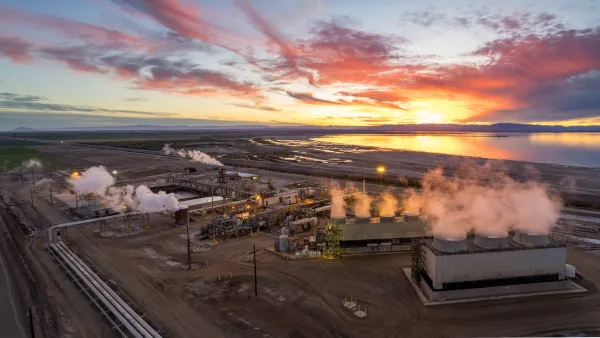
A desolate patch of Southern California desert could become a lithium powerhouse
Plans to develop lithium mines and data centers are dividing residents of a remote Southern California region.
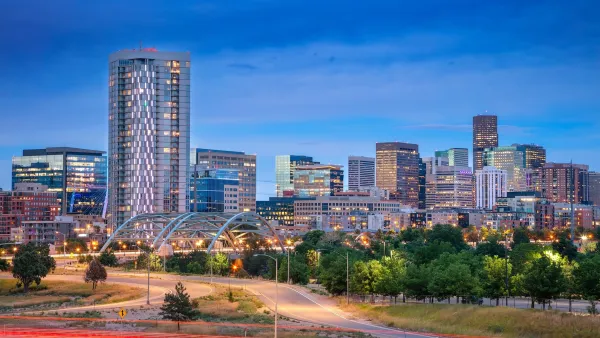
Denver is building a sewage-powered thermal energy network
A proposed thermal energy network will harness heat from the earth and from wastewater to power renewable heating and cooling systems.

Planetizen Federal Action Tracker
A weekly monitor of how Trump’s orders and actions are impacting planners and planning in America.

California plans to bury El Niño’s downpour
If the state plays its cards right, it may be able to store a billion acre-feet of El Niño’s water in aquifers.

Desperate measures: Advocates weigh draining Lake Powell to fill Colorado River
Draining the reservoir could reduce evaporation losses by a couple hundred thousand acre-feet.

California city breaks ground on transit connector
The project includes three mobility hubs and a pedestrian bridge.

After public outcry, Massachusetts city releases housing development tracker
Cambridge’s tracker currently shows 250 housing projects in various stages of development.

40 years after approval, Chicago breaks ground on new park
The park honors Jean Baptiste Point du Sable, the city’s first permanent non-native settler.

FREE Course: Walkable City 1: Why Walkability?
After describing his path towards focusing on walkability as the essence of good planning, Jeff Speck marches through his five principal reasons for making more walkable places.
Reinventing Malls: Planning Alchemy—Turning Gray Fields Into Gold
The course focuses on the opportunities and imperatives that shape reinvention of mall sites.

City of Rosemead
Rutgers University, Edward J. Bloustein School of Planning and Public Policy
One Hundred Miles
Hunter College, City University of New York (CUNY)
The Architects Foundation
University of Cincinnati Online
City of Cambridge
Montrose County
The Pocatello Development Authority