The design of intersections between major roadways and bike and pedestrian paths can have fatal consequences.


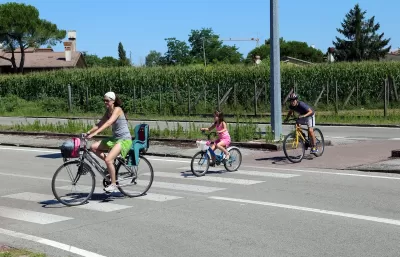
Using an example from a New Jersey segment of the East Coast Greenway, the nation’s longest biking and walking route, Asia Mieleszko highlights the danger raised by the intersection of greenways with highways and major arterial roads.
“While its most beloved segments are secluded and separated from motorized traffic, as much as 65% of the ECG involves interacting with cars and trucks that are moving at high speeds.” This puts the people biking and walking on the trail at risk, and has in some cases resulted in fatal crashes. In many places, the crossings are denoted only by a painted crosswalk, and drivers routinely ignore speed limits.
One problem, Mieleszko points out, is that the standards that county roads are held to often don’t match up with local realities. “ Often, they’re thought of as connectors between distant places, a means of getting from one side of town to the other, from one city to another dozens of miles away. As such, they prioritize the speed and throughput of vehicles in order to make that ride from A to B as efficient and seamless as possible.”
In practice, many of the country’s most dangerous, fast-moving roads intersect with pathways for people walking and biking. It takes consistent effort from local advocates to get state and county agencies to make changes that could, in theory, contradict their mandate to maintain fast traffic throughput.
FULL STORY: A Disaster Waiting to Happen: Where Our Greenways Meet Our Highways

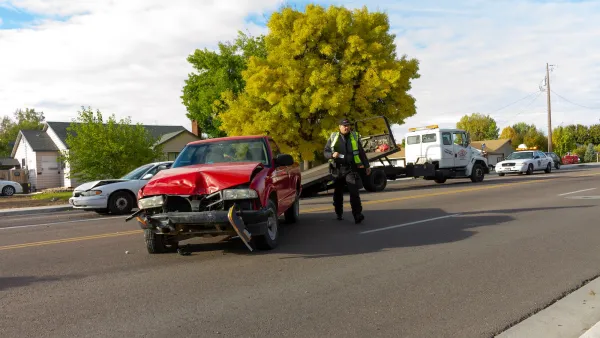
Video: Why are US roads so dangerous?
The CityNerd YouTube channel highlights key statistics from the 2026 Dangerous by Design report.
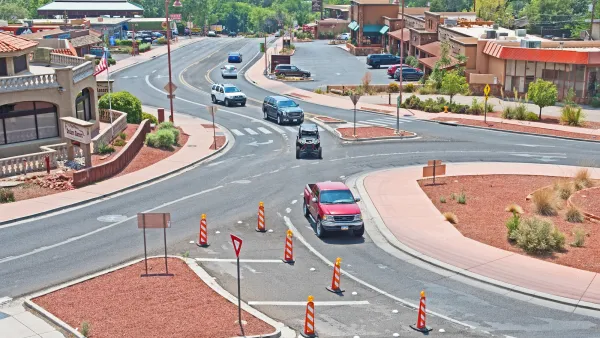
Study: Roundabouts are Primarily in Wealthier Neighborhoods
A North Carolina study sheds light on inequities in road safety interventions.
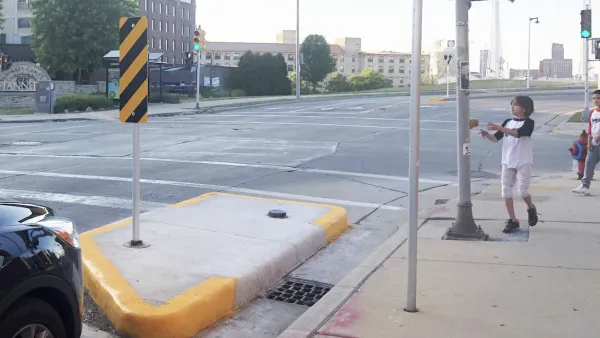
Milwaukee's Secret to Reducing Speeding by 27%
The city’s efforts to make roads safer are paying off.

The state-sanctioned urbicide of Austin
People don’t kill cities. Freeways do.

US to reduce Colorado River water deliveries to Mexico
A new Colorado Treaty amendment reduces Mexico’s Colorado River water allocation by 250,000 acre feet.

New Jersey’s second-largest city bans standalone data centers
Jersey City will continue to allow co-location facilities, such as those meant for research institutions that store their own data.

Amtrak not solely to blame for New Jersey commuter rail's unreliability, report finds
A new study from the Garden State Initiative found that NJ Transit’s budget grew 20% across a 4 year period, but reliability declined significantly over the same period.

EPA erases limits on planet-warming pollution from power plants
Under Monday’s plan, power plants would still have some limits on how much mercury, arsenic and other contaminants they can emit.

Phoenix announces new on-demand transit service, more frequent RAPID buses
Both new services will launch in October, and are part of Phoenix's Project Effective Access Solutions for Easing Congestion.

FREE Course: Walkable City 1: Why Walkability?
After describing his path towards focusing on walkability as the essence of good planning, Jeff Speck marches through his five principal reasons for making more walkable places.
Reinventing Malls: Planning Alchemy—Turning Gray Fields Into Gold
The course focuses on the opportunities and imperatives that shape reinvention of mall sites.

Eagle County Government
Harvard University Graduate School of Design
Nashville Planning Department
The Architects Foundation
University of Cincinnati Online
The Pocatello Development Authority
The Urban Renewal Agency of the City of Pocatello
Journal of the American Planning Association