Many of the states on the list are red-leaning states that fought against federal environmental reporting regulations.


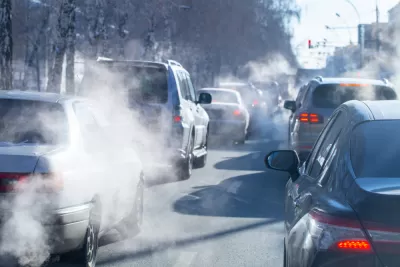
While average fuel efficiency increased by 30 percent between 2005 and 2022 and per-capita carbon emissions in the United States dropped by 25 percent, fourteen states actually saw increased per-capita carbon emissions in the same time frame.
As Streetsblog USA’s Kea Wilson explains, “According to EPA estimates compiled by Environment America, not only did the transportation emissions rise in the Filthy Fourteen, but emissions were essentially flat in another five states, including Arizona and New Mexico.”
The list includes a group of Republican-leaning states that sued the federal government over a rule that would have required them to report their emissions. “The red state lawsuit aside, though, it's worth noting that blue states like Colorado and Delaware were on the list of states that increased their transport emissions, too. Most states where transportation emissions decreased, meanwhile, still aren't on pace to meet our national goal of slashing 50 to 52 percent of 2005 levels by 2030.”
The report highlights the need for states to reduce transportation emissions rather than focusing on power sector emissions alone. “A recent Union of Concerned Scientists report found, though, that ‘visionary but feasible’ policies that reduce how much Americans need to drive would not only put states' transportation sector goals within reach, but would save U.S. residents a staggering $5.9 trillion in vehicle-related expenses, in addition to trillions in new energy infrastructure communities wouldn't have to build to power all those new EVs.”
FULL STORY: The Emissions Data GOP Pols Don’t Want Americans To See


LA’s Trees Absorb More Carbon Than Expected, But Can’t Do It Alone
A USC study finds that Los Angeles’ urban trees absorb more carbon than expected, but while they provide crucial environmental benefits, they cannot replace the urgent need for systemic emissions reductions.
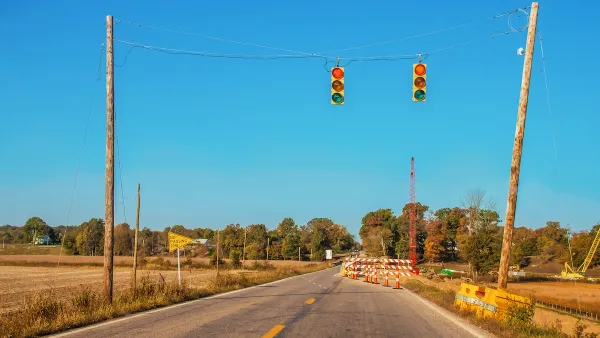
Report: Some Rural States Ahead of More Urbanized Ones in Reducing Transportation Emissions
This is a largely unintended consequence of states with lower populations and resources focusing on repairing existing roads and infrastructure rather than expanding and building new roads.
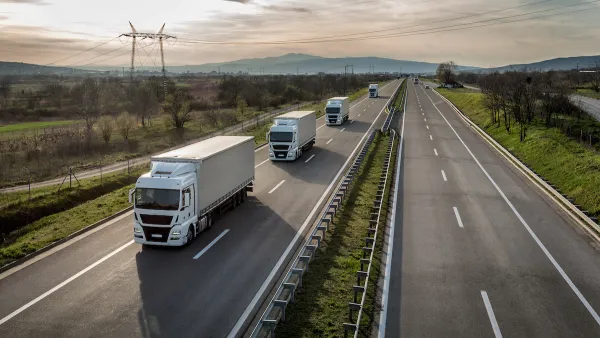
How Cities Can Lead the Way in Reducing Transportation Emissions
Decisions made at the local level can have a significant impact on emissions in the transportation sector.

Planetizen Federal Action Tracker
A weekly monitor of how Trump’s orders and actions are impacting planners and planning in America.

The state-sanctioned urbicide of Austin
People don’t kill cities. Freeways do.

US to reduce Colorado River water deliveries to Mexico
A new Colorado Treaty amendment reduces Mexico’s Colorado River water allocation by 250,000 acre feet.

5 New England states march closer to 800 megawatt wind energy project
Securing federal approval for the project may be complicated under the Trump administration, which has historically been hostile towards domestic wind power.

Baltimore to break ground on $50 million Transit Priority Project
The project will bring faster bus trips, safer streets and better bike connections to Baltimore.

Airbnb launches $250 million 'last-dollar financing' housing accelerator, makes first investment in Austin
The company will put $6.4 million towards affordable housing development in Texas’ capital.

FREE Course: Walkable City 1: Why Walkability?
After describing his path towards focusing on walkability as the essence of good planning, Jeff Speck marches through his five principal reasons for making more walkable places.
Reinventing Malls: Planning Alchemy—Turning Gray Fields Into Gold
The course focuses on the opportunities and imperatives that shape reinvention of mall sites.

Eagle County Government
Harvard University Graduate School of Design
Nashville Planning Department
The Architects Foundation
University of Cincinnati Online
The Pocatello Development Authority
The Urban Renewal Agency of the City of Pocatello
Journal of the American Planning Association