Cities and states can access federal transportation funding by including trails in long-range transportation plans.


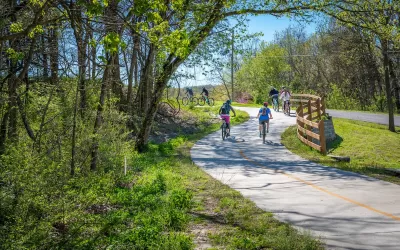
In a piece on Go Erie, Patrick Starr describes how Pennsylvania’s network of trails serves both recreational and functional purposes, offering a safe and comfortable way for people to walk or bike around cities that may not always have other safe pedestrian infrastructure.
“Trails are beloved as a safe and comfortable place to move, to see, smell, and experience the out-of-doors; to interact with family and friends; and for commuting or commerce,” Starr writes, pointing out that trails can be more than a “nice-to-have” community amenity. “Trails relieve this unmet demand for walkability and bikeability. If properly planned, trails can provide access to schools, workplaces, stores, main streets and parks.”
However, federal transportation funding only directs 1 percent of available funds to “transportation related” initiatives. Pennsylvania, where bike and walking trails are “wildly popular” with residents, has tapped these funds to build new trails, which are explicitly eligible for Carbon Reduction Program funding. “Clear patterns of increased use on some trails show that literally millions of bicycle commuters are using the trails for work trips — music to the ears of local officials dealing with rush-hour congestion.”
Starr suggests that states and cities can take advantage of transportation funding by including trails in their long-range transportation plans as critical — not purely recreational — components of an effective transportation system.
Read the full story: Opinon: Pa. trails not just 'nice to have,' they offer transportation to work, school, commerce

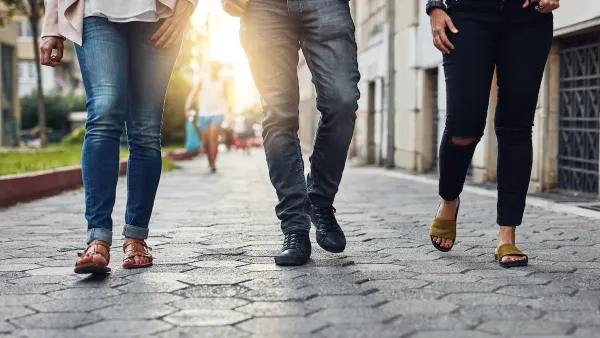
How “Walking Audits” Can Improve Neighborhood Mobility
A simple walk through your community can reveal infrastructure gaps and highlight where cities can make streets safer for pedestrians.
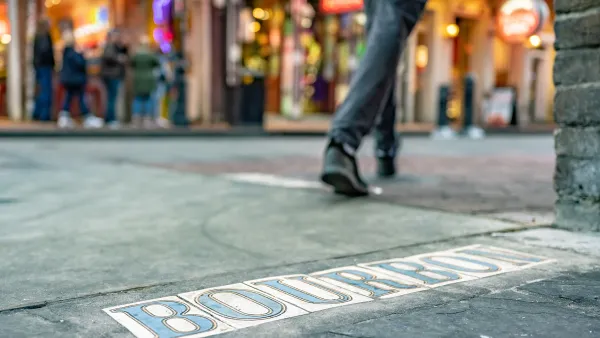
New Orleans Makes Push for Accessibility Improvements Ahead of Super Bowl
Major sporting events like the Olympics and the Super Bowl can serve as catalysts for major changes in transportation infrastructure and accessibility.
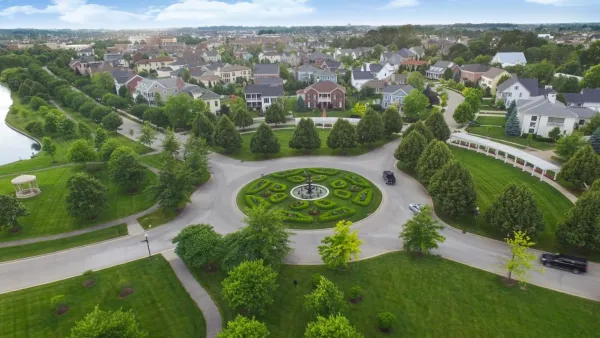
America's 'roundabout city' is in … Indiana?
Carmel, Indiana has built over 150 roundabouts as part of a broader mobility and development strategy.

Planetizen Federal Action Tracker
A weekly monitor of how Trump’s orders and actions are impacting planners and planning in America.

California plans to bury El Niño’s downpour
If the state plays its cards right, it may be able to store a billion acre-feet of El Niño’s water in aquifers.

Desperate measures: Advocates weigh draining Lake Powell to fill Colorado River
Draining the reservoir could reduce evaporation losses by a couple hundred thousand acre-feet.

California city breaks ground on transit connector
The project includes three mobility hubs and a pedestrian bridge.

After public outcry, Massachusetts city releases housing development tracker
Cambridge’s tracker currently shows 250 housing projects in various stages of development.

40 years after approval, Chicago breaks ground on new park
The park honors Jean Baptiste Point du Sable, the city’s first permanent non-native settler.

FREE Course: Walkable City 1: Why Walkability?
After describing his path towards focusing on walkability as the essence of good planning, Jeff Speck marches through his five principal reasons for making more walkable places.
Reinventing Malls: Planning Alchemy—Turning Gray Fields Into Gold
The course focuses on the opportunities and imperatives that shape reinvention of mall sites.

City of Rosemead
Rutgers University, Edward J. Bloustein School of Planning and Public Policy
One Hundred Miles
Hunter College, City University of New York (CUNY)
The Architects Foundation
University of Cincinnati Online
City of Cambridge
Montrose County
The Pocatello Development Authority