METRO’s support of an on-demand microtransit service comes as the agency is scaling back its bigger bus projects.



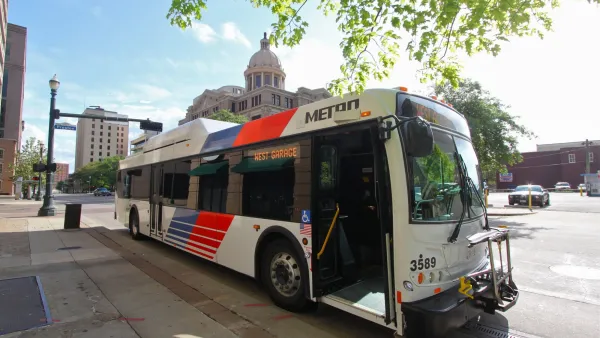
A Houston City Council member is questioning Harris County METRO’s decision to invest in an on-demand microtransit service as the agency cuts funding to a proposed bus rapid transit (BRT) line, report Dominic Anthony Walsh and Colleen DeGuzman for Houston Public Media.
According to Council member Letitia Plummer, “(Microtransit) is not helping the larger footprint of mobility that the City of Houston needs, so I'm going to look at that a little closer ... Can we use the money in a different way to serve more people?”
The article notes that METRO has walked back its plans for BRT in favor of microtransit, which the agency says helps people solve the first/last mile problem and complements traditional transit. However, critics of microtransit agree with Plummer that microtransit can sap resources from already strained transit agencies and can’t cost-effectively provide services at a large scale.
Read the full story: As METRO transit authority increases investment in microtransit, Houston city council member expresses skepticism


Houston Could Cancel Rapid Transit Project
Metro officials say prioritizing the University Corridor project would force them to delay or cancel other service expansion initiatives.

Houston Plans for More Bus Rapid Transit
The city's transit agency hopes a more comprehensive and connected rapid transit network will encourage more Houstonians to use buses.
Houston's First Bus Rapid Transit Line Sees Low Ridership
Hindered by the pandemic and other factors, ridership numbers have been disappointingly low on the city's first BRT, but Metro officials are undeterred in their plans for future BRT lines.

Planetizen Federal Action Tracker
A weekly monitor of how Trump’s orders and actions are impacting planners and planning in America.

California plans to bury El Niño’s downpour
If the state plays its cards right, it may be able to store a billion acre-feet of El Niño’s water in aquifers.

Chicago breaks ground on $3 billion megadevelopment
The new neighborhood, titled Foundry Park, will one day host 3,700 residences.

California High-Speed Rail Authority CEO resigns after $600,000 scandal
Under Ian Choudri, the authority used taxpayer dollars to fund first class flights and trips to nightclubs.

Want to study the Missouri River? Soon, you may need unanimous approval from 10 states
Legislation would require 10 governors’ permission to study or build projects moving water outside the basin.

Desperate measures: Advocates weigh draining Lake Powell to fill Colorado River
Draining the reservoir could reduce evaporation losses by a couple hundred thousand acre-feet.

FREE Course: Walkable City 1: Why Walkability?
After describing his path towards focusing on walkability as the essence of good planning, Jeff Speck marches through his five principal reasons for making more walkable places.
Reinventing Malls: Planning Alchemy—Turning Gray Fields Into Gold
The course focuses on the opportunities and imperatives that shape reinvention of mall sites.

City of Rosemead
Rutgers University, Edward J. Bloustein School of Planning and Public Policy
One Hundred Miles
Hunter College, City University of New York (CUNY)
The Architects Foundation
University of Cincinnati Online
City of Cambridge
Montrose County
The Pocatello Development Authority