A rise in permit applications after recent changes to parking requirements shows how parking mandates stifle new residential development and raise the cost of housing.


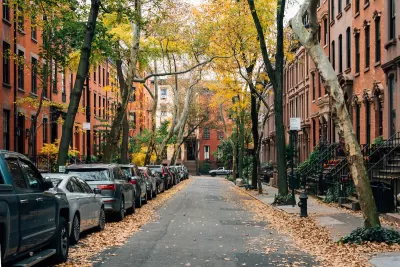
Minimum parking requirements have, for decades, hampered residential development in New York City, argues Sophia Lebowitz in Streetsblog NYC. “The average cost of building an underground parking space in the city is $67,500, according to the planning department. The city is filled with examples of developers under-building in order not to have to build costly parking.”
Even in neighborhoods zoned to encourage apartments, requirements to provide one parking spot per unit have prevented the development of more missing middle housing, which is unfeasible on many smaller lots. “A 2022 report from the Regional Plan Association found that removing parking mandates for affordable housing resulted in 36-percent more affordable units annually in the transit zone between 2016 and 2020.”
Now, the city’s new City of Yes zoning reform package could change that. “One of the main goals of City of Yes is to re-introduce the ‘missing middle’ housing to R1-R5 districts by allowing bigger buildings near transit, mixed use town-center zoning, accessory dwelling units, and getting rid of parking mandates.”
FULL STORY: City of Yes: Parking Mandates Have Shaped New York … For Worse

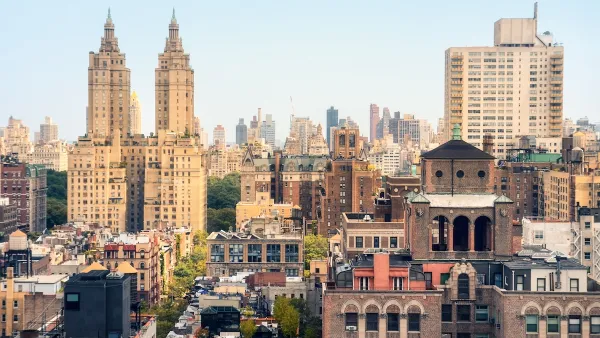
NYC Zoning Reform: Where Will It Have an Impact?
The zoning reform package dubbed ‘City of Yes’ will likely yield uneven results, with many of the lowest-density neighborhoods exempted from new regulations.
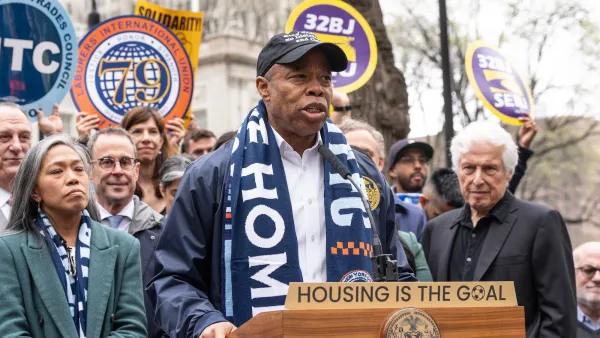
What Actually Got Built Under Eric Adams’ ‘Pro-Housing’ Administration
The outgoing mayor claims credit for hundreds of thousands of new homes. The truth is more complicated.

Lawsuit Aims to Stop NYC’s ‘City of Yes’ Zoning Reforms
A lawsuit brought by local lawmakers and community groups claims the plan failed to conduct a comprehensive environmental review.

Planetizen Federal Action Tracker
A weekly monitor of how Trump’s orders and actions are impacting planners and planning in America.

The state-sanctioned urbicide of Austin
People don’t kill cities. Freeways do.

US to reduce Colorado River water deliveries to Mexico
A new Colorado Treaty amendment reduces Mexico’s Colorado River water allocation by 250,000 acre feet.

5 New England states march closer to 800 megawatt wind energy project
Securing federal approval for the project may be complicated under the Trump administration, which has historically been hostile towards domestic wind power.

Baltimore to break ground on $50 million Transit Priority Project
The project will bring faster bus trips, safer streets and better bike connections to Baltimore.

Airbnb launches $250 million 'last-dollar financing' housing accelerator, makes first investment in Austin
The company will put $6.4 million towards affordable housing development in Texas’ capital.

FREE Course: Walkable City 1: Why Walkability?
After describing his path towards focusing on walkability as the essence of good planning, Jeff Speck marches through his five principal reasons for making more walkable places.
Reinventing Malls: Planning Alchemy—Turning Gray Fields Into Gold
The course focuses on the opportunities and imperatives that shape reinvention of mall sites.

Eagle County Government
Harvard University Graduate School of Design
Nashville Planning Department
The Architects Foundation
University of Cincinnati Online
The Pocatello Development Authority
The Urban Renewal Agency of the City of Pocatello
Journal of the American Planning Association