The decision sets the stage for what could be a fierce battle over homelessness policy.


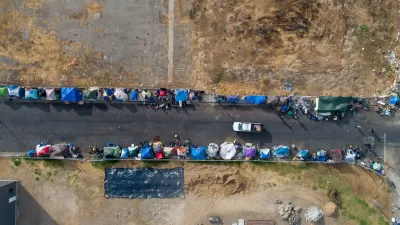
In a decision that will likely have major ripple effects on housing and homelessness policy across the nation, the United States Supreme Court ruled in favor of the city of Grants Pass, Oregon in a case that hinges on unhoused people’s right to sleep outside.
As Jennifer Ludden explains in an article for NPR, “The justices, in a 6-3 decision along ideological lines, overturned lower court rulings that deemed it cruel and unusual under the Eighth Amendment to punish people for sleeping outside if they had nowhere else to go.”
The justices, in a 6-3 decision along ideological lines, overturned lower court rulings that deemed it cruel and unusual under the Eighth Amendment to punish people for sleeping outside if they had nowhere else to go.
According to Ludden, “Today’s ruling only changes current law in the 9th Circuit Court of Appeals, which includes California and eight other Western states where the bulk of America’s unhoused population lives. But it will also determine whether similar policies elsewhere are permissible; and it will almost certainly influence homelessness policy in cities around the country.”
Advocates around the country are decrying the Grants Pass v. Johnson decision. In a statement, Rafa Sonnenfeld, Policy Director at YIMBY Action and YIMBY Law, said, “This decision will prevent people from sheltering themselves when they have no alternatives in their community; and it will create more barriers to their ability to access resources they need while on a path to being securely housed.” Laura Foote, Executive Director at YIMBY Action, added that the ruling will do nothing to address the root causes of rising homelessness rates, saying, “Only homes can end homelessness.”
FULL STORY: The Supreme Court says cities can punish people for sleeping in public places

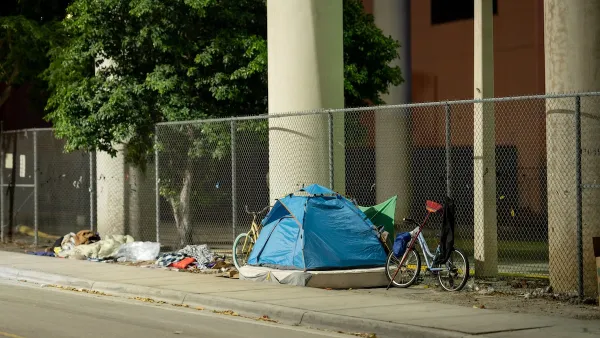
Grants Pass Homelessness Ruling Brings Issues Into Sharp Focus
Advocates for unhoused people are rallying to protect homeless populations as new legislation criminalizing homelessness rolls out around the country.
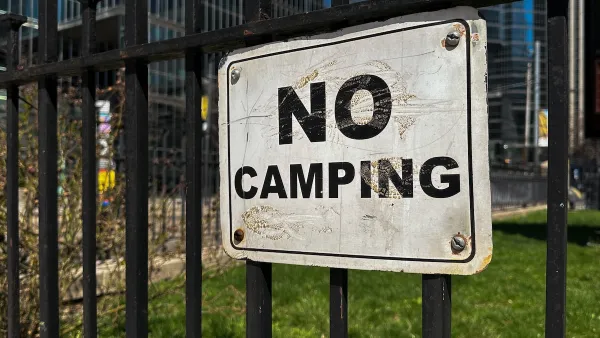
Nevada Cities Pass Punitive Anti-Homeless Laws
State legislators rejected a proposed bill that would have enshrined a “Homeless Person’s Bill of Rights” in state law.
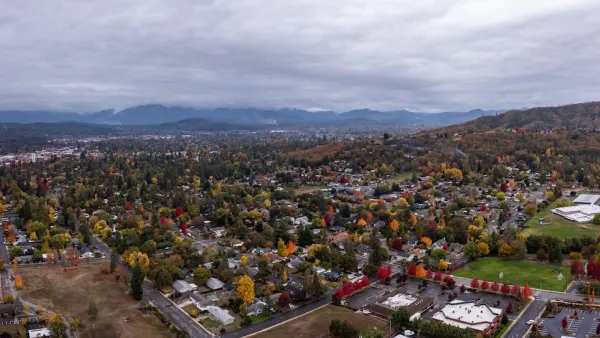
Grants Pass Bans Outdoor Sleeping, Creates Designated Camping Areas
The Oregon city was at the heart of a controversial Supreme Court case that paves the way for the criminalization of homelessness.

Planetizen Federal Action Tracker
A weekly monitor of how Trump’s orders and actions are impacting planners and planning in America.

The state-sanctioned urbicide of Austin
People don’t kill cities. Freeways do.

US to reduce Colorado River water deliveries to Mexico
A new Colorado Treaty amendment reduces Mexico’s Colorado River water allocation by 250,000 acre feet.

Mamdani overhauls NYC's Vision Zero plan with 100 new policy goals
The overhaul aims to reduce traffic deaths and make streets safer for pedestrians, cyclists and drivers through lower speed limits, new safety infrastructure and more.

Amtrak not solely to blame for New Jersey commuter rail's unreliability, report finds
A new study from the Garden State Initiative found that NJ Transit’s budget grew 20% across a 4 year period, but reliability declined significantly over the same period.

EPA erases limits on planet-warming pollution from power plants
Under Monday’s plan, power plants would still have some limits on how much mercury, arsenic and other contaminants they can emit.

FREE Course: Walkable City 1: Why Walkability?
After describing his path towards focusing on walkability as the essence of good planning, Jeff Speck marches through his five principal reasons for making more walkable places.
Reinventing Malls: Planning Alchemy—Turning Gray Fields Into Gold
The course focuses on the opportunities and imperatives that shape reinvention of mall sites.

Eagle County Government
Harvard University Graduate School of Design
Nashville Planning Department
The Architects Foundation
University of Cincinnati Online
The Pocatello Development Authority
The Urban Renewal Agency of the City of Pocatello
Journal of the American Planning Association