A lax set of rules around vehicle size, height, and other factors is partly responsible for the alarming rise in pedestrian deaths in the United States.


An investigation by the Government Accountability Office (GAO) will look into how vehicle safety standards are impacting the rise in the deaths of pedestrians and other people outside of vehicles.
As Kea Wilson explains in Streetsblog USA, “Between 1993 and 2023, the average vehicle on U.S. roads swelled by 1,000 pounds, while simultaneously getting four inches wider, 10 inches longer and eight inches taller — bloat that's driven by the increasing sales of pick-up trucks and SUVs.”
Road safety advocates say this contributes to higher death rates. “One study estimated that 18 percent of pedestrian deaths could be avoided just by capping the hood height of passenger trucks and SUVs at the level of a modest crossover,” Wilson adds.
For example, flatbed trailers like the one that killed diplomat Sarah Debbink Langenkamp in 2022, have major blind spots that are not addressed by current regulations — “and it also wasn’t outfitted with pedestrian and cyclist-specific “side-underride” guards that could have prevented her from being swept under its wheels.”
The investigation will assess the design features that impact safety including “height, geometry, driver visibility, and direct vision.”
Read the full story: Congressional Watchdog Launches Probe Into Why Massive Cars Kill So Many Pedestrians and Cyclists

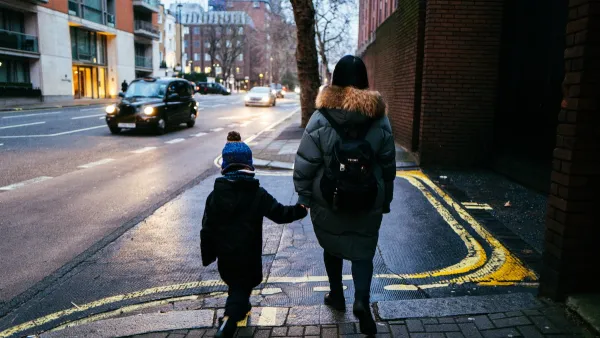
Study: Large SUVs Double Risk of Death for Children Under 10
New research from the United Kingdom reveals the higher risk of larger vehicles for pedestrians and cyclists.
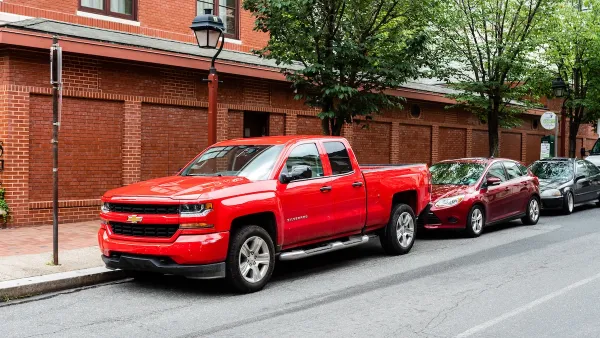
Heavier Vehicles Don’t Keep Passengers Safer
A new study shows that modern safety features are more important than size and weight once vehicles weigh over 4,000 pounds.
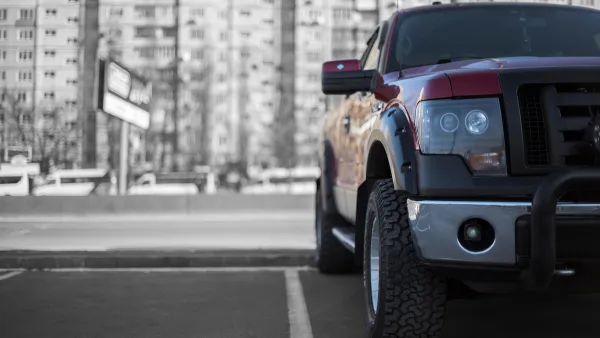
Study Zeroes in on Dangers of Taller Vehicles
Taller hoods are a major contributor to crashes that kill pedestrians.

Planetizen Federal Action Tracker
A weekly monitor of how Trump’s orders and actions are impacting planners and planning in America.

California plans to bury El Niño’s downpour
If the state plays its cards right, it may be able to store a billion acre-feet of El Niño’s water in aquifers.

Chicago breaks ground on $3 billion megadevelopment
The new neighborhood, titled Foundry Park, will one day host 3,700 residences.

California High-Speed Rail Authority CEO resigns after $600,000 scandal
Under Ian Choudri, the authority used taxpayer dollars to fund first class flights and trips to nightclubs.

Want to study the Missouri River? Soon, you may need unanimous approval from 10 states
Legislation would require 10 governors’ permission to study or build projects moving water outside the basin.

Desperate measures: Advocates weigh draining Lake Powell to fill Colorado River
Draining the reservoir could reduce evaporation losses by a couple hundred thousand acre-feet.

FREE Course: Walkable City 1: Why Walkability?
After describing his path towards focusing on walkability as the essence of good planning, Jeff Speck marches through his five principal reasons for making more walkable places.
Reinventing Malls: Planning Alchemy—Turning Gray Fields Into Gold
The course focuses on the opportunities and imperatives that shape reinvention of mall sites.

City of Rosemead
Rutgers University, Edward J. Bloustein School of Planning and Public Policy
One Hundred Miles
Hunter College, City University of New York (CUNY)
The Architects Foundation
University of Cincinnati Online
City of Cambridge
Montrose County
The Pocatello Development Authority