The Court has agreed to hear an appeal challenging federal water pollution regulations.


The City of San Francisco’s case against federal environmental regulators is going to the Supreme Court, reports Bob Egelko in the San Francisco Chronicle. “The Supreme Court agreed Tuesday to hear San Francisco’s appeal of a ruling that tightened offshore water pollution standards and said the city was failing to adequately protect swimmers and bathers from discharges of sewage into the Pacific.”
The case, San Francisco v. EPA, stems from a May 1 lawsuit by the EPA and the California Regional Quality Board charging San Francisco with failing to protect its offshore waters and “seeking orders requiring the city to change its practices and hundreds of millions of dollars in penalties.”
The city says it is only bound to “limit water pollution to amounts set in advance, such as specific discharges per million parts of water,” but federal regulators said the city needed to do more to meet its obligations. The 9th U.S. Circuit Court of Appeals agreed with federal agencies, citing their “broad authority” to regulate waste discharge and pollution. “The Supreme Court’s ruling will set legal standards for the suit and for pollution-control agencies nationwide.”
FULL STORY: Supreme Court agrees to hear water pollution fight between San Francisco, EPA

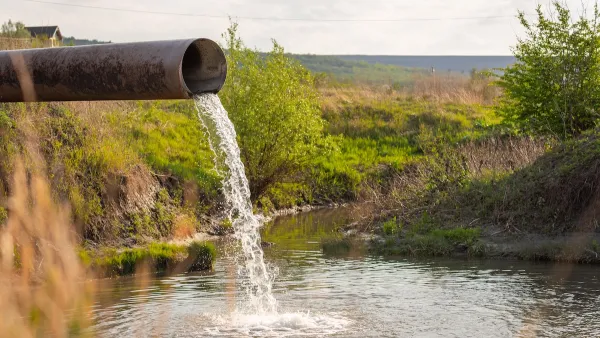
Supreme Court Could Curb EPA’s Water Quality Regulation Powers
A suit brought by the city of San Francisco argues that the agency’s language around water treatment and discharge is too vague and imposes retroactive penalties.
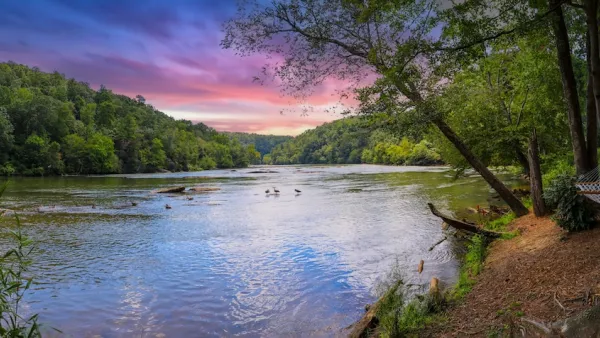
Comment: EPA Cuts will Send Atlanta Back to Eye-burning Ozone, Lung-damaging Smog, and Raw Sewage in the Chattahoochee River
A veteran political journalist takes stock of the hard-earned ground Georgia stands to lose with slashed environmental protection.

Winter Road Salt is Making Waterways Toxic to Wildlife
Salt used to clear streets is accumulating in local creeks and rivers and seeping into groundwater, contaminating fresh water supplies.

Planetizen Federal Action Tracker
A weekly monitor of how Trump’s orders and actions are impacting planners and planning in America.

The state-sanctioned urbicide of Austin
People don’t kill cities. Freeways do.

US to reduce Colorado River water deliveries to Mexico
A new Colorado Treaty amendment reduces Mexico’s Colorado River water allocation by 250,000 acre feet.

5 New England states march closer to 800 megawatt wind energy project
Securing federal approval for the project may be complicated under the Trump administration, which has historically been hostile towards domestic wind power.

Baltimore to break ground on $50 million Transit Priority Project
The project will bring faster bus trips, safer streets and better bike connections to Baltimore.

Airbnb launches $250 million 'last-dollar financing' housing accelerator, makes first investment in Austin
The company will put $6.4 million towards affordable housing development in Texas’ capital.

FREE Course: Walkable City 1: Why Walkability?
After describing his path towards focusing on walkability as the essence of good planning, Jeff Speck marches through his five principal reasons for making more walkable places.
Reinventing Malls: Planning Alchemy—Turning Gray Fields Into Gold
The course focuses on the opportunities and imperatives that shape reinvention of mall sites.


Eagle County Government
Harvard University Graduate School of Design
Nashville Planning Department
The Architects Foundation
University of Cincinnati Online
The Pocatello Development Authority
The Urban Renewal Agency of the City of Pocatello
Journal of the American Planning Association