In response to public feedback, the Michigan Department of Transportation is no longer considering options to widen U.S. 23 on Ann Arbor’s east side.


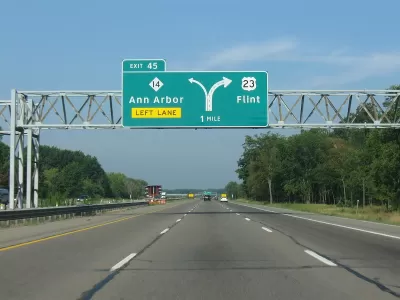
After Ann Arbor leaders and resident advocates pushed back on proposals to widen U.S. 23 as part of a major improvement project, the Michigan Department of Transportation has taken them off the table., according to an MLive article by reporter Lucas Smolcic. In place of a possible extra general purpose lane, a flex shoulder lane system, or a new high-occupancy vehicle lane, “officials have put forward a new alternative, dubbed ‘safely connecting communities,’ that focuses on rebuilding highway pavement, replacing bridges and making safety improvements with increased options for pedestrians and cyclists.”
MDOT is also working with the Ann Arbor Area Transportation Authority, TheRide, on public transit improvements, including the possibility of “bus on shoulder” operations during peak traffic conditions and a Washtenaw Avenue interchange. “The transportation agency is still aiming to have the project ready for 2027 construction,” Smolcic reports, and “ plans to continue public engagement around the new design alternative.”
Read the full story: Highway expansion options cut from big U.S. 23 project in Ann Arbor

California Bill Could Ban Freeway Expansions in Underserved Neighborhoods
A proposed bill in the California State Legislature would bar the state from funding road construction in communities at risk for displacement and health impacts.
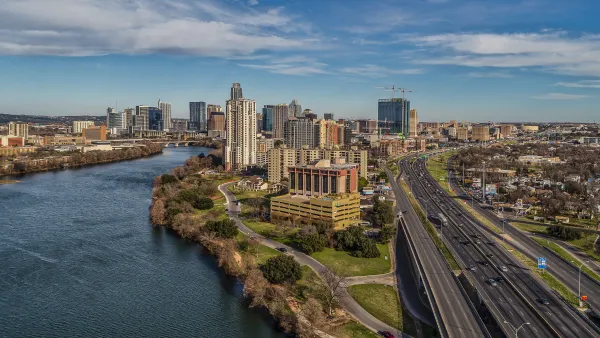
TxDOT Wages Quiet Battle to Acquire Properties for I-35 Expansion
TxDOT has filed “takings lawsuits” against holdout property owners along the eight-mile stretch of I-35 slated for widening in Austin, but property owners say the agency isn't offering just compensation.
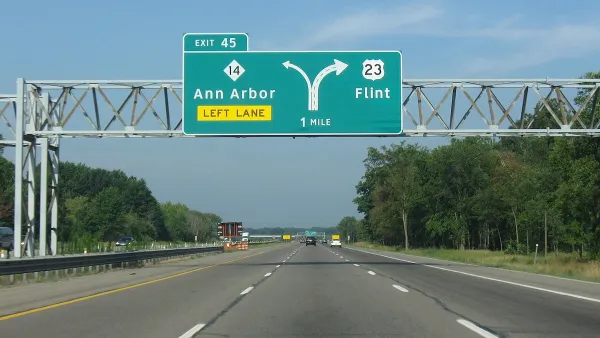
Ann Arbor Calls for Highway Bus Service
The city council voted unanimously in support of a plan to build more transit and park-and-ride options rather than expand a highway with more car lanes.

Planetizen Federal Action Tracker
A weekly monitor of how Trump’s orders and actions are impacting planners and planning in America.

California plans to bury El Niño’s downpour
If the state plays its cards right, it may be able to store a billion acre-feet of El Niño’s water in aquifers.

Desperate measures: Advocates weigh draining Lake Powell to fill Colorado River
Draining the reservoir could reduce evaporation losses by a couple hundred thousand acre-feet.

In Texas, data centers are swallowing promised parkland
Residents who moved to Taylor, Texas for a rural community now have to contend with three data centers in their backyard.

How a Chicago-sized wind farm beat the odds and powered on
The project spanned five presidential administrations and a standoff with a U.S. military base.

MTA gives itself 30 days to transform pit into basketball court
The site has been under construction since 2022; the city originally estimated it would finish the court in 2024.

FREE Course: Walkable City 1: Why Walkability?
After describing his path towards focusing on walkability as the essence of good planning, Jeff Speck marches through his five principal reasons for making more walkable places.
Reinventing Malls: Planning Alchemy—Turning Gray Fields Into Gold
The course focuses on the opportunities and imperatives that shape reinvention of mall sites.


City of Rosemead
Rutgers University, Edward J. Bloustein School of Planning and Public Policy
One Hundred Miles
Hunter College, City University of New York (CUNY)
The Architects Foundation
University of Cincinnati Online
City of Cambridge
Montrose County
The Pocatello Development Authority