Washington County has dramatically reduced per-capita water use, but the region’s explosive growth means increased demand for water.


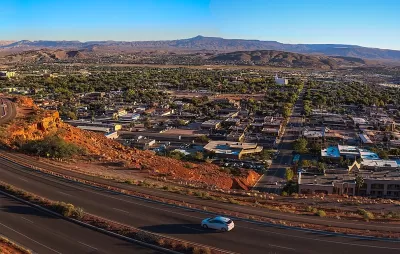
Washington County, Utah will pay residents to swap water-intensive lawns for drought-tolerant landscaping, reports Morgan Sjogren in Reasons to Be Cheerful.
According to Sjogren, 70 percent of residential culinary water in Utah is used on grass lawns. “By shifting landscaping away from grass and to plants more readily adapted to the climate, the Washington County Water Conservancy District estimates that residents can reduce landscape watering to 11 gallons per square foot annually, compared to 56 gallons for conventional turf.”
Residents who apply for the program have a year to complete projects to receive the incentive of $2 per square foot of converted turf, and $1 per square foot after 5,000 square feet. The program includes stipulations about irrigation, permeable barriers, and types of plants.
Since the program began in late 2022, 2,044 applications have been submitted and 918 projects are complete. Although Washington County has reduced its per capita water use by 30 percent since 2000, rapid population growth means that the county’s overall water use has grown by 15 percent in the same period.
FULL STORY: This Utah County Will Buy Your Lawn to Save Water

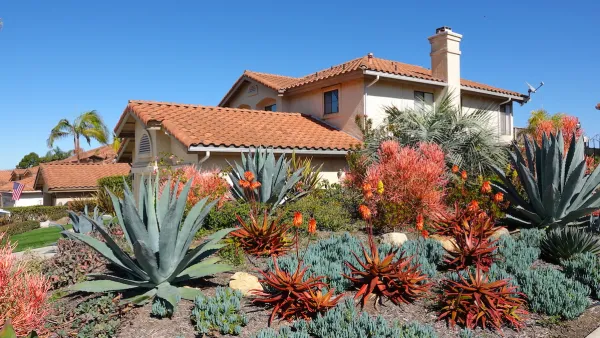
California Agency Awards $38 Million for Turf Replacement
The grant funds grass replacement rebates for commercial and residential properties and water-saving devices for fire stations.
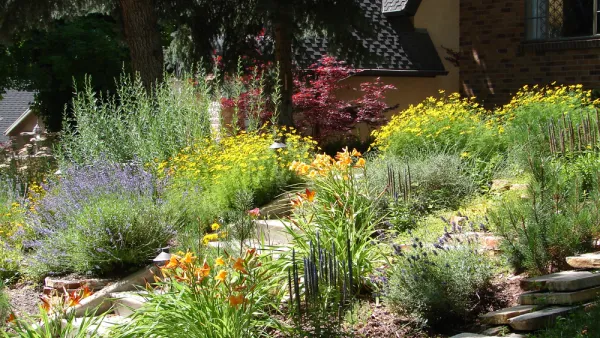
Opinion: The Time for ‘Yard Reform’ is Now
Replacing lawns with native plants and grasses saves water and improves biodiversity, but some cities make the practice illegal.
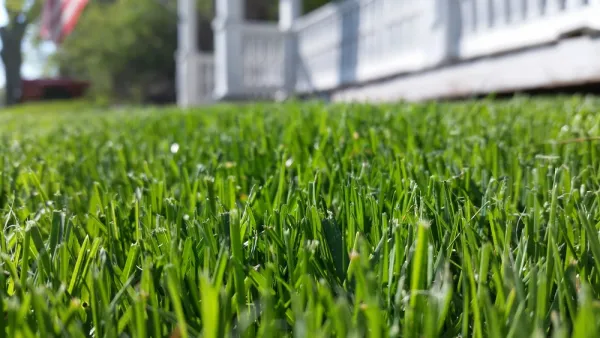
The Declining Appeal of Lawns
Long held as a symbol of middle-class success and the American Dream, homogenous, monocultural lawns are quickly falling out of favor as people opt for more ecologically friendly gardens that conserve water and increase biodiversity.

Planetizen Federal Action Tracker
A weekly monitor of how Trump’s orders and actions are impacting planners and planning in America.

The state-sanctioned urbicide of Austin
People don’t kill cities. Freeways do.

US to reduce Colorado River water deliveries to Mexico
A new Colorado Treaty amendment reduces Mexico’s Colorado River water allocation by 250,000 acre feet.

Guerilla urbanists are building DIY bus stop benches in Chicago
A before-and-after of one of the bus stops with a new bench. The new benches are not officially sanctioned or permitted, but the residents who placed them hope they will be the start of a network of DIY benches across the city.

Mamdani overhauls NYC's Vision Zero plan with 100 new policy goals
The overhaul aims to reduce traffic deaths and make streets safer for pedestrians, cyclists and drivers through lower speed limits, new safety infrastructure and more.

Amtrak not solely to blame for New Jersey commuter rail's unreliability, report finds
A new study from the Garden State Initiative found that NJ Transit’s budget grew 20% across a 4 year period, but reliability declined significantly over the same period.

FREE Course: Walkable City 1: Why Walkability?
After describing his path towards focusing on walkability as the essence of good planning, Jeff Speck marches through his five principal reasons for making more walkable places.
Reinventing Malls: Planning Alchemy—Turning Gray Fields Into Gold
The course focuses on the opportunities and imperatives that shape reinvention of mall sites.


Eagle County Government
Harvard University Graduate School of Design
Nashville Planning Department
The Architects Foundation
University of Cincinnati Online
The Pocatello Development Authority
The Urban Renewal Agency of the City of Pocatello
Journal of the American Planning Association