The “Connected Communities” zoning plan aims to increase middle housing near transit and in Cincinnati neighborhoods’ business districts.



The Cincinnati planning commission has approved the Connected Communities zoning plan after two years of public engagement, according to a local WCPO 9 News article by Andrew Ronan. The plan overhauls existing zoning codes which has prohibited construction of anything but single-family homes in most neighborhoods since the 1960s. In order to become law, it must now go for review and a vote by the city’s Equitable Growth and Housing Committee and then a final vote by the city council.
If approved into law, the Connected Communities proposal would allow developers to build duplexes, rowhomes, and small mixed-use buildings to neighborhood business districts and along major bus routes. Advocates for the plan say it is desperately needed to expand the city’s stagnant housing supply to meet the demands of its growing population and to support economic growth. Critics of the plan say it is a one-size-fits-all approach that leaves which neighborhoods to build in up to developers, which could lead to booms in neighborhoods whose infrastructure might not be adequate to support increased density.
FULL STORY: Cincinnati Planning Commission passes 'Connected Communities' zoning overhaul


San Diego wants to limit upzoning law to just 16% of transit-adjacent parcels
The city's planning director says some areas are unfit for immediate upzoning due to a lack of resources or hazards such as wildfire risk.
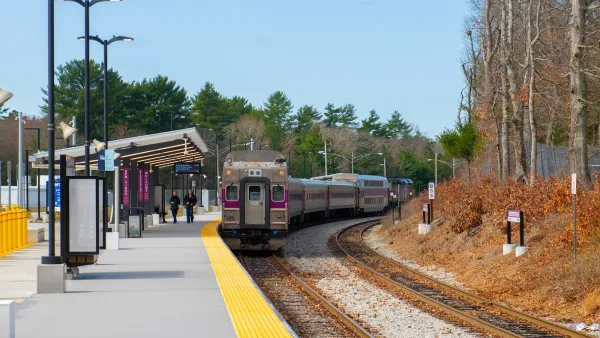
Over 90% of Massachusetts Towns Have Changed Zoning to Comply With MBTA Communities Law
Massachusetts municipalities have until December 31 to adjust their zoning codes or face the potential loss of state funding.
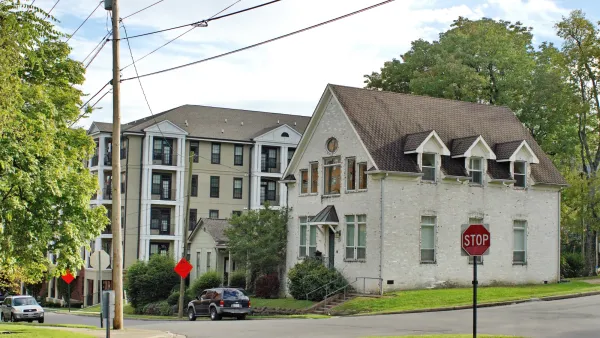
Nashville Allows More Detached ADUs, Courtyard Apartments
The city has been considering a series of zoning reform bills designed to diversify housing options.

Planetizen Federal Action Tracker
A weekly monitor of how Trump’s orders and actions are impacting planners and planning in America.

The state-sanctioned urbicide of Austin
People don’t kill cities. Freeways do.

US to reduce Colorado River water deliveries to Mexico
A new Colorado Treaty amendment reduces Mexico’s Colorado River water allocation by 250,000 acre feet.

5 New England states march closer to 800 megawatt wind energy project
Securing federal approval for the project may be complicated under the Trump administration, which has historically been hostile towards domestic wind power.

Baltimore to break ground on $50 million Transit Priority Project
The project will bring faster bus trips, safer streets and better bike connections to Baltimore.

Airbnb launches $250 million 'last-dollar financing' housing accelerator, makes first investment in Austin
The company will put $6.4 million towards affordable housing development in Texas’ capital.

FREE Course: Walkable City 1: Why Walkability?
After describing his path towards focusing on walkability as the essence of good planning, Jeff Speck marches through his five principal reasons for making more walkable places.
Reinventing Malls: Planning Alchemy—Turning Gray Fields Into Gold
The course focuses on the opportunities and imperatives that shape reinvention of mall sites.

Eagle County Government
Harvard University Graduate School of Design
Nashville Planning Department
The Architects Foundation
University of Cincinnati Online
The Pocatello Development Authority
The Urban Renewal Agency of the City of Pocatello
Journal of the American Planning Association