In addition to displacement and public health impacts, highway expansions can also make communities less resilient to flooding and other climate-related disasters.


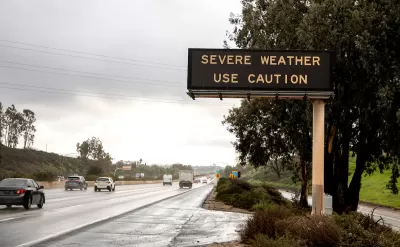
In a blog post for Transportation for America, Mehr Mukhtar describes how the U.S. Interstate Highway System has negatively impacted communities. “These legacies are not abstract; they have tangible effects in terms of pollution, population displacement, and environmental degradation,” Mukhtar writes.
To illustrate the point, Mukhtar uses the case of Shiloh, Alabama, a predominantly Black rural community where the expansion of a local highway led to increased flooding impacts. “Flooding has affected the structural integrity of homes and is raising alarming health concerns with residents reporting the appearance of mold. Physical damages and rising maintenance issues have forced the Shiloh community to contend with the difficult reality of investing in expensive repair projects or leaving their homes.”
Shiloh, like other communities, has been fighting for recognition and resources using tools like the National Environmental Policy Act (NEPA). In the case of Shiloh, “Their efforts culminated in an ongoing civil rights investigation from the Federal Highway Administration (FHWA) and a visit from the U.S. Secretary of Transportation Pete Buttigieg in early April of this year. But so far, no real relief has been found.”
Now, funding from programs like Reconnecting Communities must be used strategically to begin redressing historical harms. According to Mukhtar, “Funding is being moved towards emissions-increasing roadway widenings at a critical moment in the climate crisis when our dollars should be spent towards robust public and alternative transportation options. Our transportation system is steeped in environmental racism and continues to function as a driver of inequality.”
Read the full story: There’s a climate cost to America’s freeways, and it’s not paid equally

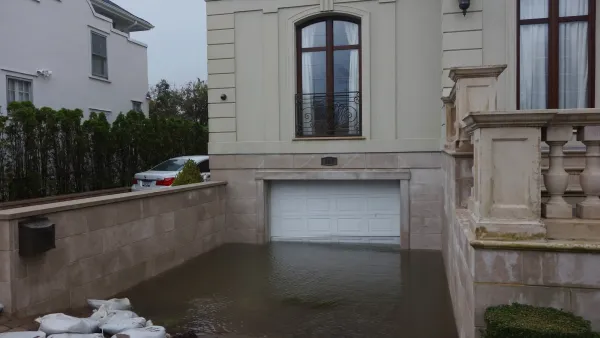
Over 500 NYC ‘Blue Zones’ at Risk of More Destructive Floods
High-risk flood zones cover roughly 20% of the city’s land.
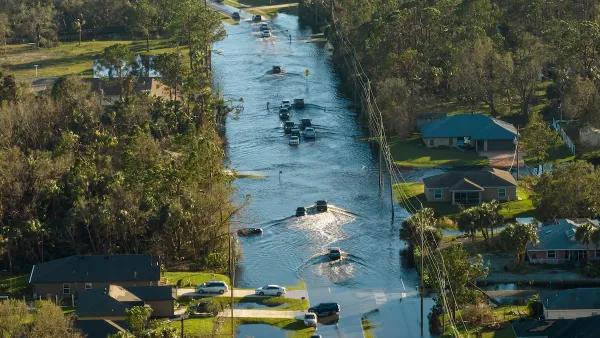
New Florida Law Bars Communities From Planning for Climate, Disaster Resilience
A law aimed at speeding up redevelopment after hurricanes bars “burdensome” land use regulations that could help communities rebuild with more resilience.
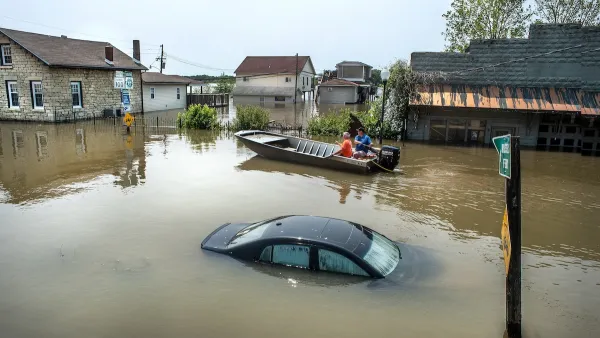
Mayors Along the Mississippi See Climate Change Coming — and are Shoring up Together
The Mississippi River Cities and Towns Initiative is bringing together local officials to address climate resilience across the region.

Planetizen Federal Action Tracker
A weekly monitor of how Trump’s orders and actions are impacting planners and planning in America.

Amtrak, CN end decades-long dispute with eight-year agreement
The new operating agreement establishes an updated framework for the companies to work together, including processes to resolve disputes.

Northwest rail fans eager for Sept. 30 debut of Amtrak’s Airo fleet
Get ready for that new train smell and more seats. But they won’t go faster or run more frequently on the Cascades route in Washington and Oregon.

Brightline Florida files for bankruptcy
The transit company is over $5 billion in debt.

St. Louis Metro to test if single-car trains can reduce operating costs, maintain rider satisfaction
The pilot program will run from October to spring 2027, and begin with one single-car train operating on Metrolink’s Red and Blue lines.

Pennsylvania is building data centers in abandoned mines
Housing data centers in mines provides an alternative to destroying local forests and may spare residents from data centers’ noise and air pollution.

FREE Course: Walkable City 1: Why Walkability?
After describing his path towards focusing on walkability as the essence of good planning, Jeff Speck marches through his five principal reasons for making more walkable places.
Reinventing Malls: Planning Alchemy—Turning Gray Fields Into Gold
The course focuses on the opportunities and imperatives that shape reinvention of mall sites.

City of Thousand Oaks
City of Wisconsin Rapids
Harvard University Graduate School of Design
The Architects Foundation
University of Cincinnati Online
The Pocatello Development Authority
The Urban Renewal Agency of the City of Pocatello