A law aimed at speeding up redevelopment after hurricanes bars “burdensome” land use regulations that could help communities rebuild with more resilience.


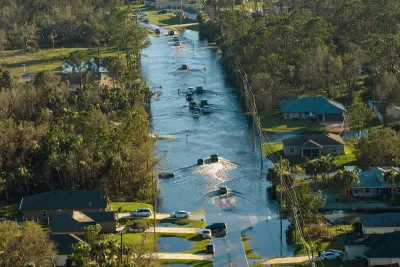
A Florida state law that took effect in July bars local jurisdictions from enacting “restrictive or burdensome” land development policies, including those aimed at boosting climate resilience and preventing future flooding and climate disasters.
As Amy Green explains in Inside Climate News, SB 180 was designed to ease building regulations to speed up recovery after hurricanes, but also prevents cities from creating new policies around development in flood-prone areas. According to Jamie Cole, the lead attorney in a lawsuit brought by local governments against the state, “it basically freezes all local planning and zoning regulations in place as they were on Aug. 1, 2024, until Oct. 1, 2027.”
Kim Dinkins, policy and planning director at 1000 Friends of Florida, says “the law threatens to upend local efforts at balancing climate impacts with rapid growth and development” and will lead to continued rebuilding in areas that are not viable.
“The law applies to counties listed in a federal disaster declaration that come at least partially within 100 miles of a storm’s path, and also to every municipality within those counties even when the municipalities did not sustain hurricane damage.” It bars municipalities from enacting development moratoriums as well as adding amendments to their comprehensive plans.
An analysis prepared for 1000 Friends of Florida calls the measure, which was supported by some of the state’s largest builders, “one of the most dangerous and ill-conceived pieces of planning-related legislation adopted in modern times in Florida.”
FULL STORY: In Hurricane-Prone Florida, a New State Law Blocks Local Policies Aimed at Reducing the Impact of Disasters

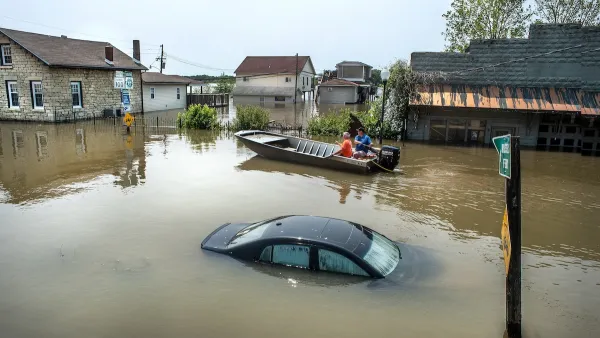
Mayors Along the Mississippi See Climate Change Coming — and are Shoring up Together
The Mississippi River Cities and Towns Initiative is bringing together local officials to address climate resilience across the region.
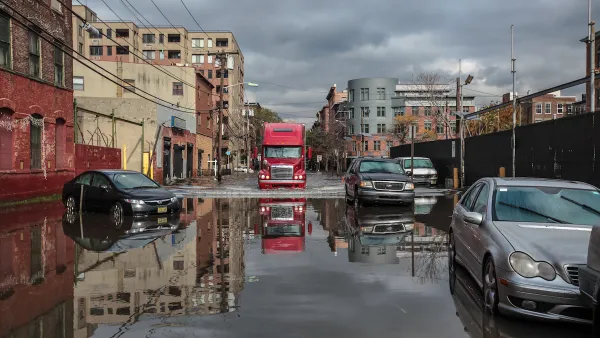
FEMA Resilience Program Cuts Grant Funding
The Building Resilient Infrastructure and Communities program funded projects from flood prevention to power station upgrades.
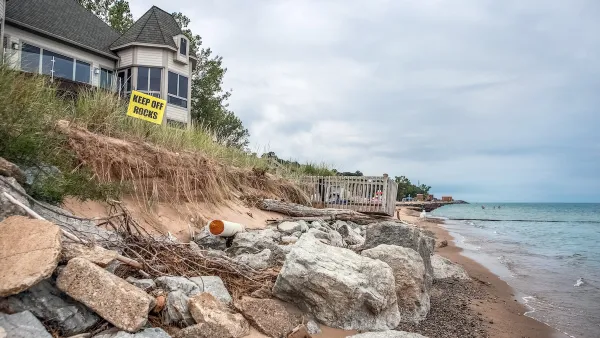
How US Cities Can Prepare for Climate Disasters
Resilience, encompassing infrastructure, governance, economic strength, and social cohesion, is critical for cities to mitigate rising climate risks like flooding, wildfires, and heat, ensuring long-term recovery and adaptability.

Planetizen Federal Action Tracker
A weekly monitor of how Trump’s orders and actions are impacting planners and planning in America.

The state-sanctioned urbicide of Austin
People don’t kill cities. Freeways do.

US to reduce Colorado River water deliveries to Mexico
A new Colorado Treaty amendment reduces Mexico’s Colorado River water allocation by 250,000 acre feet.

5 New England states march closer to 800 megawatt wind energy project
Securing federal approval for the project may be complicated under the Trump administration, which has historically been hostile towards domestic wind power.

Baltimore to break ground on $50 million Transit Priority Project
The project will bring faster bus trips, safer streets and better bike connections to Baltimore.

Airbnb launches $250 million 'last-dollar financing' housing accelerator, makes first investment in Austin
The company will put $6.4 million towards affordable housing development in Texas’ capital.

FREE Course: Walkable City 1: Why Walkability?
After describing his path towards focusing on walkability as the essence of good planning, Jeff Speck marches through his five principal reasons for making more walkable places.
Reinventing Malls: Planning Alchemy—Turning Gray Fields Into Gold
The course focuses on the opportunities and imperatives that shape reinvention of mall sites.

Eagle County Government
Harvard University Graduate School of Design
Nashville Planning Department
The Architects Foundation
University of Cincinnati Online
The Pocatello Development Authority
The Urban Renewal Agency of the City of Pocatello
Journal of the American Planning Association