Gov. DeSantis signed a transportation law that complicates the process for lane reductions, despite the rising number of pedestrian deaths in the state.


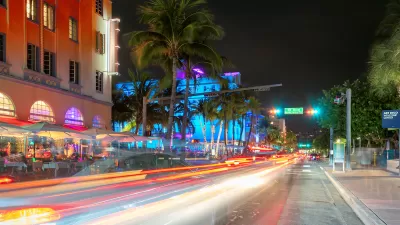
In a move that politicizes road safety, Florida Governor Ron DeSantis signed a bill that both accelerates funding for major transportation projects and complicates the public process for road diet and lane adjustment projects. “This, DeSantis said, was needed to prevent ‘activists’ from promoting congestion on roads to convince people to give up gas-powered cars.”
Florida has the distinction of being the deadliest state for cyclists and ranks third in pedestrian deaths.
As Gray Rohrer explains in Florida Politics, “The bill prevents public transportation agencies from using state funds for marketing or advertising on public vehicles. DeSantis suggested that such funds could be used to push diversity, equity and inclusion or other progressive ideology, but didn’t cite an example of that happening in Florida.”
Another provision bars state funding for airports, seaports, or other transportation agencies that enact Covid-19 mask mandates.
FULL STORY: Gov. DeSantis signs measure to hurry transportation projects, clamp down on ‘activism’ on roads


Analysis: Bigger cars are responsible for 10% of increase in pedestrian deaths
The New York Times offers a visual explanation of how larger vehicles make US roads more dangerous.
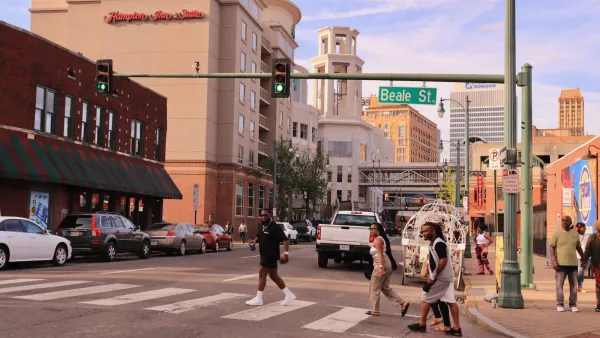
Memphis is the nation's most dangerous city for pedestrians
Memphis had the highest rate of traffic deaths for people walking in the US for two years in a row.
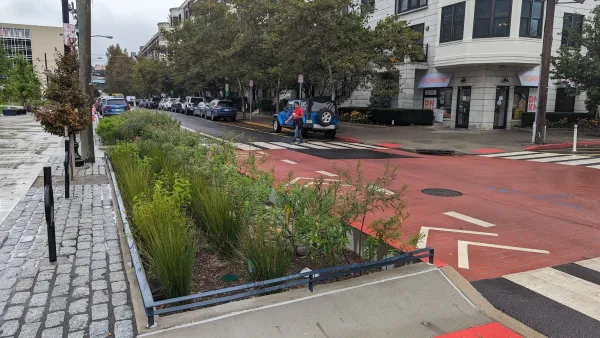
Hoboken's $20 Vision Zero fix
The New Jersey city eliminated traffic deaths for the last nine years in a row.

Planetizen Federal Action Tracker
A weekly monitor of how Trump’s orders and actions are impacting planners and planning in America.

The state-sanctioned urbicide of Austin
People don’t kill cities. Freeways do.

US to reduce Colorado River water deliveries to Mexico
A new Colorado Treaty amendment reduces Mexico’s Colorado River water allocation by 250,000 acre feet.

5 New England states march closer to 800 megawatt wind energy project
Securing federal approval for the project may be complicated under the Trump administration, which has historically been hostile towards domestic wind power.

Baltimore to break ground on $50 million Transit Priority Project
The project will bring faster bus trips, safer streets and better bike connections to Baltimore.

Airbnb launches $250 million 'last-dollar financing' housing accelerator, makes first investment in Austin
The company will put $6.4 million towards affordable housing development in Texas’ capital.

FREE Course: Walkable City 1: Why Walkability?
After describing his path towards focusing on walkability as the essence of good planning, Jeff Speck marches through his five principal reasons for making more walkable places.
Reinventing Malls: Planning Alchemy—Turning Gray Fields Into Gold
The course focuses on the opportunities and imperatives that shape reinvention of mall sites.

Eagle County Government
Harvard University Graduate School of Design
Nashville Planning Department
The Architects Foundation
University of Cincinnati Online
The Pocatello Development Authority
The Urban Renewal Agency of the City of Pocatello
Journal of the American Planning Association