Vacant lots pose challenges for the city’s goals of promoting transit-oriented development.


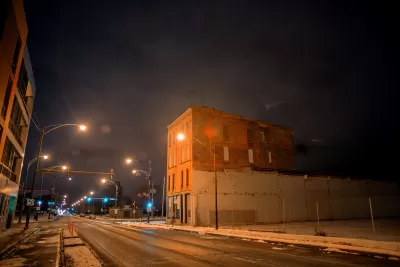
A report from Elevated Chicago, the Institute for Housing Studies at DePaul University, and community groups points out that over one-third of Chicago’s vacant lots are located near “L” train stations. “The data showed more than 14,700 vacant lots in the city were close to a CTA train station as of July 2023. Nearly 74% of the lots were within predominantly Black communities.”
As Sarah Freishtat explains in the Chicago Tribune, the lots are primarily concentrated in historically Black neighborhoods, “a glaring symbol of historic disinvestment.”
The high prevalence of vacant lots is a problem for the city’s transportation agency, the Chicago Transit Authority (CTA), the report notes. “Sometimes breeding environmental hazards and safety concerns, unmaintained vacant lots can limit how willing residents are to walk to transportation and other neighborhood amenities, shaping when and how residents take public transit and the ability of transit, often considered a neighborhood asset, to connect communities to the rest of the city.”
Read the full story: Many of Chicago’s vacant lots are near transit, posing challenges for neighborhoods and CTA, study says

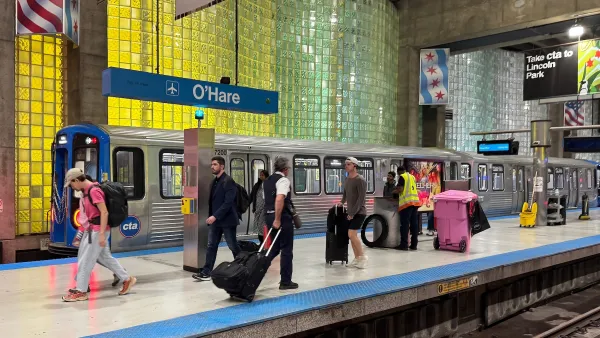
Costumed Chicagoans try to 'Catch That Train' in new viral trend
Residents are donning costumes and running to board CTA trains in a whimsical nod to the age-old problem of missing your train.
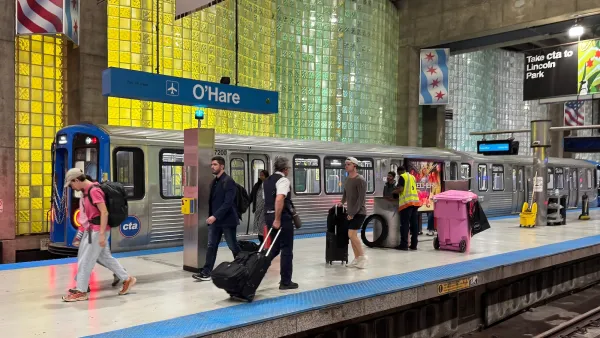
CTA underestimated Chicago transit ridership by 19 million trips
The agency is moving from using farebox data and manual video reviews to automatic counters that more accurately measure the total number of riders, whether or not they pay full fares.
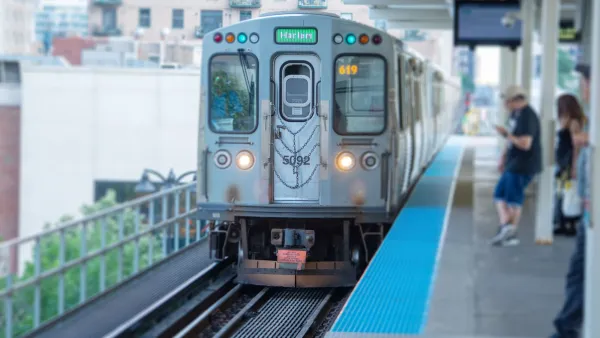
Chicago Transit Authority to Boost Policing Hours by 75%
In December, federal officials tasked the CTA to develop an enhanced security plan or risk losing federal funding.

Planetizen Federal Action Tracker
A weekly monitor of how Trump’s orders and actions are impacting planners and planning in America.

California plans to bury El Niño’s downpour
If the state plays its cards right, it may be able to store a billion acre-feet of El Niño’s water in aquifers.

Desperate measures: Advocates weigh draining Lake Powell to fill Colorado River
Draining the reservoir could reduce evaporation losses by a couple hundred thousand acre-feet.

California’s ‘unrecognizable’ water plan may go down the drain
After four years of regulatory processes, water agencies say the plan to overhaul how cities and farms take water from the Sacramento-San Joaquin Delta has changed dramatically.

Chicago Avenue bridge construction delays enrages city leaders
The bridge has been closed since 2025. The city originally aimed to re-open it in December, and now expects to finish construction in 2027.

NYC bus network redesign speeds up Queens buses
Rush routes have seen a 4.6% speed increase after the redesign.

FREE Course: Walkable City 1: Why Walkability?
After describing his path towards focusing on walkability as the essence of good planning, Jeff Speck marches through his five principal reasons for making more walkable places.
Reinventing Malls: Planning Alchemy—Turning Gray Fields Into Gold
The course focuses on the opportunities and imperatives that shape reinvention of mall sites.

City of Rosemead
Rutgers University, Edward J. Bloustein School of Planning and Public Policy
One Hundred Miles
Hunter College, City University of New York (CUNY)
The Architects Foundation
University of Cincinnati Online
City of Cambridge
Montrose County
The Pocatello Development Authority