Officials are eyeing a plan that could replace a proposed streetcar line with a bus rapid transit line.


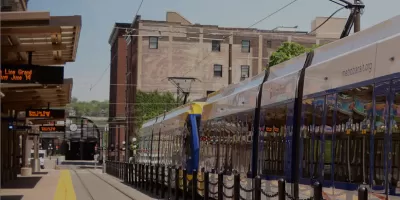
A new proposal for an ‘arterial bus rapid transit’ (aBRT) line that would connect downtown St. Paul with the Minneapolis-St. Paul International Airport could cost a billion dollars less than a proposed streetcar alternative, reports Janet Moore in the Star Tribune. “The so-called Riverview Corridor would join a growing stable of aBRT routes throughout the metro, a popular service that features heated and well-lit stations, payment-before-boarding, and 10-minute service during peak hours.”
This form of rapid transit would run in traffic but receive signal priority and include pre-paid fares, heated and well-lit stations, and 10-minute headways at rush hours. aBRT would use existing infrastructure, contributing to the project’s much lower cost. The county also estimates the streetcar would be roughly five minutes slower than aBRT. “The Federal Transit Administration (FTA) is expected to pay about half of the cost of the streetcar project, with Ramsey and Hennepin counties paying the rest. The bus would be funded mostly with state and local money.”
Read the full story: Vastly cheaper alternative to a St. Paul streetcar emerges. It's a bus.
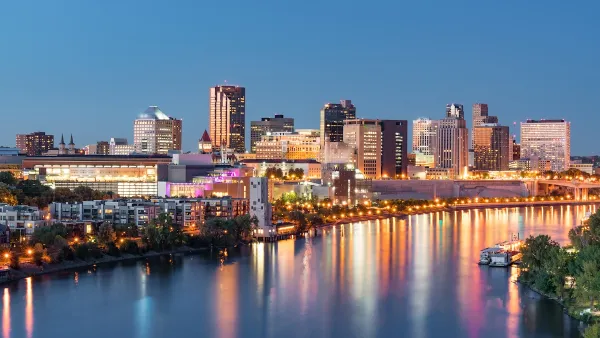
Officials Kill St. Paul Streetcar, BRT Proposals
The proposed transit lines would have linked the St. Paul airport, downtown, and the Mall of America.

Experts Reject Florida Study That Killed St. Pete Bus Lane as ‘Incomplete,’ ‘Unfair’
A transit activist has filed a suit against FDOT, which used a a one-page study to justify removing a dedicated bus lane.
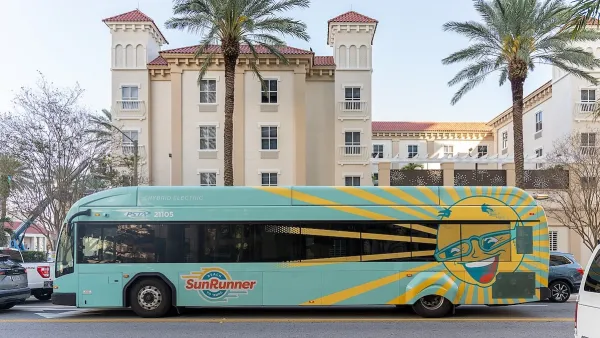
Florida DOT Orders Removal of St. Pete Bus Lane
The state says a popular BRT line has increased crashes and traffic on a state-owned portion of its corridor, prompting it to call for its reversal.

Planetizen Federal Action Tracker
A weekly monitor of how Trump’s orders and actions are impacting planners and planning in America.

California plans to bury El Niño’s downpour
If the state plays its cards right, it may be able to store a billion acre-feet of El Niño’s water in aquifers.

Desperate measures: Advocates weigh draining Lake Powell to fill Colorado River
Draining the reservoir could reduce evaporation losses by a couple hundred thousand acre-feet.

US buildings threatened, destroyed by fires set to triple by 2060
Researchers found a high fire risk for socioeconomically vulnerable neighborhoods in the American West.

LA residents may be allowed to paint their own crosswalks
Councilwoman Katy Yaroslavsky put out a motion instructing the Los Angeles Department of Public Transportation to study the feasibility of allowing volunteers to paint crosswalks.

Dallas moves to overhaul its zoning code
The city's zoning reform will allow more multi-family and mixed-use developments.

FREE Course: Walkable City 1: Why Walkability?
After describing his path towards focusing on walkability as the essence of good planning, Jeff Speck marches through his five principal reasons for making more walkable places.
Reinventing Malls: Planning Alchemy—Turning Gray Fields Into Gold
The course focuses on the opportunities and imperatives that shape reinvention of mall sites.


City of Rosemead
Rutgers University, Edward J. Bloustein School of Planning and Public Policy
One Hundred Miles
Hunter College, City University of New York (CUNY)
The Architects Foundation
University of Cincinnati Online
City of Cambridge
Montrose County
The Pocatello Development Authority