The proposed rule change would require states to include vulnerable road users in their road safety plans.


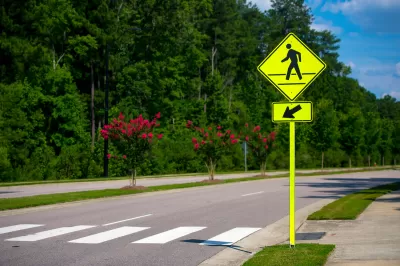
The Federal Highway Administration (FHWA) announced proposed changes to the Highway Safety Improvement Program that would require states to include a risk analysis for pedestrians, cyclists, and other vulnerable road users in their highway safety plans. “The FHWA also seeks through these new rules to streamline state reporting efforts while also requiring states to report and evaluate individual projects, programs and countermeasures.”
As Dan Zukowski explains in Smart Cities Dive, “Under the new regulations, the FHWA proposes that states include representatives from underserved communities ‘to ensure that the needs of all road users are represented in the planning, implementation and evaluation of the [Highway Safety Improvement Program].’” The agency also proposed increasing collaboration with public health officials and agencies to highlight the link between transportation and public health.
FULL STORY: States must assess road safety for pedestrians, cyclists under FHWA proposed rule change

NACTO Suggests Changes to MUTCD
The association's proposed changes to the manual include a focus on eliminating road deaths, improving pedestrian safety, and creating a more inclusive public process.
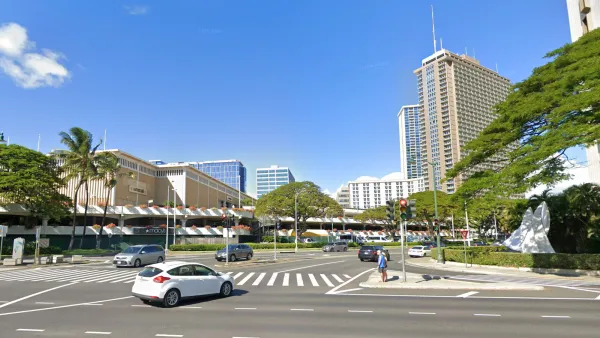
Hawaii DOT takes action after reporters call attention to dangerous crosswalk
The state made changes to a treacherous intersection after reporting revealed that traffic light timing was posting a threat to pedestrians.
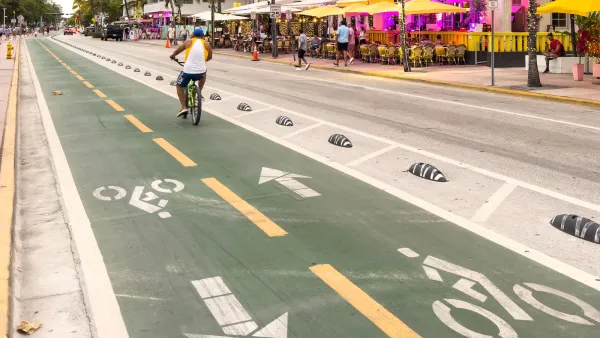
FHWA removes bike lanes and speed cameras from list of traffic safety measures
The agency did not announce its intention to eliminate five proven safety measures from its list of suggested interventions.

The state-sanctioned urbicide of Austin
People don’t kill cities. Freeways do.

US to reduce Colorado River water deliveries to Mexico
A new Colorado Treaty amendment reduces Mexico’s Colorado River water allocation by 250,000 acre feet.

New Jersey’s second-largest city bans standalone data centers
Jersey City will continue to allow co-location facilities, such as those meant for research institutions that store their own data.

Amtrak not solely to blame for New Jersey commuter rail's unreliability, report finds
A new study from the Garden State Initiative found that NJ Transit’s budget grew 20% across a 4 year period, but reliability declined significantly over the same period.

EPA erases limits on planet-warming pollution from power plants
Under Monday’s plan, power plants would still have some limits on how much mercury, arsenic and other contaminants they can emit.

Phoenix announces new on-demand transit service, more frequent RAPID buses
Both new services will launch in October, and are part of Phoenix's Project Effective Access Solutions for Easing Congestion.

FREE Course: Walkable City 1: Why Walkability?
After describing his path towards focusing on walkability as the essence of good planning, Jeff Speck marches through his five principal reasons for making more walkable places.
Reinventing Malls: Planning Alchemy—Turning Gray Fields Into Gold
The course focuses on the opportunities and imperatives that shape reinvention of mall sites.

Eagle County Government
Harvard University Graduate School of Design
Nashville Planning Department
The Architects Foundation
University of Cincinnati Online
The Pocatello Development Authority
The Urban Renewal Agency of the City of Pocatello
Journal of the American Planning Association