A roadway connecting Eureka and Crescent City is a lifeline for local residents, but its future is uncertain as rock slides force repeated closures.


A $2.1 billion tunnel project aims to save Highway 101 in Northern California, where a section of the road that connects Eureka and Crescent City is at risk of falling into the ocean.
As Rachel Swan explains in the San Francisco Chronicle, the three miles of ‘Last Chance Grade’ that wind through a redwood forest have been plagued by ground tremors, winter storms, and rockslides that have forced repeated closures.
“After years of patch jobs and careful monitoring, Caltrans landed on a solution: A 6,000-foot tunnel that would bypass the landslide area, at a cost of $2.1 billion. If built, it would be the longest tunnel in state history, a bedrock lifeline for a relatively isolated place.” According to Congressman Jared Huffman, the road carries about 6,000 vehicles each day, including freight trucks. Closing the grade creates hours-long detours.
Caltrans has set aside $275 million for design and engineering and plans to begin construction in 2030, but the project is far from fully funded. Some local officials are hoping to win federal funding, while others have proposed a toll program to help pay for the project.
FULL STORY: This California city relies on a highway that’s sliding into the ocean. Fixing it will cost $2 billion

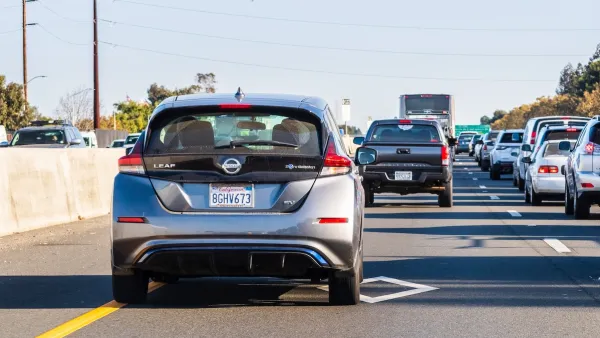
When Carpool Lanes Cause Mayhem
A newly widened Bay Area freeway serves as a reminder of the futility of HOV lanes. There are better ways to manage and mitigate traffic.
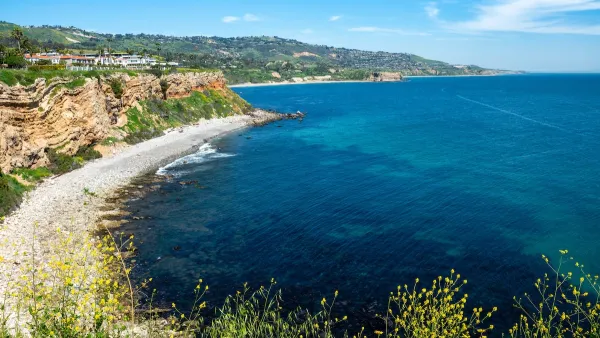
Southern California City Offers Buyout to Homeowners Facing Erosion Threat
Power and gas were shut off to dozens of homes in Rancho Palos Verdes as landslides threatened homes and infrastructure. Now, the city is offering to buy the homes to help residents relocate.
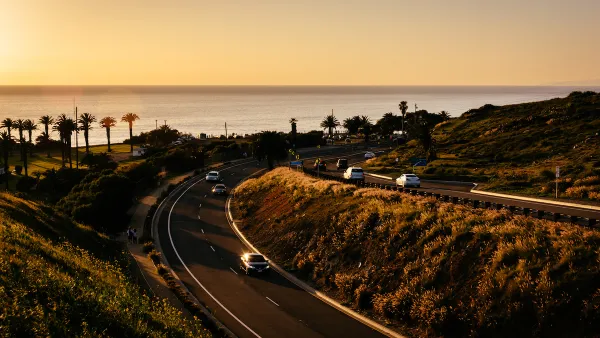
Erosion Threatens SoCal Road, Lloyd Wright Icon
The city of Palos Verdes is closing parts of a roadway to cyclists, citing safety concerns as the land underneath moves between 7 and 12 inches per week.

Planetizen Federal Action Tracker
A weekly monitor of how Trump’s orders and actions are impacting planners and planning in America.

The state-sanctioned urbicide of Austin
People don’t kill cities. Freeways do.

US to reduce Colorado River water deliveries to Mexico
A new Colorado Treaty amendment reduces Mexico’s Colorado River water allocation by 250,000 acre feet.

Amtrak not solely to blame for New Jersey commuter rail's unreliability, report finds
A new study from the Garden State initiative found that NJ Transit’s budget grew 20% across a 4 year period, but reliability declined significantly over the same period.

EPA erases limits on planet-warming pollution from power plants
Under Monday’s plan, power plants would still have some limits on how much mercury, arsenic and other contaminants they can emit.

Phoenix announces new on-demand transit service, more frequent RAPID buses
Both new services will launch in October, and are part of Phoenix's Project Effective Access Solutions for Easing Congestion.

FREE Course: Walkable City 1: Why Walkability?
After describing his path towards focusing on walkability as the essence of good planning, Jeff Speck marches through his five principal reasons for making more walkable places.
Reinventing Malls: Planning Alchemy—Turning Gray Fields Into Gold
The course focuses on the opportunities and imperatives that shape reinvention of mall sites.

Eagle County Government
Harvard University Graduate School of Design
Nashville Planning Department
The Architects Foundation
University of Cincinnati Online
The Pocatello Development Authority
The Urban Renewal Agency of the City of Pocatello
Journal of the American Planning Association