Charles Marohn argues that building six new roundabouts to preserve access to big box stores and strip malls is an ineffective way to reduce traffic.


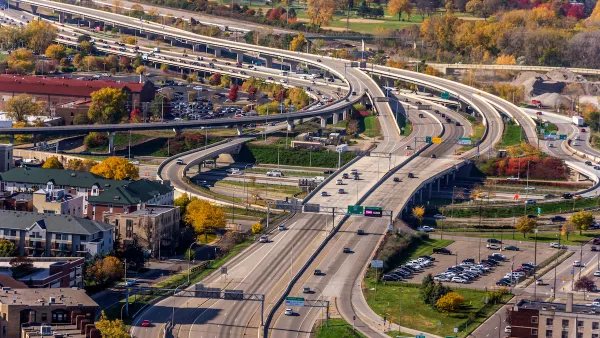
In a post on Strong Towns, Charles Marohn questions the purpose of a $58 million project planned by the Minnesota Department of Transportation (MnDOT), which will elevate a highway over a major interchange in Baxter and includes six new roundabouts designed to drive traffic to the surrounding strip malls and big box stores.
According to Marohn, “Even the visual renderings of this project are absurd. To the untrained eye, it looks like a highway engineer’s fever dream. To anyone familiar with how our transportation system works, it looks familiar in all the worst ways.”
While the project is ostensibly designed to reduce congestion, Marohn argues that it in fact prioritizes preserving access to the businesses, resulting in a compromise that “doesn’t fix that conflict; it institutionalizes it, pouring asphalt over a bad idea so we don’t have to confront the reality, at least not yet.”
For Marohn, the project, dubbed the ‘buttonhook,’ represents “physical manifestation of a larger problem: our refusal to let go of the stroad.” Marohn suggests that MnDOT should opt instead for its first proposed alternative for the interchange, a single-point design that would cost less and address traffic issues, and remove left crossover intersections that often lead to crashes and backups.
According to Marohn, “This project isn’t a one-time failure. It’s the system working exactly as designed: subsidize the fragile, reward inertia, and call it progress.”
FULL STORY: Six Roundabouts to Nowhere

Fixing the ‘Legacy’ Highways That Don’t Work for Anyone
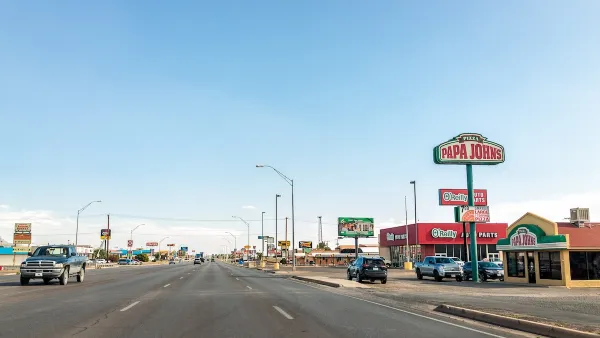
A classic example of the notorious ‘stroad,’ aging state roads that aim to serve all users with piecemeal infrastructure solutions fail to facilitate safe, efficient transportation.
Minnesota Law Calls for Climate Impact Assessment for Highway Projects
The state’s department of transportation will have to consider potential greenhouse gas emissions and alter projects that don’t meet emissions reduction targets.
A Traffic Engineer Questions His Profession
Charles Marohn is a traffic engineer. Despite years of training and millenia of precedents, Marohn now feels that the common practice of traffic engineering is creating bad and even unsafe streets.

The state-sanctioned urbicide of Austin
People don’t kill cities. Freeways do.

US to reduce Colorado River water deliveries to Mexico
A new Colorado Treaty amendment reduces Mexico’s Colorado River water allocation by 250,000 acre feet.

New Jersey’s second-largest city bans standalone data centers
Jersey City will continue to allow co-location facilities, such as those meant for research institutions that store their own data.

Amtrak not solely to blame for New Jersey commuter rail's unreliability, report finds
A new study from the Garden State Initiative found that NJ Transit’s budget grew 20% across a 4 year period, but reliability declined significantly over the same period.

EPA erases limits on planet-warming pollution from power plants
Under Monday’s plan, power plants would still have some limits on how much mercury, arsenic and other contaminants they can emit.

Phoenix announces new on-demand transit service, more frequent RAPID buses
Both new services will launch in October, and are part of Phoenix's Project Effective Access Solutions for Easing Congestion.

FREE Course: Walkable City 1: Why Walkability?
After describing his path towards focusing on walkability as the essence of good planning, Jeff Speck marches through his five principal reasons for making more walkable places.
Reinventing Malls: Planning Alchemy—Turning Gray Fields Into Gold
The course focuses on the opportunities and imperatives that shape reinvention of mall sites.

Eagle County Government
Harvard University Graduate School of Design
Nashville Planning Department
The Architects Foundation
University of Cincinnati Online
The Pocatello Development Authority
The Urban Renewal Agency of the City of Pocatello
Journal of the American Planning Association