More than a century of discriminatory housing policy divided cities and contributed to the racial wealth gap and other social and economic inequities.


Attorney George Fatheree III has written an excellent article on the history of racial zoning for Urban Land magazine. It begins in 1910, when Baltimore passed the first racial zoning ordinance in the U.S., making it illegal for Black Americans to live in white neighborhoods (and vice versa), which prompted other cities across the country to follow suit. From there the article covers how patterns of segregation formed and evolved under racially restrictive covenants and municipal zoning — and the related court case rulings — throughout the decades.
The “devastating effects … on those who have been kept out of historically white communities,” including higher poverty rates, lower home values and incomes, and lower home ownership rates, persist to this day, Fatheree writes, citing research from the Other & Belonging Institute. Featheree closes his article by discussing steps that need to be taken to reverse the effects of this discrimination and the role federal, state, and local governments should play in righting the wrongs they caused.
FULL STORY: A Brief History of Racial Zoning and How to Reverse the Lasting Effects of Housing Discrimination

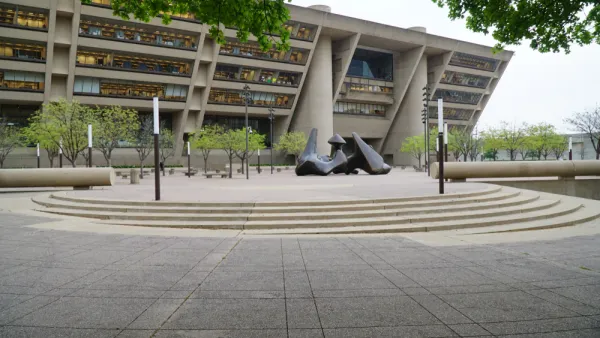
Dallas Housing Proposal Aims for Equity, Finally
Not only does the plan promise more affordable housing, it’s also supposed to deliver “access to more upwardly mobile communities."
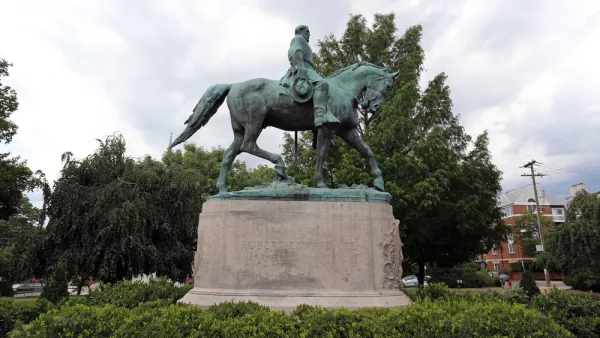
Mapping Housing Discrimination in Charlottesville
Like many American cities, the site of white supremacist unrest in 2017 has a long history of residential discrimination by race. This mapping project seeks to uncover the roots of today's disparities.
Study: Minimum lot sizes reinforce racial disparities
A Connecticut study found that zoning rules perpetuate residential segregation.

Planetizen Federal Action Tracker
A weekly monitor of how Trump’s orders and actions are impacting planners and planning in America.

The state-sanctioned urbicide of Austin
People don’t kill cities. Freeways do.

US to reduce Colorado River water deliveries to Mexico
A new Colorado Treaty amendment reduces Mexico’s Colorado River water allocation by 250,000 acre feet.

5 New England states march closer to 800 megawatt wind energy project
Securing federal approval for the project may be complicated under the Trump administration, which has historically been hostile towards domestic wind power.

Baltimore to break ground on $50 million Transit Priority Project
The project will bring faster bus trips, safer streets and better bike connections to Baltimore.

Airbnb launches $250 million 'last-dollar financing' housing accelerator, makes first investment in Austin
The company will put $6.4 million towards affordable housing development in Texas’ capital.

FREE Course: Walkable City 1: Why Walkability?
After describing his path towards focusing on walkability as the essence of good planning, Jeff Speck marches through his five principal reasons for making more walkable places.
Reinventing Malls: Planning Alchemy—Turning Gray Fields Into Gold
The course focuses on the opportunities and imperatives that shape reinvention of mall sites.

._Gruber%27s_Saloon_and_Buffet_is_at_1038_North_Taylor_Avenue.jpg)
Eagle County Government
Harvard University Graduate School of Design
Nashville Planning Department
The Architects Foundation
University of Cincinnati Online
The Pocatello Development Authority
The Urban Renewal Agency of the City of Pocatello
Journal of the American Planning Association