Not only does the plan promise more affordable housing, it’s also supposed to deliver “access to more upwardly mobile communities."


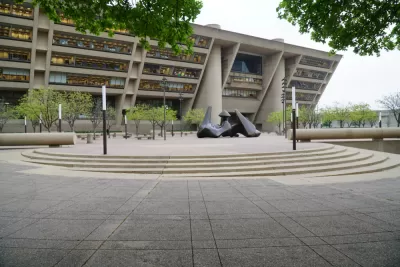
At Next City, Jared Brey reports that early next month the Dallas City Council will vote on a plan to build 20,000 below-market-rate units, most aggressively in areas of the city where housing costs are relatively high.
“The plan is intended not only to overcome a shortage of affordable housing in the city,” Brey writes, “but to chip away at patterns of racial and economic segregation that have developed in the city over the course of decades.”
Lots of apartments are being built in and around Dallas at the moment, but the city has long struggled with segregation and equity in both housing and transit; Brey explains that several years ago it faced two major legal challenges related to the Fair Housing Act.
This plan is basically a direct response:
“It calls for a mix of public and private investment to help fund 20,000 new homes over the next three years, with slightly more than half of the homes reserved for homeownership and the rest for rental. New affordable housing production would be focused in areas with stronger markets, through zoning for increased density and loans to fill financing gaps.”
FULL STORY: Dallas Unveils Plan to Meet Fair Housing Obligations

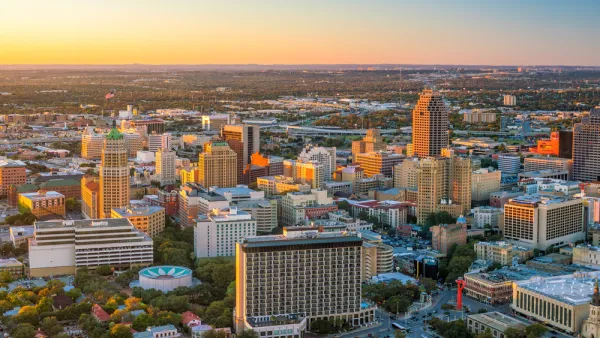
San Antonio's Housing Equity Crisis Traced to Planning Roots
Lending and planning policies have split San Antonio residents into haves and haves for decades, according to a large feature published recently by the Rivard Report.

Planners Cannot Ignore Legacy Of Government-Sanctioned Segregation
Even in liberal states like California, government-sanctioned residential segregation persisted in the 20th century. In a recent talk in L.A., Richard Rothstein, author of The Color of Law, charged planners with undoing this shameful legacy.
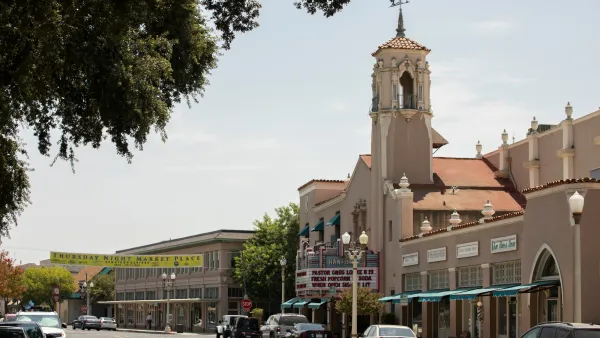
California Gives 15 Cities ‘Final Warning’ to Submit Mandatory Housing Plans
Communities are required to produce housing elements that accommodate sufficient housing for all income levels.

The state-sanctioned urbicide of Austin
People don’t kill cities. Freeways do.

US to reduce Colorado River water deliveries to Mexico
A new Colorado Treaty amendment reduces Mexico’s Colorado River water allocation by 250,000 acre feet.

New Jersey’s second-largest city bans standalone data centers
Jersey City will continue to allow co-location facilities, such as those meant for research institutions that store their own data.

Amtrak not solely to blame for New Jersey commuter rail's unreliability, report finds
A new study from the Garden State Initiative found that NJ Transit’s budget grew 20% across a 4 year period, but reliability declined significantly over the same period.

EPA erases limits on planet-warming pollution from power plants
Under Monday’s plan, power plants would still have some limits on how much mercury, arsenic and other contaminants they can emit.

Phoenix announces new on-demand transit service, more frequent RAPID buses
Both new services will launch in October, and are part of Phoenix's Project Effective Access Solutions for Easing Congestion.

FREE Course: Walkable City 1: Why Walkability?
After describing his path towards focusing on walkability as the essence of good planning, Jeff Speck marches through his five principal reasons for making more walkable places.
Reinventing Malls: Planning Alchemy—Turning Gray Fields Into Gold
The course focuses on the opportunities and imperatives that shape reinvention of mall sites.

Eagle County Government
Harvard University Graduate School of Design
Nashville Planning Department
The Architects Foundation
University of Cincinnati Online
The Pocatello Development Authority
The Urban Renewal Agency of the City of Pocatello
Journal of the American Planning Association