The proposed zoning and land use changes would offer bigger incentives for developers of ‘moderately priced’ housing and relax some restrictions that builders say drive up the cost of construction.



Zoning reform is back in the spotlight in Portland as the city council prepares to consider a package of zoning changes designed to spur more housing development, reports Jayati Ramakrishnan in The Oregonian.
“The biggest proposed change would offer deeper property tax exemptions to developers for building moderately priced apartments in areas just outside the central city, including Slabtown or the inner Eastside.” Other proposals would reduce current bike parking requirements, allow residential units on ground floors, and relax other rules that developers say slow down the process.
The most controversial amendments were those proposed at the last minute by Commissioner Rene Gonzalez, which call for a postponement of two major environmental requirements until 2029: green roofs and bird-safe glass.
Read the full story: Portland City Council looks to boost affordable housing under ‘inclusionary zoning’ mandate, spars over environmental policies

Ohio Lawmakers Propose Incentivizing Housing Production
A proposed bill would take a carrot approach to stimulating housing production through a grant program that would reward cities that implement pro-housing policies.

San Diego wants to limit upzoning law to just 16% of transit-adjacent parcels
The city's planning director says some areas are unfit for immediate upzoning due to a lack of resources or hazards such as wildfire risk.
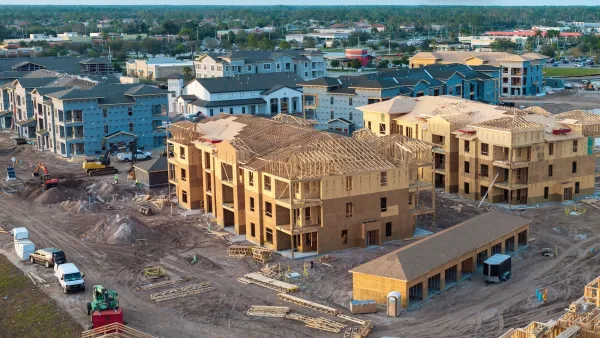
Study: Urban Institute analysis underestimates zoning reform impacts
A new analysis reveals a more significant growth in housing supply after zoning changes than an Urban Institute study shows.

Planetizen Federal Action Tracker
A weekly monitor of how Trump’s orders and actions are impacting planners and planning in America.

California plans to bury El Niño’s downpour
If the state plays its cards right, it may be able to store a billion acre-feet of El Niño’s water in aquifers.

Desperate measures: Advocates weigh draining Lake Powell to fill Colorado River
Draining the reservoir could reduce evaporation losses by a couple hundred thousand acre-feet.

Los Angeles just elected an urban planner as its mayor
Transportation analysts are optimistic that Raman will be more aggressive in addressing transit issues than Bass.

Mamdani’s pied-à-terre tax survives legal challenge
A panel of judges found that the plaintiffs failed to demonstrate injury as a result of New York City's implementation of the tax.

Eastern Nebraska is running out of electricity
Data centers and electrification are straining eastern Nebraska’s grid, throttling economic development.

FREE Course: Walkable City 1: Why Walkability?
After describing his path towards focusing on walkability as the essence of good planning, Jeff Speck marches through his five principal reasons for making more walkable places.
Reinventing Malls: Planning Alchemy—Turning Gray Fields Into Gold
The course focuses on the opportunities and imperatives that shape reinvention of mall sites.

City of Rosemead
Rutgers University, Edward J. Bloustein School of Planning and Public Policy
One Hundred Miles
University of Michigan School for Environment and Sustainability (SEAS)
Hunter College, City University of New York (CUNY)
The Architects Foundation
City of Cambridge
Montrose County
The Pocatello Development Authority