New research reveals that some coastal areas are sinking by as much as 5 millimeters per year, which could threaten key infrastructure.


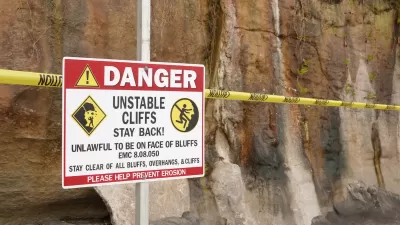
A new study highlights the urgency of restructuring East Coast infrastructure, showing that cities on the Atlantic are sinking by as much as 5 millimeters per year. “Global warming is causing a rise in sea levels, meaning coastal areas are particularly at risk,” explains Robyn White in Newsweek.
While entire areas are unlikely to sink into the ocean, sea level rise threatens infrastructure near the coast. “For example, significant areas of critical infrastructure in New York, including JFK and LaGuardia airports and its runways, along with the railway systems, are affected by subsidence rates exceeding 2 mm per year,” explains Leonard Ohenhen, lead author of the study.
Sea level rise and subsidence is already impacting U.S. infrastructure. On the West Coast, a key Southern California rail corridor was shut down on and off for months as a result of coastal erosion. In Northern California, the California Department of Transportation (Caltrans) completed its first-ever road relocation project in November of last year.
FULL STORY: US Cities Sinking on the East Coast, Threatening Critical Infrastructure

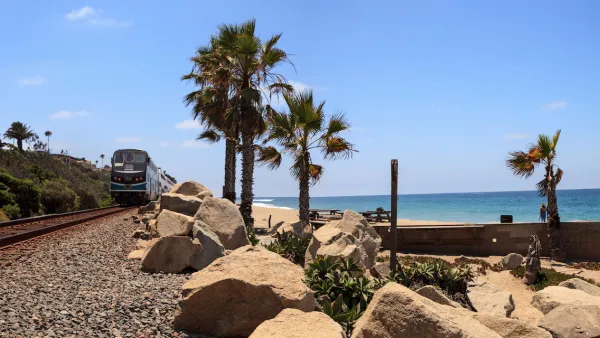
State Leaders Warn of Risks to Southern California Rail Corridor
Coastal erosion and rising sea levels threaten one of the nation’s most scenic—and strategically important—rail corridors.
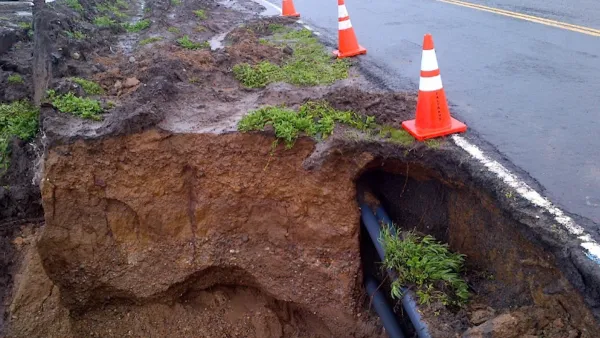
California Completes First Coastal Erosion Mitigation Project
Caltrans moved a segment of the state’s celebrated Highway 1 inland by 400 feet to avoid erosion caused by sea level rise.
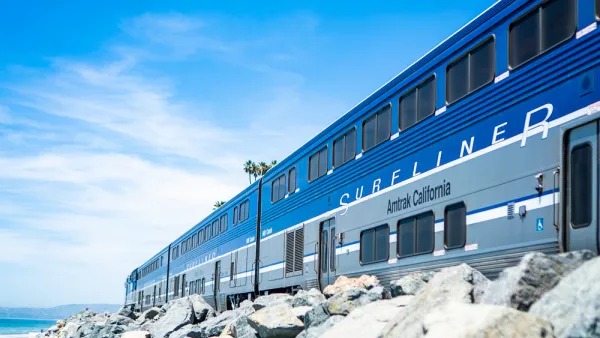
Sea Level Rise Threatens an Iconic California Train
A scenic Southern California line could require relocation as rising sea levels destabilize the coastal soil that supports its tracks.

The state-sanctioned urbicide of Austin
People don’t kill cities. Freeways do.

US to reduce Colorado River water deliveries to Mexico
A new Colorado Treaty amendment reduces Mexico’s Colorado River water allocation by 250,000 acre feet.

New Jersey’s second-largest city bans standalone data centers
Jersey City will continue to allow co-location facilities, such as those meant for research institutions that store their own data.

Amtrak not solely to blame for New Jersey commuter rail's unreliability, report finds
A new study from the Garden State Initiative found that NJ Transit’s budget grew 20% across a 4 year period, but reliability declined significantly over the same period.

EPA erases limits on planet-warming pollution from power plants
Under Monday’s plan, power plants would still have some limits on how much mercury, arsenic and other contaminants they can emit.

Phoenix announces new on-demand transit service, more frequent RAPID buses
Both new services will launch in October, and are part of Phoenix's Project Effective Access Solutions for Easing Congestion.

FREE Course: Walkable City 1: Why Walkability?
After describing his path towards focusing on walkability as the essence of good planning, Jeff Speck marches through his five principal reasons for making more walkable places.
Reinventing Malls: Planning Alchemy—Turning Gray Fields Into Gold
The course focuses on the opportunities and imperatives that shape reinvention of mall sites.

Eagle County Government
Harvard University Graduate School of Design
Nashville Planning Department
The Architects Foundation
University of Cincinnati Online
The Pocatello Development Authority
The Urban Renewal Agency of the City of Pocatello
Journal of the American Planning Association