States must find other ways to fund transportation projects as the transportation sector moves toward decarbonization.


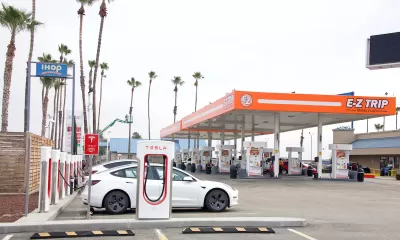
As electric vehicles grow in market share, states like California that depend on gas tax revenue for much of their transportation funding must find other ways to make up for the loss.
According to Manola Secaira of Cap Radio, “A report from the state’s Legislative Analyst’s Office projects a net transportation funding decline of about $4.4 billion — or 31% — within the next decade.” Currently, California gets about one-third of its transportation funding from gas taxes and vehicle fees.
Proposed replacements for the gas tax include mileage-based road user fees and new electric vehicle fees. The report recommends diversifying transportation funding sources and considering mileage fees (also known as vehicle miles traveled or VMT), which make all road users responsible for the damage incurred to roads by driving based on how much they travel. “Regardless of whether or not this approach is adopted, the report makes it clear that California officials must think of solutions sooner rather than later.”
FULL STORY: As gas use declines, California could lose $4 billion in transportation funding, report finds


Can State Lawmakers Make the Case for Road Charges?
More state legislatures are considering fees based on vehicle miles traveled as a replacement for declining gas tax revenues.
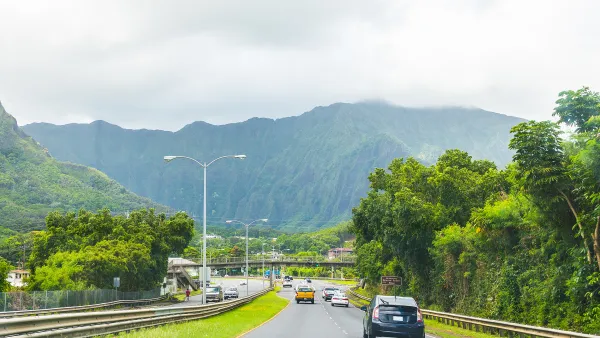
Hawaii Could Implement Road Usage Charge
The tax would apply to electric vehicles, which avoid the state’s gas tax and are a growing percentage of cars on the road.

San Diego County Weighs VMT Proposal
San Diego County could tax developers based on projected vehicle miles traveled as part of a new CEQA requirement that replaces Level of Service with VMT.

Planetizen Federal Action Tracker
A weekly monitor of how Trump’s orders and actions are impacting planners and planning in America.

The state-sanctioned urbicide of Austin
People don’t kill cities. Freeways do.

US to reduce Colorado River water deliveries to Mexico
A new Colorado Treaty amendment reduces Mexico’s Colorado River water allocation by 250,000 acre feet.

5 New England states march closer to 800 megawatt wind energy project
Securing federal approval for the project may be complicated under the Trump administration, which has historically been hostile towards domestic wind power.

Baltimore to break ground on $50 million Transit Priority Project
The project will bring faster bus trips, safer streets and better bike connections to Baltimore.

Airbnb launches $250 million 'last-dollar financing' housing accelerator, makes first investment in Austin
The company will put $6.4 million towards affordable housing development in Texas’ capital.

FREE Course: Walkable City 1: Why Walkability?
After describing his path towards focusing on walkability as the essence of good planning, Jeff Speck marches through his five principal reasons for making more walkable places.
Reinventing Malls: Planning Alchemy—Turning Gray Fields Into Gold
The course focuses on the opportunities and imperatives that shape reinvention of mall sites.

Eagle County Government
Harvard University Graduate School of Design
Nashville Planning Department
The Architects Foundation
University of Cincinnati Online
The Pocatello Development Authority
The Urban Renewal Agency of the City of Pocatello
Journal of the American Planning Association