Ridership recovery is an uphill battle for transit agencies across the nation, but some metro areas have made progress.


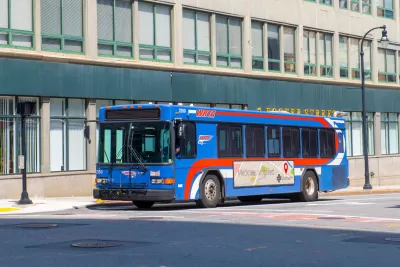
Public transit ridership is still lagging behind pre-pandemic levels in most major U.S. metro areas, according to the American Public Transportation Association’s third-quarter public transportation ridership report. Axios staffers Alex Fitzpatrick and Kavya Beheraj compared the data to 2019 numbers and highlighted key trends.
At a national level, ridership currently stands at 77 percent of pre-pandemic levels. Drilling down to the state level, just nine of around 100 U.S. metro areas with more than 500,000 people had September 2023 public transit ridership at or above 100 percent of September 2019; of those nine, Poughkeepsie, New York (150.3 percent); Worcester, Massachusetts (141percent) and Youngstown, Ohio (130 percent) had the highest.
Fitzpatrick and Beheraj attribute a recent rise in ridership rates for some of the countries biggest transit systems to employers requiring workers to return to the office. New York subway ridership is up 16 percent, Chicago’s L is up 14 percent, and San Francisco’s Muni Metro light rail network has risen 43 percent.
In addition to return to the office, the authors say cities have been experimenting with a variety of tactics to boost ridership, including reduced or waived fares, new and adjusted routes based on people’s post-pandemic travel patterns, and investments in infrastructure.
FULL STORY: Where public transit is recovering — and where it's not

In Las Vegas, Ridesharing and Transit Complement and Compete
A look at transportation trends in Las Vegas suggests a surprising relationship between ridesharing and transit.
Chicago Transit Recovery Trails Behind Other Major US Cities
Sluggish ridership rates and staffing shortages are dampening recovery. Looming budget gaps could make things even worse.
The Demographics of U.S. Transit Ridership
New research from the Pew Research Center provides insight into the people relying on public transit.

Planetizen Federal Action Tracker
A weekly monitor of how Trump’s orders and actions are impacting planners and planning in America.

The state-sanctioned urbicide of Austin
People don’t kill cities. Freeways do.

US to reduce Colorado River water deliveries to Mexico
A new Colorado Treaty amendment reduces Mexico’s Colorado River water allocation by 250,000 acre feet.

5 New England states march closer to 800 megawatt wind energy project
Securing federal approval for the project may be complicated under the Trump administration, which has historically been hostile towards domestic wind power.

Baltimore to break ground on $50 million Transit Priority Project
The project will bring faster bus trips, safer streets and better bike connections to Baltimore.

Airbnb launches $250 million 'last-dollar financing' housing accelerator, makes first investment in Austin
The company will put $6.4 million towards affordable housing development in Texas’ capital.

FREE Course: Walkable City 1: Why Walkability?
After describing his path towards focusing on walkability as the essence of good planning, Jeff Speck marches through his five principal reasons for making more walkable places.
Reinventing Malls: Planning Alchemy—Turning Gray Fields Into Gold
The course focuses on the opportunities and imperatives that shape reinvention of mall sites.

Eagle County Government
Harvard University Graduate School of Design
Nashville Planning Department
The Architects Foundation
University of Cincinnati Online
The Pocatello Development Authority
The Urban Renewal Agency of the City of Pocatello
Journal of the American Planning Association