A new proposal reimagines the primarily industrial and office-oriented area to a ‘15-minute city.’



Local leaders in North Carolina’s Research Triangle Park (RTP) are proposing zoning changes that would make the area more mixed-use and boost density in the economically fertile but sprawling region, writes Mary Helen Moore in a story for The News & Observer.
According to Research Triangle Foundation CEO and president Scott Levitan, “the development model for RTP has not really kept up with the way innovation communities around our country and around the world have evolved,” with 20 percent of the area covered by surface parking lots.
Now, the foundation is developing a vision modeled on the ’15-minute city’ concept that would bring a wider variety of businesses and homes to the area and make it easier for residents, workers, and visitors to get around.
RTP straddles two counties, Durham and Wake, and is specially zoned for low-density campuses. “Levitan said they aim to ask both counties for a new overlay for the park by the end of 2024, giving private land owners considerable options for future development.” The proposed overlay would include three new ‘place types:’ enhanced corporate campus, residential neighborhoods with amenities like grocery stores, and mixed-use density nodes. Additionally, “Because landowners in RTP are governed by private covenants, the RTP Planning Board could require environmentally sustainable design or affordable housing, which the state of North Carolina preempts local governments from doing.”
Park leaders are also interested in mirroring Durham’s ‘social district,’ which allows people to walk around with alcoholic beverages in a designated commercial area.
Read the full story: A 15-minute-city? Leaders propose rezoning all of RTP and adding a drinking district (North Carolina)


Cincinnati upzoning plan paves way for revitalized waterfront district
The city hopes to kickstart new development on five vacant lots in the riverfront entertainment district.
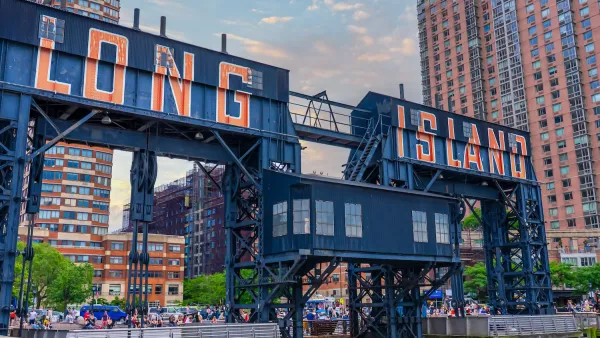
Upzoning Could Bring 15K New Homes to Queens
A rezoning plan for Long Island City opens up prime waterfront land for residential development, but some critics say new housing could be prone to flooding and should be built farther inland.

Report Shows San Francisco’s ‘Family Zoning’ Plan Would Produce Less Than Half of Needed Housing Units
The city’s economic analysis reveals that a rezoning proposal would yield from 8,504 to 14,646 units, well below the number required by the state.

Planetizen Federal Action Tracker
A weekly monitor of how Trump’s orders and actions are impacting planners and planning in America.

California plans to bury El Niño’s downpour
If the state plays its cards right, it may be able to store a billion acre-feet of El Niño’s water in aquifers.

Desperate measures: Advocates weigh draining Lake Powell to fill Colorado River
Draining the reservoir could reduce evaporation losses by a couple hundred thousand acre-feet.

Chicago Avenue bridge construction delays enrages city leaders
The bridge has been closed since 2025. The city originally aimed to re-open it in December, and now expects to finish construction in 2027.

NYC bus network redesign speeds up Queens buses
Rush routes have seen a 4.6% speed increase after the redesign.

California High-Speed Rail Authority picks trainset manufacturer
The California High-Speed Rail Authority aims to start servicing passengers by 2033.

FREE Course: Walkable City 1: Why Walkability?
After describing his path towards focusing on walkability as the essence of good planning, Jeff Speck marches through his five principal reasons for making more walkable places.
Reinventing Malls: Planning Alchemy—Turning Gray Fields Into Gold
The course focuses on the opportunities and imperatives that shape reinvention of mall sites.

City of Rosemead
Rutgers University, Edward J. Bloustein School of Planning and Public Policy
One Hundred Miles
Hunter College, City University of New York (CUNY)
The Architects Foundation
University of Cincinnati Online
City of Cambridge
Montrose County
The Pocatello Development Authority