A provision in the city’s ADU ordinance allows developers to build an essentially unlimited number of units on single-family lots.


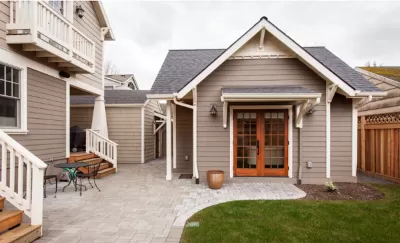
Developers in San Diego are using the city’s ADU Bonus Program to build multi-unit accessory dwelling units (ADUs) that go far beyond the typical ‘granny flat,’ reports Ben Christopher in CALmatters. “The city’s one-of-a-kind ordinance offers landlords a one-for-one deal. If they agree to construct an ADU and keep the rent low enough for San Diegans making under a certain income, they’re automatically permitted to build a second ‘bonus’ unit, which they can rent at whatever price they like.”
The law generally allows for up to five units on one property. “But in bus-and train-adjacent ‘transit priority’ areas — a designation that covers much of San Diego’s urban core — a landlord can alternate affordable and bonus units again and again and again.” Although there are height and floor area ratio limits, “you can squeeze in an awful lot of ADUs within those parameters.” In one case, a single lot now holds nine apartment units, of which four are ADUs. According to the city, a typical ADU application includes 4 to 7 units, while the largest project with a submitted application is 148 units.
As Christopher explains, “Depending on your perspective, San Diego’s ‘crafty little maneuver’ is either an ingeniously clever use of state law to provide a much needed boost to the local housing supply or a sneak effort to foist an intolerable degree of construction and density upon unsuspecting residents while only providing a token degree of affordability.”
FULL STORY: Not your grandma’s granny flat: How San Diego hacked state housing law to build ADU ‘apartment buildings’

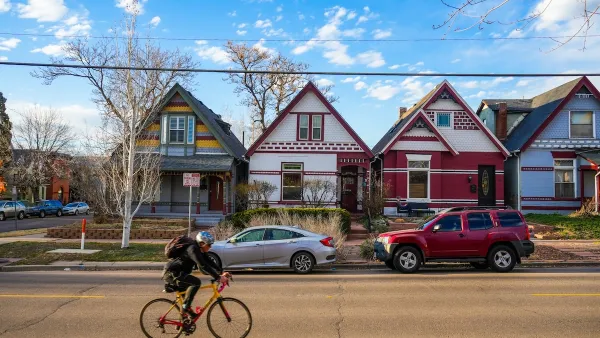
Amidst Colorado Affordability Crisis, Just 3% of Residential Land Zoned for Multifamily Housing
A new report suggests loosening restrictive zoning laws on multifamily development could help bring down high housing costs.
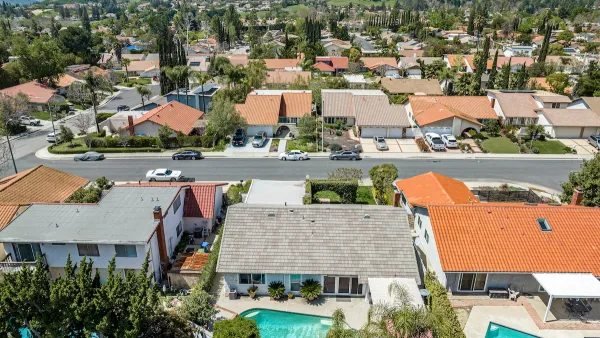
San Diego to Rescind Multi-Unit ADU Rule
The city wants to close a loophole that allowed developers to build apartment buildings on single-family lots as ADUs.

Arizona Legalizes ADUs and Higher Downtown Density Statewide
Two new laws require cities to permit ‘missing middle housing’ near city centers and ADUs on all single-family lots.

The state-sanctioned urbicide of Austin
People don’t kill cities. Freeways do.

US to reduce Colorado River water deliveries to Mexico
A new Colorado Treaty amendment reduces Mexico’s Colorado River water allocation by 250,000 acre feet.

New Jersey’s second-largest city bans standalone data centers
Jersey City will continue to allow co-location facilities, such as those meant for research institutions that store their own data.

Amtrak not solely to blame for New Jersey commuter rail's unreliability, report finds
A new study from the Garden State Initiative found that NJ Transit’s budget grew 20% across a 4 year period, but reliability declined significantly over the same period.

EPA erases limits on planet-warming pollution from power plants
Under Monday’s plan, power plants would still have some limits on how much mercury, arsenic and other contaminants they can emit.

Phoenix announces new on-demand transit service, more frequent RAPID buses
Both new services will launch in October, and are part of Phoenix's Project Effective Access Solutions for Easing Congestion.

FREE Course: Walkable City 1: Why Walkability?
After describing his path towards focusing on walkability as the essence of good planning, Jeff Speck marches through his five principal reasons for making more walkable places.
Reinventing Malls: Planning Alchemy—Turning Gray Fields Into Gold
The course focuses on the opportunities and imperatives that shape reinvention of mall sites.

Eagle County Government
Harvard University Graduate School of Design
Nashville Planning Department
The Architects Foundation
University of Cincinnati Online
The Pocatello Development Authority
The Urban Renewal Agency of the City of Pocatello
Journal of the American Planning Association