Unhoused adults are more than three times as likely to die in any given year as their housed counterparts, research shows.


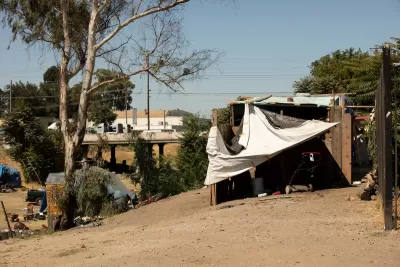
A new study from the National Bureau of Economic Research reveals the stark disparity in life expectancy between housed and unhoused people, reports Christian Leonard in the San Francisco Chronicle.
The study shows that “non-elderly homeless people are about 3.5 times more likely to die in any given year as people with housing,” while “a 40-year-old person experiencing homelessness has a similar risk of death as a 60-year-old person with housing.”
The study analyzed data about 140,000 homeless individuals from the U.S. Census and Social Security Administration and “measured death risk by tracking the percentage of homeless people who lived to the end of a six-month period, compared to the share of housed people who lived to the end of that same period.”
In one surprising finding, the study showed that sheltered and unsheltered homeless people had the same mortality risk, signaling that “while shelter is important, it doesn’t address all the challenges homeless people face.”
FULL STORY: First-of-its-kind homelessness study reveals alarming statistic for California’s unhoused

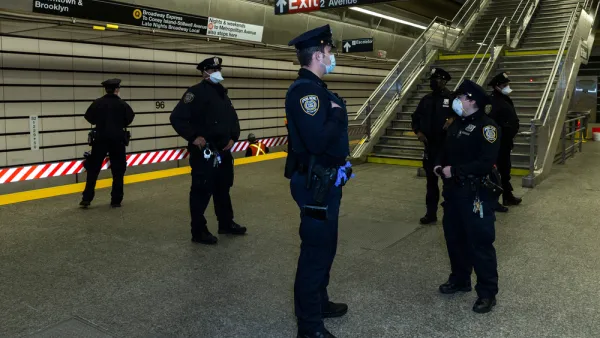
More Unhoused New Yorkers Died in 2021 Than in any Prior Year
New York City saw its deadliest year for people living in shelters or public spaces, with the pandemic and a rise in deadly overdoses fueling a fatal epidemic.
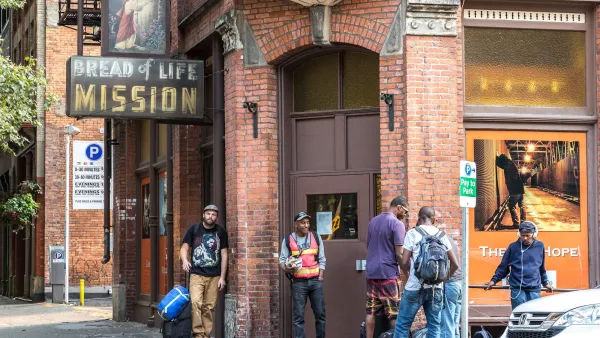
Seattle mayor pledges to build 500 shelter units by June
The Seattle Times editorial board expresses cautious optimism about the mayor's ambitious supportive housing plan.
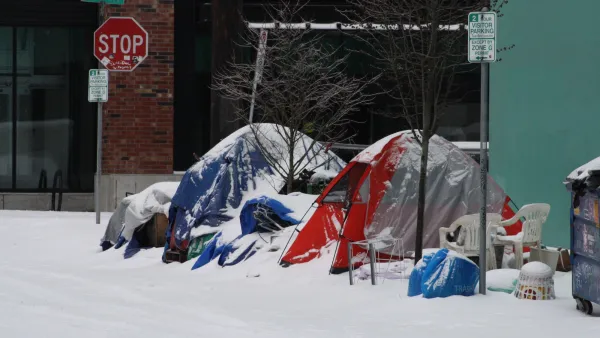
Portland Service Providers Say Mayor’s Methods for Ending Homelessness ‘Least Effective’
Experts say the mayor’s focus on overnight-only shelters fails to get people into long-term housing with the supportive services they need.

Planetizen Federal Action Tracker
A weekly monitor of how Trump’s orders and actions are impacting planners and planning in America.

The state-sanctioned urbicide of Austin
People don’t kill cities. Freeways do.

US to reduce Colorado River water deliveries to Mexico
A new Colorado Treaty amendment reduces Mexico’s Colorado River water allocation by 250,000 acre feet.

5 New England states march closer to 800 megawatt wind energy project
Securing federal approval for the project may be complicated under the Trump administration, which has historically been hostile towards domestic wind power.

Baltimore to break ground on $50 million Transit Priority Project
The project will bring faster bus trips, safer streets and better bike connections to Baltimore.

Airbnb launches $250 million 'last-dollar financing' housing accelerator, makes first investment in Austin
The company will put $6.4 million towards affordable housing development in Texas’ capital.

FREE Course: Walkable City 1: Why Walkability?
After describing his path towards focusing on walkability as the essence of good planning, Jeff Speck marches through his five principal reasons for making more walkable places.
Reinventing Malls: Planning Alchemy—Turning Gray Fields Into Gold
The course focuses on the opportunities and imperatives that shape reinvention of mall sites.

Eagle County Government
Harvard University Graduate School of Design
Nashville Planning Department
The Architects Foundation
University of Cincinnati Online
The Pocatello Development Authority
The Urban Renewal Agency of the City of Pocatello
Journal of the American Planning Association