Adding new renewable energy projects to local grids can take an average of five years, slowing the process of reducing reliance on fossil fuels.


A draft plan from the Department of Energy focuses on improving interconnection processes in the nation’s electric grids as part of the Biden administration’s goal to decarbonize the power sector by 2035.
As Ethan Howland explains in Smart Cities Dive, “In the last five years, interconnection queues — generators waiting to have their proposed projects studied to see if grid upgrades are required to bring them online — have surged.” On average, it currently takes five years to complete interconnection for a new project.
The plan’s recommendations include: “Create new and expand existing fast-track interconnection options, including surplus interconnection service, generation replacement service and energy-only interconnection service” and “Investigate inter-regional transmission solutions through joint transmission planning efforts between neighboring systems,” as well as boosting effort to improve workforce capability and retention as demand for skilled staff grows in this sector.
FULL STORY: DOE issues draft plan to speed up, improve grid interconnections

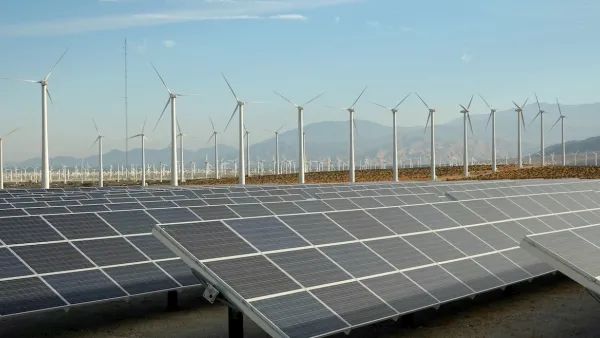
Renewable Energy Going to Waste Due to Grid Bottleneck
The equivalent of 480 nuclear reactors’a worth of power generated from renewable sources is being produced but not captured in the U.S. and Europe — a number expected to grow as investment flows into the renewable energy industry.
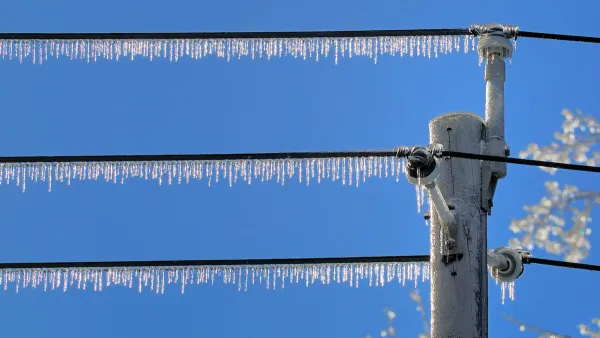
Texas Grid Holds Up to Freezing Temperatures
Efforts made to prepare the state’s infrastructure for winter storms after 2021’s disastrous freeze are paying off.
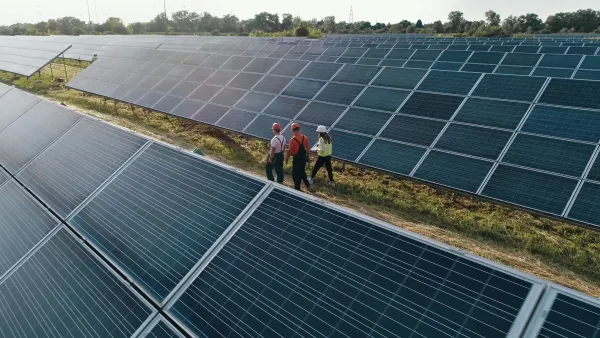
Study: States approved 90% of renewable energy projects between 2018 and 2024
Ohio had the highest rejection rate for wind and solar proposals.

Planetizen Federal Action Tracker
A weekly monitor of how Trump’s orders and actions are impacting planners and planning in America.

The state-sanctioned urbicide of Austin
People don’t kill cities. Freeways do.

US to reduce Colorado River water deliveries to Mexico
A new Colorado Treaty amendment reduces Mexico’s Colorado River water allocation by 250,000 acre feet.

5 New England states march closer to 800 megawatt wind energy project
Securing federal approval for the project may be complicated under the Trump administration, which has historically been hostile towards domestic wind power.

Baltimore to break ground on $50 million Transit Priority Project
The project will bring faster bus trips, safer streets and better bike connections to Baltimore.

Airbnb launches $250 million 'last-dollar financing' housing accelerator, makes first investment in Austin
The company will put $6.4 million towards affordable housing development in Texas’ capital.

FREE Course: Walkable City 1: Why Walkability?
After describing his path towards focusing on walkability as the essence of good planning, Jeff Speck marches through his five principal reasons for making more walkable places.
Reinventing Malls: Planning Alchemy—Turning Gray Fields Into Gold
The course focuses on the opportunities and imperatives that shape reinvention of mall sites.

Eagle County Government
Harvard University Graduate School of Design
Nashville Planning Department
The Architects Foundation
University of Cincinnati Online
The Pocatello Development Authority
The Urban Renewal Agency of the City of Pocatello
Journal of the American Planning Association