A new California state bill lets churches and other faith-based institutions bypass environmental reviews for proposed affordable housing on their properties.


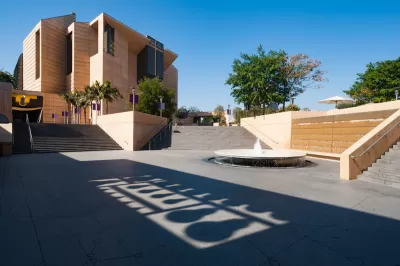
According to an article by Lynette Wilson for the Episcopal News Service, the Catholic Diocese of Los Angeles, which sprawls “from the Pacific Ocean to the northern tip of Santa Barbara County, east to Needles on the Arizona border, and south to the San Diego County,” plans to build affordable housing on 25 percent of the 133 church campuses it owns.
As Wilson explains, “The diocese’s churches are working with development partners to build and maintain apartment complexes on land held in trust by the diocese that’s being leased to its various partners.”
The project is part of a growing ‘Yes in God’s Backyard’ movement that calls on religious institutions to contribute to creating more affordable housing for people struggling to afford housing costs. The movement gained steam with the passage of California’s SB 4, which streamlines the permitting process for houses of worship and nonprofit colleges to build affordable housing.
A Los Angeles Times editorial from December 2022 points out that “‘California has nearly 39,000 acres of land used for religious purposes that could be developed,’ with close to half of it in ‘high opportunity’ neighborhoods, where cost, zoning, and local opposition often make it difficult to build affordable housing.”
FULL STORY: Los Angeles diocese set to develop affordable housing on 25% of church-owned land


Texas Churches Rally Behind ‘Yes in God’s Back Yard’ Legislation
Religious leaders want the state to reduce zoning regulations to streamline leasing church-owned land to housing developers.
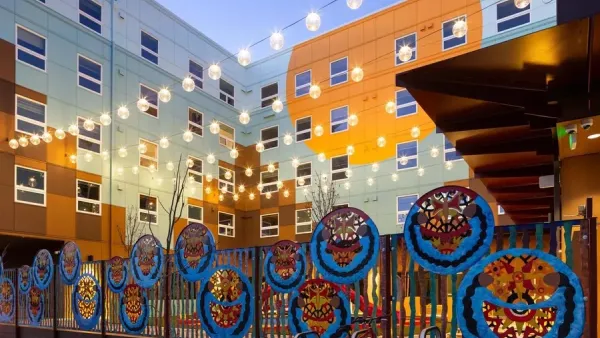
Seattle church complex includes 87 affordable homes
The Columbia City Church of Hope deeded part of its property to an affordable housing developer after limiting in-person congregation during the pandemic.
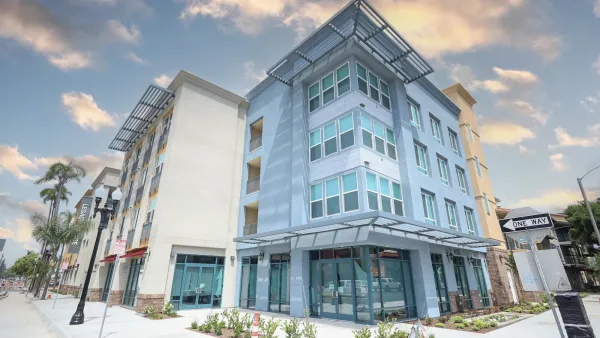
Church-to-housing trend grows in Southern California
Many faith leaders are eager to support housing construction on church land.

Planetizen Federal Action Tracker
A weekly monitor of how Trump’s orders and actions are impacting planners and planning in America.

The state-sanctioned urbicide of Austin
People don’t kill cities. Freeways do.

US to reduce Colorado River water deliveries to Mexico
A new Colorado Treaty amendment reduces Mexico’s Colorado River water allocation by 250,000 acre feet.

Mamdani overhauls NYC's Vision Zero plan with 100 new policy goals
The overhaul aims to reduce traffic deaths and make streets safer for pedestrians, cyclists and drivers through lower speed limits, new safety infrastructure and more.

Amtrak not solely to blame for New Jersey commuter rail's unreliability, report finds
A new study from the Garden State Initiative found that NJ Transit’s budget grew 20% across a 4 year period, but reliability declined significantly over the same period.

EPA erases limits on planet-warming pollution from power plants
Under Monday’s plan, power plants would still have some limits on how much mercury, arsenic and other contaminants they can emit.

FREE Course: Walkable City 1: Why Walkability?
After describing his path towards focusing on walkability as the essence of good planning, Jeff Speck marches through his five principal reasons for making more walkable places.
Reinventing Malls: Planning Alchemy—Turning Gray Fields Into Gold
The course focuses on the opportunities and imperatives that shape reinvention of mall sites.

Eagle County Government
Harvard University Graduate School of Design
Nashville Planning Department
The Architects Foundation
University of Cincinnati Online
The Pocatello Development Authority
The Urban Renewal Agency of the City of Pocatello
Journal of the American Planning Association