The ‘Yes in God’s Backyard’ movement could get a boost from a proposed bill in the California state legislature.


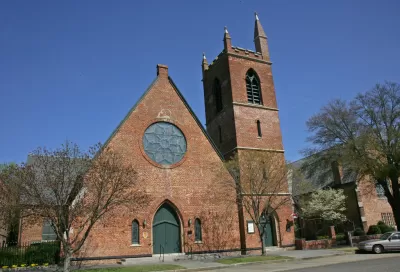
The Los Angeles Times editorial board writes in support of a proposed bill that would make it easier and more affordable for religious institutions to build housing on land they own.
“Senate Bill 4 by Sen. Scott Wiener (D-San Francisco) would allow 100% affordable housing projects to be built by right — meaning the development proposal would be reviewed by city staff but the projects wouldn’t need planning commission or city council approval — if the developments are on land owned by religious institutions or nonprofit colleges and meet objective planning standards.”
According to the board, “California has nearly 39,000 acres of land used for religious purposes that could be developed,” with close to half of it in ‘high opportunity’ neighborhoods, where cost, zoning, and local opposition often make it difficult to build affordable housing. And many churches are eager to make use of this space and provide much-needed housing. “Allowing [churches] to build low-income housing would make better use of their property and generate income from the rentals. The bill also applies to nonprofit colleges, and it would make it easier for campuses to add affordable housing for employees and students.”
A 2020 version of the bill passed the California Senate but was blocked in the Assembly over disagreements about union labor requirements. The Building Trades Council continues to oppose the current bill, but “SB 4 includes compromise language that lawmakers backed last year in another housing streamlining bill that required union-level wages but not necessarily a union workforce.”
FULL STORY: Editorial: Religious institutions want to build affordable housing. Say ‘Yes in God’s Backyard’

Five simple zoning changes that any city can make to increase housing affordability
Zoning for more affordable housing is not rocket science, says Donald Elliot, author of "An Even Better Way to Zone." Here’s his five-step guide to getting started.
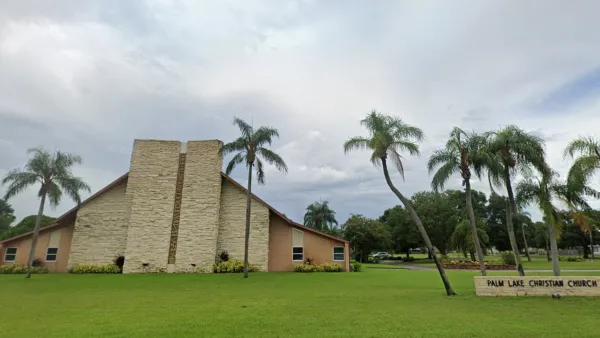
St. Pete Allows Housing on Church Land, a Florida First
Religious institutions can now build housing on their properties without rezoning.
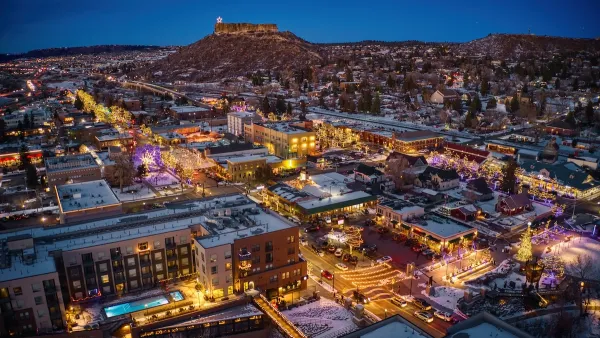
Colorado Church Fights for Right to Provide Housing
A church in Castle Rock, Colorado is suing the city, pointing out the lack of shelter options for unhoused residents in the area.

Planetizen Federal Action Tracker
A weekly monitor of how Trump’s orders and actions are impacting planners and planning in America.

The state-sanctioned urbicide of Austin
People don’t kill cities. Freeways do.

US to reduce Colorado River water deliveries to Mexico
A new Colorado Treaty amendment reduces Mexico’s Colorado River water allocation by 250,000 acre feet.

5 New England states march closer to 800 megawatt wind energy project
Securing federal approval for the project may be complicated under the Trump administration, which has historically been hostile towards domestic wind power.

Baltimore to break ground on $50 million Transit Priority Project
The project will bring faster bus trips, safer streets and better bike connections to Baltimore.

Airbnb launches $250 million 'last-dollar financing' housing accelerator, makes first investment in Austin
The company will put $6.4 million towards affordable housing development in Texas’ capital.

FREE Course: Walkable City 1: Why Walkability?
After describing his path towards focusing on walkability as the essence of good planning, Jeff Speck marches through his five principal reasons for making more walkable places.
Reinventing Malls: Planning Alchemy—Turning Gray Fields Into Gold
The course focuses on the opportunities and imperatives that shape reinvention of mall sites.

Eagle County Government
Harvard University Graduate School of Design
Nashville Planning Department
The Architects Foundation
University of Cincinnati Online
The Pocatello Development Authority
The Urban Renewal Agency of the City of Pocatello
Journal of the American Planning Association