Air pollution is more likely to take years life off the lifespan of the average human than any other external factor, according to a recent report out of the University of Chicago.


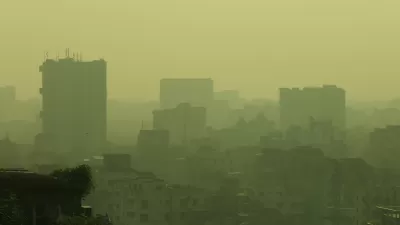
Air pollution is the most significant public health threat on the planet, according to the most annual Air Quality Index report by the Energy Policy Institute at the University of Chicago (EPIC). According to the report, just meeting the World Health organization’s guideline limits for fine particulate pollution would add 2.3 years to the expected lifespan of the average individual.
An article by Issam Ahmed for Phys.org provides more details from the study, noting that pollution from vehicles, industry, wildfire, and more contributes to lung disease, heart disease, strokes, and cancer.
“Asia and Africa bear the greatest burden yet have some of the weakest infrastructure to deliver citizens timely, accurate data,” writes Ahmed. “They also receive tiny slices of an already small global philanthropic pie.”
Among the countries facing the worst air pollution in the world, Bangladesh, India, Nepal, and Pakistan top the list. The article also notes that China as made significant progress in improving its air quality. “Its air pollution dropped 42.3 percent between 2013 and 2021. If the improvements are sustained, the average Chinese citizen will be able to live 2.2 years longer,” reports Ahmed.
In the United States, wildfires are significantly worsening air quality in parts of the country. “For example, California's historic wildfire season of 2021 saw Plumas County receive an average concentration of fine particulate matter more than five times over the WHO guideline,” according to Ahmed.
Read the full story: Air pollution greatest global threat to human health, says benchmark study

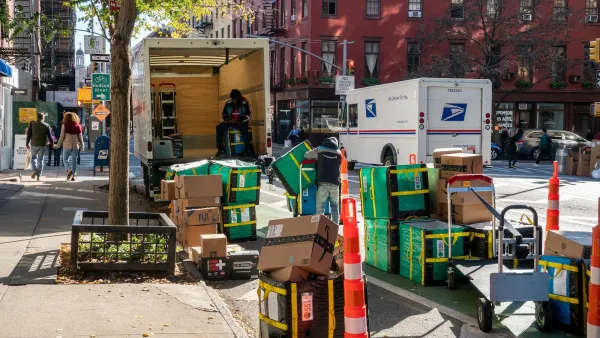
Report: 75% of NYC warehouses are in 'disadvantaged communities'
Low-income New Yorkers are 1.2 times more likely to live within half a mile of a warehouse.
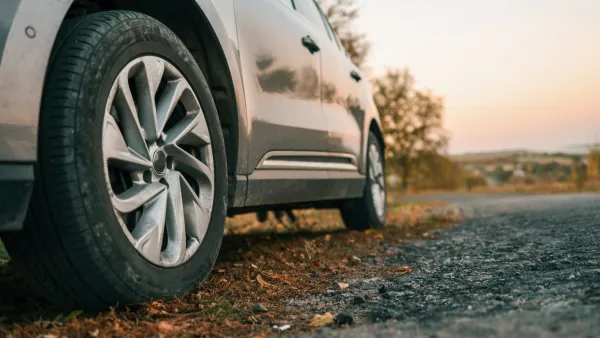
Study: Airborne tire pollution is harmful to human health
Rubber particles that wear off tires combine with other chemicals to create harmful airborne pollutants.

Study: Pavement covers 40% of Phoenix
A new study reveals how ultrafine particles emitted by pavement worsen air quality.

Planetizen Federal Action Tracker
A weekly monitor of how Trump’s orders and actions are impacting planners and planning in America.

The state-sanctioned urbicide of Austin
People don’t kill cities. Freeways do.

US to reduce Colorado River water deliveries to Mexico
A new Colorado Treaty amendment reduces Mexico’s Colorado River water allocation by 250,000 acre feet.

Brightline West’s future may rely on $6 billion federal loan
The company has until Nov. 2 to make a $400 million equity investment into its proposed high-speed rail line.

LA Metro’s ultimatum: no extra buses for LA28 if federal funding isn’t imminently secured
If Metro does not provide additional buses, LA28 organizers will have to find a new way to manage Olympic traffic. LA28’s budget does not include a line item for transit.

Colorado’s Largest Data Center Could Rise Next to Homes — Without a Public Hearing
The proposed campus would consume 11 times the power of Denver International Airport; as it has across the country, opposition mounts.

FREE Course: Walkable City 1: Why Walkability?
After describing his path towards focusing on walkability as the essence of good planning, Jeff Speck marches through his five principal reasons for making more walkable places.
Reinventing Malls: Planning Alchemy—Turning Gray Fields Into Gold
The course focuses on the opportunities and imperatives that shape reinvention of mall sites.

Eagle County Government
Harvard University Graduate School of Design
Nashville Planning Department
The Architects Foundation
University of Cincinnati Online
The Pocatello Development Authority
The Urban Renewal Agency of the City of Pocatello
Journal of the American Planning Association